




All Sustainability articles – Page 99
-
 Article
Itero Technologies and Brightlands Chemelot Campus join forces to build pyrolysis plant
Itero Technologies has signed a commercial realisation agreement with Brightlands Chemelot Campus to build a chemical recycling plant anticipated to recycle 27kT of plastic waste every year.
-
 Article
Open-source net zero roadmap revealed by Mars
Mars, Incorporated has published its Net Zero Roadmap, an open-source action plan documenting its plans to have carbon emissions across its value chain by 2030, invest $1 billion in driving climate action, and more.
-
 Article
PepsiCo: EU packaging rules should embrace refill at home
Is the EU’s proposed Packaging and Packaging Waste Regulation missing a critical element? In this article, Archana Jagannathan, chief sustainability officer at PepsiCo Europe, argues that the regulation does not go far enough due to its omission of refill at-home bottling solutions and refillable bottles.
-
 Article
Walmart right-sizes delivery packs with automated solution from KNAPP and Packsize
Walmart has adopted technologies from KNAPP and Packsize to right-size cartons at its distribution facilities – a move thought to have lowered the retailer’s cardboard waste and more than halved its use of filler material.
-
 Article
Durst showcases automated label printing solutions, LED and UV inks, and more
Durst Group has revealed a computer vision and artificial intelligence solution aspiring to automate print quality, improve efficiency, and reduce both set-up time and waste in digital print.
-
 Article
FINAT pursues harmonised data generation for label life cycles and carbon footprints
FINAT revealed its Product Carbon Footprint and Life Cycle Analysis initiative at Labelexpo 2023, hoping to establish objective criteria for customers to measure and generate data regarding the environmental impact of their products and processes.
-
 Article
Home compostable crisp packet produced by Parkside and SMUG
Parkside and food and drink brand SMUG have unveiled what is said to be a 100% compostable crisp packet, reported to biodegrade in domestic compost heaps in less than 26 weeks.
-
 Article
Sustainability Awards 2023 Finalist Interview: Floeter’s PaperWave box
Our latest Finalist Interview ahead of the Sustainability Awards is with Floeter regarding its PaperWave box. We spoke to the company about this entry, nominated in the commercialised E-commerce category.
-
 Article
Pre-compression trigger from Caps & Closures incorporates up to 50% rPP
Caps & Closures has revealed EzySpray Boost, a pre-compression trigger made using 100% PP and up to 50% recycled content; it aims to provide an easily recyclable option for sprayable product packaging.
-
 Article
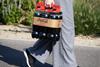
Coca-Cola, Fanta and Sprite trial fibre-based wrap for beverage multipacks
Coca-Cola HBC is piloting a cardboard and paper alternative to plastic shrink film for 1.5-litre multipacks of Coca-Cola, Fanta, and Sprite sold in Austria – a move anticipating a 200-tonne reduction in plastic every year.
-
 Article
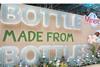
Pepsi and Mineré distribute ‘first 100% rPET bottles’ on Thai market using ENVICCO recyclate
ALPLA and PTT Global Chemical’s joint venture, ENVICCO, is helping beverage brands Pepsi and Mineré roll out what claim to be Thailand’s first 100% rPET bottles – apparently serving as the first food-grade rPET sold on the Thai market.
-
 Article
Innovia Films unveils naturally printable, ‘low-carbon’ label facestock films
At Labelexpo 2023, Innovia Films has launched two new, designed-for-recycling label facestock films – reported to be thinner than traditional filmic label materials, naturally printable, and capable of reducing customers’ carbon footprints.
-
 Article
What steps is Apple taking to make its packaging more sustainable?
Apple has designed downsized, fibre-based, label-free packaging for its new Apple Watch line and is set to increase its delivery via ‘low-carbon’ transportation – aspiring to phase out plastics and decarbonise its operations by 2025 and 2030, respectively.
-
 Article
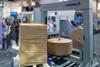
New solution from Mondi and Robopac stretch wraps pallets in paper
Mondi and Robopac have joined forces to develop a paper stretch wrapping solution and help phase out unnecessary plastics in pallet wrapping applications – claiming to wrap up to 750 pallets with one reel of kraft paper.
-
 Article
Winners of Label Industry Global Awards 2023 announced at Labelexpo
The seven winners of the Label Industry Global Awards 2023 – including UPM Raflatac for its label made of ‘ocean-bound’ plastic, CARTES and its automated digital embellishment line, and LINTEC’s polyester-based adhesive – have been announced at Labelexpo Europe 2023.
-
 Article
UKRI to reward refillable food and beverage packaging initiatives in £1.5m competition
UKRI has introduced a £1.5 million competition for Liquid Food and Beverages in Refillable Packaging to its Smart Sustainable Plastic Packaging (SSPP) Challenge, hoping to incentivise brands, retailers, and consumers to make use of reusable and refillable packaging.
-
 Article
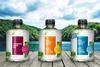
Mono-PET bottle and shrink sleeve solution revealed in #SleeveConnect collaboration
EMSUR, Siegwerk, Karlville, and SK microworks have developed a CPET shrink sleeve label for colourless rPET bottles – seeking to create a fully recyclable packaging solution and enhance shrink sleeve technology under the collaborative #SleeveConnect project.
-
 Article
Solvay and Hegen partner to bring ‘the first baby bottle made with recycled content’ to the market
Solvay has entered into a strategic partnership with Hegen to produce baby feeding bottles made from recycled, non-fossil feedstock content.
-
 Article
Coca-Cola Europacific Partners announces project to explore CO2 upcycling technology
Coca-Cola Europacific Partners (CCEP) has announced an investment into carbon conversion research, which will explore how CO2 captured from the atmosphere could be upcycled to create ethylene, a key component in plastic bottles.
-
 Article
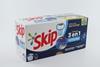
Sustainability Awards 2023 Finalist Interview: Graphic Packaging’s fibre-based carton for Unilever
In our latest Finalist Interview for the Sustainability Awards, Graphic Packaging spoke to us about its Skip cartonboard pack for laundry detergent capsules, developed for Unilever and nominated in the commercialised Recyclable Packaging category.