




All Print and Labelling articles
-
 Article
AstroNova launches new desktop industrial colour label printer
AstroNova has introduced its flagship QuickLabel QL-125 desktop industrial colour label printer, said to deliver ‘dramatically lower’ total cost of ownership and ‘significantly enhanced’ user experience.
-
 Article
Huel serves high-protein ramen in plastic cup with separable cardboard wrap
Huel is using Greiner Packaging’s K3 cups with a separable cardboard wrap for its High Protein Ramen Noodle Cups, aiming to reduce plastic consumption and unlock a convenient meal format for busy lifestyles.
-
 Article
Sun Chemical unveils direct food contact ink and water-based green pigment
Sun Chemical reveals its new direct food contact sheetfed ink for folding carton alongside a green pigment for its water-based ink portfolio – both designed to help brands comply with EU sustainability and food safety requirements.
-
 Article
Stahl introduces haptic coatings range for tactile finishes
Speciality coatings provider Stahl has announced its expanded Sensora portfolio of high-performance haptic coatings, with tactile finishes including soft, rubbery and textured.
-
 Article
Archroma Packaging Technologies to unveil new pressure-sensitive adhesive
Archroma Packaging Technologies is due to introduce its Ultra High Solids pressure-sensitive adhesive (PSA) Cartacol APS75 Ultra to the North American market at LOUPE Americas in Chicago, taking place from 15-17th September. The technology is said to help converters reduce energy use and carbon footprint without compromising adhesive performance.
-
 Article
Sustainability Awards Finalist Interview 2026: Evonik’s food-contact compliant de-inking solution
Evonik’s acrylate-based co-binder for solvent borne packaging inks is designed to improve recyclability and remove ink within minutes. A finalist in the Circular Plastics category of the Sustainability Awards, we spoke with the company to find out more.
-
 Article
Wiliot and CISC partner to increase testing of IoT Pixels for labels
Supply chain AI platform Wiliot and testing and measurement solutions company CISC have partnered to support high-volume functional testing of Wiliot’s battery-free Internet of Things (IoT) Pixels for labels.
-
 Article
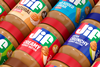
Refreshed Jif branding mirrors modern consumption habits for peanut butter
Jif has refreshed its branding for the first time in over thirty years, updating its on-pack imagery and logo to reflect the changing role of its peanut butter in consumers’ daily lives.
-
 Article
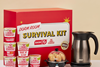
New Cup Noodles labels capture student life for back-to-college season
Nissin Foods and Dash have unveiled the limited-edition Cup Noodles x Dash Dorm Survival Kit bundle, featuring a six-pack of noodles with exclusive labels inspired by life in a university dormitory.
-
 Article
Markem-Imaje launches new SaaS solutions for GS1 QR codes
Markem-Imaje has introduced its CoLOS 2D Activate and CoLOS 2D Engage Software-as-a-Service (SaaS) enterprise solutions, aiming to enable global CPG and FMCG brands to create, organize, activate and manage static and dynamic GS1 Digital Link QR codes.
-
 Article
EU Commission misses deadline to harmonize PPWR’s labelling requirements
The European Commission has missed its self-imposed deadline to harmonize the Packaging and Packaging Waste Regulation’s labelling requirements for recycled content, reusable packaging, and consumer sorting via implementing acts – potentially resulting in a time crunch for businesses to comply.
-
 Article
Videojet targets reduced downtime with new continuous inkjet printer
Videojet Technologies has introduced its 1880 C continuous inkjet printer, designed to help reduce cleaning, service calls and unpredictable downtime for pigmented CIJ printing.
-
 Article
Sustainability Awards Finalist Interview: Living Ink’s renewable black pigment
Living Ink Technologies is a finalist in this year’s Sustainability Awards, nominated in the Start-Up New Materials category for its renewable black pigment made from agrifood waste. We spoke with the company’s director of Partnerships & Strategic Growth, Devon Murrie, to find out more about this entry.
-
 Article
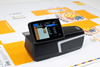
X-Rite Pantone’s portable spectrophotometer to optimize colour print
X-Rite Pantone has revealed its new portable spectrophotometer, eXact 2 Basic – a device set to unlock consistent colour workflows, reduce waste, and improve efficiency alongside digital workflow solutions.
-
 Article
Amcor and Ocean Potion unveil laminated tube for children’s sunscreen
Amcor has helped Ocean Potion develop a 3.4 oz laminate tube for its new sunscreen product, overcoming printing challenges to achieve a colourful and consistent design.
-
 Article
Everything you need to know about the EU’s upcoming environmental claim law
The European Commission has published an FAQ document for the Directive on Empowering Consumers for the Green Transition, clarifying the rules around environmental claims and greenwashing that will apply from September.
-
 Article
Securikett introduces translucent paper-based security seals
Securikett has unveiled its ‘highly translucent’ paper-based security seals, available with a fibre tear effect or VOID technology and designed to deliver effective product protection without compromising packaging aesthetics.
-
 Article
SATO provides RFID labels for blood bank system in Singapore
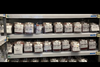
SATO has supported the implementation of a Radio Frequency Identification (RFID) enabled Next-Generation Blood Supply Management System (NBSM) in Singapore by providing RFID labels and readers, enabling online blood ordering and automatic tracking of all blood components.
-
 Article
UFlex commissions woven PP bag manufacturing plant in Mexico
Indian packaging company UFlex has commissioned its first overseas woven polypropylene (WPP) bag manufacturing plant in Mexico, with an annual production capacity of 80 million bags.
-
 Article
San Pellegrino adds thought-provoking questions to bottle labels
San Pellegrino has introduced new labels for its sparkling water bottles, featuring thought-provoking questions aiming to spark interesting conversations at mealtimes.