





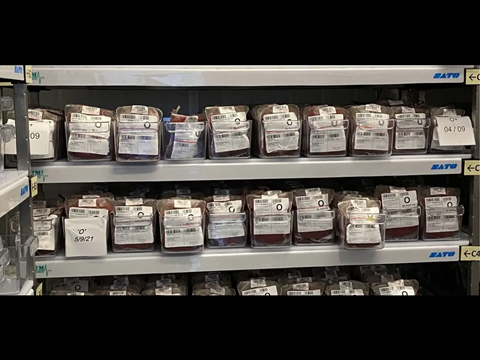
SATO has supported the implementation of a Radio Frequency Identification (RFID) enabled Next-Generation Blood Supply Management System (NBSM) in Singapore by providing RFID labels and readers, enabling online blood ordering and automatic tracking of all blood components.
The new system is operating in Health Sciences Authority‘s (HSA) Blood Services Group and across all public and private hospitals’ blood bank laboratories, providing HSA with increased visibility of the country’s blood supply.
Led by HSA’s Blood Services Group, the initiative aims to meet the growing demands of healthcare while maintaining ‘the highest standards’ of safety and service delivery. Key objectives of the new system include improving productivity throughout the blood supply chain from HSA to hospitals; enhancing visibility of national blood stock levels to enable effective management during peacetime and emergencies; improving blood and patient safety through better tracking and quarantine of blood components; and streamlining HSA’s workflows and simplifying blood component ordering for hospitals.
Apparently, the NBSM project was awarded to CADI Scientific after an open tender by HSA, with SATO serving as the technology partner providing its PJM RFID labels and readers, said to have a rapid read rate and ‘exceptional readability’ in tracking fluids such as blood products. SATO adds that it is committed to driving global advancements in the blood supply chain through precision label printing, automated issuance and application, and PJM RFID tracking technologies compliant with the ISO 18000-3 Mode 2 international standard.
In related news, Avery Dennison recently secured RecyClass Technology Approval in Europe for its AD CleanFlake RFID tags, certifying their compatibility with mechanical PET recycling streams. The solution combines Avery Dennison’s proprietary CleanFlake adhesive technology with a patent-pending RFID inlay and label construction.
Earlier this year UPM Adhesive Materials introduced its UPM ProCycle portfolio of recycling compatible label solutions, aiming to provide converters and packaging brand owners with a solution that delivers ‘recognized recyclability performance’. The adhesive technologies aim to ensure that materials separate cleanly during mechanical plastic recycling, including washing and grinding.
If you liked this story, you might also enjoy:
The ultimate guide to packaging innovation in 2026
Packaging and Packaging Waste Regulation: what to know in 2026
Everything you need to know about global packaging sustainability regulation















No comments yet