




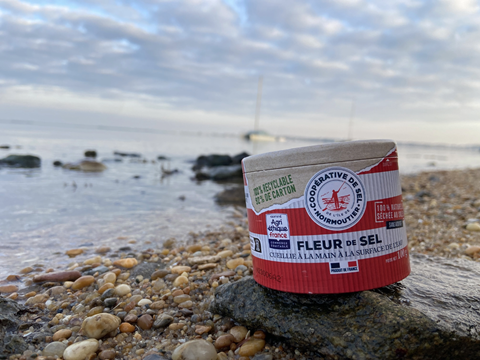
The Noirmoutier Sea Salt Cooperative has adopted Sonoco’s paper-based GreenCan for its Agri-Éthique labelled sea salt range, intending to embrace paperization and reduce its plastic consumption while protecting its product against humidity.
According to Sonoco, GreenCan contains up to 98% paper content and combines renewable and recycled fibres. It is also designed to offer functional barrier protection and preserve freshness – a feature thought to be especially important for hygroscopic products such as sea salt.
Noirmoutier is replacing its traditional plastic sprinkler container with GreenCan, including an integrated paper lid. This format is set to reflect the cooperative’s aims to cut down on plastic use without compromising the quality of its product.
“In anticipation of the upcoming PPWR regulation, we wanted to reduce plastic waste by adopting packaging that is more sustainable and genuinely circular,” said Joël Piau, director at Noirmoutier Sea Salt Cooperative. “Sonoco’s GreenCan met our sustainability requirements and allowed us to implement this transition with a solution aligned with our values and our long-term vision.
“GreenCan combines high paper content with functional performance for demanding food applications. The packaging contains up to 98% paper and incorporates renewable and recycled fibres, while providing the barrier protection needed to preserve product freshness and quality. For hygroscopic products such as sea salt, this balance between sustainability and protection is critical.”
Sonoco links its GreenCan to the increasing trend of paperization, citing Mintel’s statistic that paper-based product launches rose by over 122% between 2023 and 2025.
“Several forces are driving this shift,” says Seàn Cairns, president of Sonoco Consumer Packaging EMEA/APAC. “Consumers have a good perception of paper packaging, especially the younger generations of consumers (Gen Z), associating paper packaging with environmental benefits, safety and good value for money.
“Retailers and brands are getting ready for the Packaging and Packaging Waste Regulation (PPWR), prioritizing circular packaging formats. Technological progress and innovations such as Sonoco’s Greencan are also expanding the possibilities for fibre-based solutions. Advances in packaging design now enable paper formats to protect sensitive products while maintaining product integrity and shelf appeal.
“Against this backdrop, the Noirmoutier Cooperative initiative illustrates how heritage food brands can rethink packaging as an integral part of their sustainability strategy — aligning product values, consumer expectations and future regulatory requirements.
“For Noirmoutier Sea Salt, the transition represents more than a packaging change. It is a way to ensure that a product rooted in one of France’s most iconic coastal landscapes continues to reflect the principles of responsibility and sustainability that have defined it for generations.”
Other companies have also adopted the GreenCan format, including Kotányi for its latest spice range – seeking to align with the EU Green Deal’s life-cycle approach to circularity – and Vetain for its vegan protein powder and supplements, replacing its previous metal-end can with a recyclability-minded alternative.
In other news, Prymat is using Mondi’s high-barrier paper for its dried seasoning product. The brand intends to balance recyclability and low CO2 impact with product protection and visual appeal.
If you liked this story, you might also enjoy:
The ultimate guide to packaging innovation in 2026
Packaging and Packaging Waste Regulation: what to know in 2026
Everything you need to know about global packaging sustainability regulation














No comments yet