
DoorDash develops aircraft, packaging and infrastructure for drone delivery
DoorDash has revealed a purpose-built autonomous aircraft for its drone delivery system, having designed specific packaging and infrastructure for
DoorDash has revealed a purpose-built autonomous aircraft for its drone delivery system, having designed specific packaging and infrastructure for

DE-VAU-GE Gesundkostwerk Deutschland GmbH upgraded to Alpha – the latest generation of adhesive melters from Robatech – while continuing normal operations. This Spotlight looks at the reasons behind this decision, and the benefits modernization has brought to operation and maintenance.
In this edition of The Spotlight, Markem-Imaje examines how 2D coding is redefining the role of flexible packaging and how manufacturers can prepare for the challenges to come.

In the latest edition of our ‘In Conversation With…’ series, we speak with H.B. Fuller’s Europe Business Manager Timo Gratilow and Senior Application Specialist Jeff Burrington about the localization of Gel-Tac™ microsphere adhesive production at the company’s Pianezze facility, and their perspectives on the opportunities shaping the future of microsphere adhesive technology.

Timo Gratilow, Europe Business Manager at H.B. Fuller
TG: The expansion of our microsphere portfolio under the Gel-Tac™ brand is driven by a combination of market demand, customer proximity, and our commitment to long-term growth in Europe. Customers increasingly value suppliers that can provide not only innovative technologies but also reliable regional supply and technical support.
Gel-Tac™ has a strong heritage in delivering removable and repositionable adhesive performance, particularly for labels, graphics, tapes, and specialty applications.
Historically, these products have been supplied to Europe from the United States. Beginning in August, production will be localized at our manufacturing facility in Pianezze, Italy. This is an important milestone because it allows us to bring production closer to our European customers, improve supply responsiveness, and strengthen our ability to support regional growth.
Beyond production localization, the Gel-Tac™ brand represents a platform for future innovation. We continue to invest in extending the performance capabilities of microsphere technology, particularly for applications involving difficult-to-bond surfaces and evolving sustainability requirements.
TG: The localization of Gel-Tac™ production in Pianezze delivers benefits across the entire value chain. From a sustainability perspective, manufacturing closer to European customers reduces transportation requirements compared with transatlantic shipments, helping lower the overall carbon footprint associated with product delivery.
This move also aligns with broader sustainability investments at our Pianezze site. The facility has recently installed a solar photovoltaic system that generates approximately 511 MWh of renewable electricity annually, covering around 20% of the site’s electricity needs and reducing Scope 2 emissions by approximately 240 tonnes of CO2 equivalent per year. In addition, the site continues to invest in resource-efficiency initiatives, including advanced water recovery and treatment technologies capable of reducing wastewater disposal by up to 90%, as well as infrastructure upgrades expected to lower energy consumption and water losses by around 10%.
For customers, this means access to adhesive solutions manufactured at a site that is continuously investing in reducing its environmental footprint while maintaining the high quality, reliability and consistency expected from H.B. Fuller products.
From an operational perspective, localized manufacturing enables shorter lead times, improved supply flexibility, and closer collaboration with customers on new developments and technical projects.

Jeff Burrington, Senior Application Specialist at H.B. Fuller
JB: The unique performance of microsphere adhesives comes from their structure at the interface to the substrate. Traditional water-based dispersion adhesives typically wet out the substrate fully over time leading to an increase in peel adhesion, compromising their repositionability and final removal.
Polymeric microsphere technology behaves differently. The adhesive forms a discontinuous bonding structure at the interface with the substrate, limiting the surface area of wetting over an extended time period.. This allows the adhesive to provide reliable holding power while maintaining clean removability and repositionability, that is difficult to achieve with conventional PSA technologies. The technology also facilitates reliable performance over a relatively wide application and service temperature range.
The result is an adhesive that can stay in place when needed but can also be removed or repositioned without leaving residue or damaging surfaces, even after extended application periods. These characteristics have made microsphere technology a preferred choice for many removable and reusable applications.
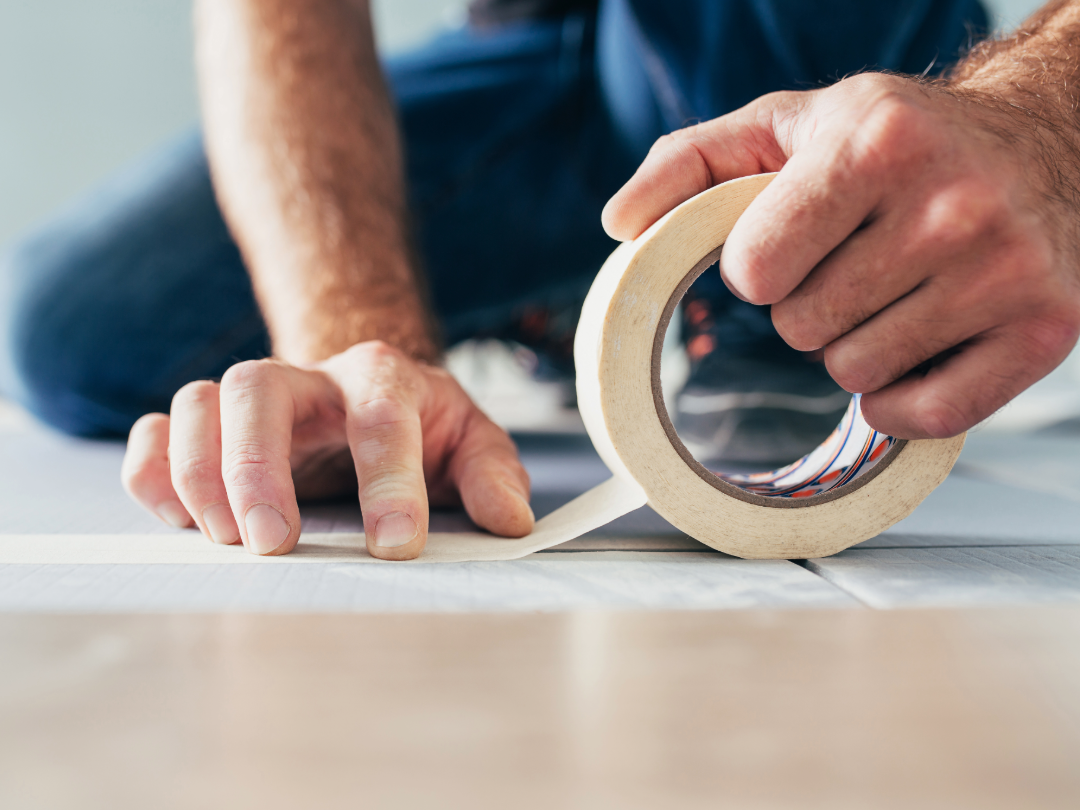
JB: One of the greatest advantages of Gel-Tac™ technology is its versatility.
In the labeling sector, it is widely used for removable labels, shelf marking and promotional labels. The technology also supports linerless label constructions and self-wound products where clean removal and controlled adhesion are essential, with a high degree of thermal paper compatibility.
In graphics applications, Gel-Tac™ performs exceptionally well in wall décor, wallpapers, floor graphics, temporary signage, and large-format graphics where easy repositioning during installation is highly valued.
The technology is also used in masking tapes, sticky notes, office products, reusable stickers, and specialty tape applications that require a combination of adhesion, clean removability, and repeatable performance.
As converters continue to seek solutions that offer both application flexibility and end-user convenience, we expect the demand for microsphere-based technologies to continue growing across these segments.
JB: The market is evolving rapidly. Customers are increasingly working with recycled materials, low surface energy substrates, and more demanding application environments.
Traditional microsphere technologies have delivered excellent removable adhesion performance, but there are limits when higher adhesion levels are required on low surface energy substrates. To address this, H.B. Fuller has been developing next-generation Gel-Tac™ microsphere technologies designed to improve adhesion performance while preserving the repositionability and removability that define microsphere systems.
The new platform is being developed to provide enhanced tack, improved peel strength, and greater substrate versatility, enabling customers to address a broader range of label, graphic, and tape applications. By expanding the performance envelope of microsphere technology, we are helping customers solve challenges that were previously difficult to address with traditional removable adhesive systems.
TG: We see significant opportunities ahead. Trends such as linerless labeling, e-commerce growth, smart packaging, RFID labels, increased use of recyclable and recycled substrates, and rising demand for user-friendly graphics and décor applications, are driving new requirements for adhesive technologies.
At the same time, customers are seeking solutions that combine performance, sustainability, and manufacturing efficiency. Our strategy is to continue investing in both innovation and production capabilities so that we can help customers address these evolving needs.
Our focus is therefore twofold: continuing to expand the performance capabilities of Gel-Tac™ technology and ensuring those innovations are supported by more sustainable manufacturing practices. The localization of production in Pianezze is an important step in that journey, providing a strong foundation for future growth, innovation, and customer collaboration in the European market.
To learn more about Gel-Tac™ microsphere technologies or discuss your specific application requirements, contact your H.B. Fuller representative or visit https://www.hbfuller.com/en/markets/tapes-labels-and-graphics.

DE-VAU-GE Gesundkostwerk Deutschland GmbH upgraded to Alpha – the latest generation of adhesive melters from Robatech – while continuing normal operations. This Spotlight looks at the reasons behind this decision, and the benefits modernization has brought to operation and maintenance.

In this edition of The Spotlight, Markem-Imaje examines how 2D coding is redefining the role of flexible packaging and how manufacturers can prepare for the challenges to come.


The material that consumer and industrial (C&I) applications rely on just got a sustainability upgrade. DuPont talks us


Utilizing vacuum aluminizing and laser-writing technologies, Shunho Creative (a sub-brand of Shanghai Shunho International) has developed a plastic-

Seeking to meet the challenges of the climate crisis and regulatory changes, Smurfit Westrock is investing in its manufacturing network,

ATS-Tanner’s banding solutions aim to reduce packaging waste, provide a practical alternative to plastic and improve recyclability. In

DoorDash has revealed a purpose-built autonomous aircraft for its drone delivery system, having designed specific packaging and infrastructure for

Hyaku-Pa’s portable paper tube and display box for its shakeable green tea leaves – designed for on-the-go

iBoxit Limited has secured £400,000 in funding to support the development and commercial readiness of its recyclable, plant-based

SIG has expanded its SIG Neo portfolio with new filling machines for aseptic cartons – seeking to offer high output and