
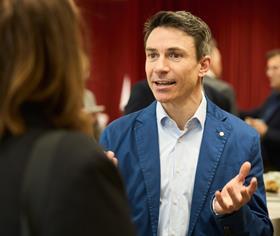
Alexander Rauer, Head of Business Development flexible packaging paper at Koehler Paper, discusses sustainability benefits of the material, product innovations, collaborations, industry trends and more in the latest of our ‘In Conversation With…’ article series.
”Circularity starts with design. At Koehler Paper, we believe that the most sustainable packaging solution is one that not only protects the product but also fits seamlessly into existing recycling systems. That is why we are continuously developing fibre-based packaging solutions that help our customers move from linear to circular packaging concepts.” Alexander Rauer
Koehler Group has set a target to ensure that 100% of its innovations meet the relevant sustainability criteria by 2030. What would that mean for Koehler Paper’s target groups in particular?
For Koehler Paper, this means that sustainability is no longer an add-on. It is becoming a fundamental design principle for every new packaging solution we develop.
In the flexible packaging sector, our customers are looking for alternatives that combine performance with circularity. By ensuring that all innovations meet relevant sustainability criteria, we are helping brand owners, converters and retailers transition towards packaging solutions based on renewable raw materials, improved recyclability and lower environmental impact.
Ultimately, our goal is to enable customers to meet both consumer expectations and evolving regulatory requirements without compromising product protection or packaging functionality.
When designing packaging for these sectors, what circularity benefits does flexible packaging deliver compared to rigid packaging?
Flexible packaging is inherently resource-efficient because it typically requires significantly less material than rigid alternatives while delivering comparable product protection.
When flexible packaging is based on paper, it offers additional circularity advantages. It can leverage existing paper collection and recycling systems, helping to keep valuable fibres in circulation for multiple life cycles.
In short, flexible paper packaging combines material efficiency, renewable resources and compatibility with established recycling infrastructures—making it a strong contributor to a circular economy.
Could you also tell us about the NexFlex product range, and how it benefits the sectors in question?
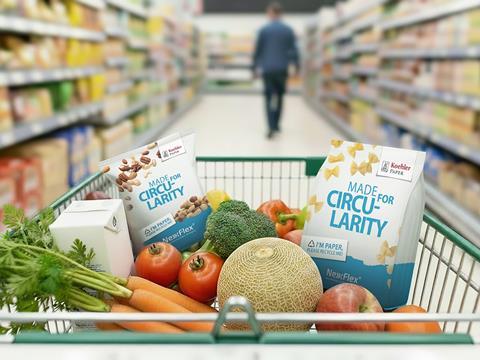
Koehler NexFlex® is Koehler Paper’s product family for flexible packaging applications. The portfolio consists of three main product groups:
Koehler NexPure® – uncoated machine-glazed paper for applications such as confectionery wraps, tea packaging and other primary packaging solutions.
Koehler NexCoat® – one-sided coated paper offering excellent printability and converting performance.
Koehler NexPlus® – functional barrier paper with tailored properties such as heat sealability, oxygen barrier, grease barrier, water vapour barrier, aroma protection, UV protection or MOSH/MOAH barriers.
Our modular barrier concept allows us to tailor packaging performance to specific market requirements. This makes the portfolio suitable for applications including tea, cereals, confectionery, snacks, bakery products, fast-moving consumer goods and selected non-food segments. This paper is designed to run on conventional converting and packaging equipment while supporting recyclability in existing paper streams.
The key benefit for customers is that Koehler NexFlex® combines product protection with circularity. It enables brands to replace conventional plastic packaging in many applications while maintaining the functionality required throughout the supply chain.
Can you give an example of a collaboration, in production or with end users, to advance circularity in these sectors?
Circularity can only be achieved through collaboration across the entire value chain.
A good example is the collaboration with the Italian confectionery manufacturer Loacker. Koehler Paper has documented how Loacker’s paper-based packaging journey extends beyond product use and continues through the paper recycling process, demonstrating the practical circularity of fibre-based packaging solutions.
Another example is the cooperation with retailers and brand owners to replace conventional plastic packaging with paper-based alternatives. Internal case studies and customer projects show ongoing work with major food and consumer goods brands to develop recyclable packaging structures based on Koehler NexPlus® barrier paper while ensuring product protection and machine performance
One example is our work with brand owners and converters to replace conventional plastic packaging with recyclable paper-based alternatives. These projects bring together paper manufacturers, converters, machine suppliers and brand owners to develop solutions that work not only technically but also within existing recycling systems.
We also actively contribute to industry initiatives such as 4evergreen, which aims to improve the circularity of fibre-based packaging across Europe and strengthen recycling performance throughout the value chain.
Do current industry circumstances – e.g. the realities of existing markets and infrastructure – affect Koehler’s circular packaging designs? How so?
Absolutely. Circular packaging solutions must work within the realities of existing collection, sorting and recycling systems. This is why recyclability and compatibility with current paper recycling infrastructure are key design criteria for our products.
Legislation such as the European Packaging and Packaging Waste Regulation (PPWR) is also influencing design decisions. Customers increasingly require packaging that can demonstrate recyclability, reduce EPR costs and comply with future regulatory requirements. As a result, Koehler Paper focuses on paper-based structures and barrier technologies that balance functionality with recyclability.
At the same time, we recognize that not all applications can be converted immediately. Barrier requirements, shelf-life expectations and existing packaging lines remain important considerations. Therefore, our approach is to replace plastic wherever it is technically and economically feasible.
Koehler Paper has recently published a white paper. Based on its findings, how would you compare the recyclability of paper-based and plastic packaging?
The main conclusion is that paper-based packaging currently benefits from a highly developed collection and recycling infrastructure, particularly within Europe.
The white paper and related PPWR analyses highlight that paper-based structures such as Koehler NexPlus® generally achieve significantly higher recyclability performance than comparable paper-plastic composite solutions. For example, internal recyclability assessments have shown substantially higher screening yields and significantly lower reject rates for Koehler NexPlus® paper packaging compared with paper-polyethylen laminate alternatives
Paper fibres can be recycled several times and are already recovered at high rates. This gives paper a significant advantage from a circularity perspective, especially when packaging is designed according to established recyclability guidelines.
Where does Koehler plan to go next? Are there any circularity-minded products or projects in the pipeline?
Our ambition is clear: we want to further expand the range of applications in which paper can successfully replace plastic.
We are continuously developing our Koehler NexFlex® portfolio and investing in next-generation barrier technologies that combine functionality, product protection and recyclability. Particular focus areas include improved barrier performance, broader application fields and solutions that support future regulatory requirements.
Looking ahead, we see significant opportunities for fibre-based packaging as brands increasingly seek circular alternatives. Our role is to provide solutions that make that transition possible without compromising product quality or consumer convenience.
Click here to learn more about Koehler’s paper packaging solutions.