



Karl Axnäs, business development manager, Transparent Fiber Materials at Ahlstrom, dives deeper into the company’s transparent paper portfolio – ranging from food packaging and clothing bags to bouquet wraps and tape – in this edition of our ‘In Conversation With…’ series.
How do you make paper transparent and, generally speaking, what advantages would you say they have compared to transparent polymers?

Karl Axnäs, business development manager, Transparent Fiber Materials
At Ahlstrom, we explain transparent paper with a simple analogy. Normal paper is opaque for the same reason that snow looks white: light is scattered by the many air pockets between the fibers. When snow is compressed into ice, those air pockets disappear and the material becomes transparent. The same principle applies to paper, as the cellulose in itself is transparent.
To make paper transparent, we structure the fiber network by combining refining and supercalendering process. These processes densify the sheet, drastically reducing the gaps between fibers so that light can pass through instead of scattering. Achieving high transparency, however, is not only about pressure. It requires deep papermaking expertise, including the right wood pulp selection, fiber refining, and precise control of the sheet structure. Through decades of experience, Ahlstrom has developed fiber blends and processes that deliver transparency levels with Cristal® papers that are close to those of transparent polymers.
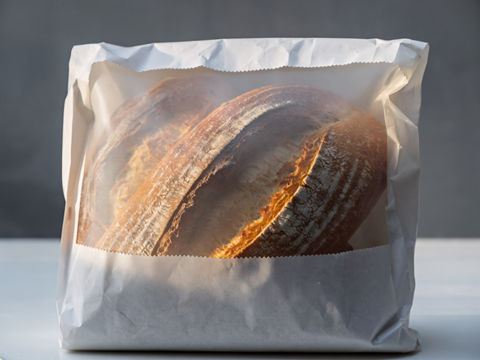
Compared with transparent plastic, transparent paper offers several important advantages. Because it is 100% fiber-based, it allows flexible packaging structures to stay mono-material rather than combining paper with plastic films. This means the material can be recycled directly in the paper and board recycling stream, while plastic windows often complicate sorting and can prevent packaging from being recyclable. A good example is a bread bag with a transparent window: when the window is made from plastic film, the pack becomes a mixed material; when it is made from transparent paper, the entire package can remain paper-based and recyclable in the paper stream.
On that note, are there any particular sectors of applications that could benefit from transparent paper over plastics?
We see strong potential for transparent paper across several application areas where product visibility is important, and brands are looking to move away from plastic films.
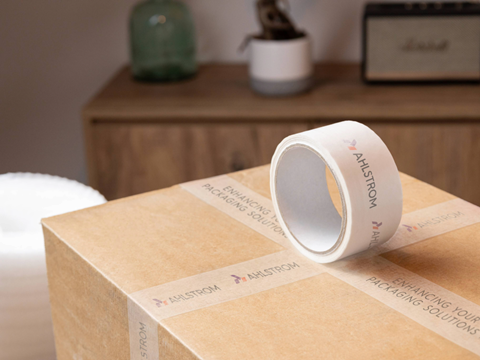
Today, our transparent paper team works with customers and brands in food packaging, particularly for bags and windows where consumers want to see the product inside, such as bakery or fresh food packaging. Another important segment is adhesive tapes, where transparent paper can replace conventional plastic backings while maintaining transparency and performance. Most of the products that I just mentioned are already on the market and available to consumers.
We also see growing interest in lidding applications and heat-sealable structures, where transparent paper can function similarly to plastic films while enabling a fiber-based packaging design. In addition, floral wrapping is a natural fit: transparency is essential to showcase the product, and paper offers a renewable alternative to traditional plastic wraps.
We have also been developing transparent paper materials designed to replace conventional plastic protection films. These films are essential for safeguarding the surfaces of electronic and electrical appliances, as well as furniture i.e. protecting screens, metal plates and other components from scratches during manufacturing, transport and installation.
More broadly, any application currently using transparent plastic films primarily for visibility can be a candidate. We are continuously exploring new opportunities and remain very open to testing and developing solutions together with customers to adapt transparent paper to their specific technical and sustainability requirements.
Have you conducted any LCAs or pursued any certifications for the compostability of the paper?
We are actively working on life cycle assessment (LCA) studies to quantify the environmental performance of our transparent paper solutions across their full lifecycle.
In parallel, our papers have already obtained recognized third party certifications confirming their recyclability and compostability, demonstrating that they can fit within existing paper recycling systems while also offering end-of-life options aligned with circular economy principles.
Beyond the material itself, Ahlstrom also supports customers in the transition from plastics to fiber-based packaging by providing expertise on Extended Producer Responsibility (EPR) fee calculations. This helps brands and converters better understand the regulatory and financial implications of switching materials and assess the potential benefits of moving from plastic films to paper-based alternatives.
In terms of transparency, how do Ahlstrom’s paper solutions compare to plastics? Were there any challenges or trade-offs in developing the paper?
Transparent paper is not a new development for us. We have been producing transparent papers for decades now, making it a long-established product within our portfolio.
In terms of transparency, our Cristal® paper solutions today can reach levels the highest levels of transparency in the paper market, very close to those of plastic films, which allows brands to maintain product visibility while moving to a fiber-based material. Achieving this performance requires a highly controlled papermaking process: the right wood pulp selection, fiber refining, and densification of the sheet through processes such as supercalendering to minimize light scattering.

The main challenge in developing transparent paper is balancing transparency with the inherent properties of a fiber-based material. Paper behaves differently from plastics in terms of structure and processing, so reaching high transparency while maintaining strength and runnability requires deep expertise in fiber engineering and papermaking.
In addition, our Cristal® transparent papers are designed to offer good machine runnability and compatibility with standard converting and packaging processes, enabling smooth integration into existing production lines. Today we see the right conditions and a growing demand to expand the transparent paper use much further. Technological advances in papermaking and increasing sustainability regulations and market expectations are accelerating the shift toward paper-based alternatives, which is why Ahlstrom is now focusing on increasing market penetration for transparent paper solutions.
Where is Ahlstrom’s transparent paper going next? Will it be introduced to any new applications or industries in the future?
At Ahlstrom, Cristal® is the root of Ahlstrom Transparency Platform, an innovation team where we continue to expand both the performance in terms of transparency and the range of solutions available to customers. The Transparency Platform brings together multiple research and development projects, from different Business Units, focused on advancing transparency-related science and creating fiber-based alternatives to plastics.
One important direction is the development of new paper grades with even higher transparency, allowing us to broaden our portfolio and address a wider range of applications. By further improving the transparency level and the functionality, we can support packaging designs that currently rely on plastic films while keeping the structure paper-based. At the same time, we are increasing our production capacity, which is essential to make transparent paper solutions more accessible and cost-competitive. Scaling up production helps reduce costs and enables wider adoption across different markets.
Overall, our objective is clear: expand the portfolio, improve transparency performance, and scale production so that transparent paper can move from a niche material into a mainstream solution for packaging and other applications that require visibility. This ambition is already being rolled out through ongoing development and testing, and we are actively looking for partners and customers interested in testing these new materials and exploring their potential in real applications.
To learn more about Ahlstrom’s transparent paper portfolio and its Ahlstrom Transparency Platform, click here.










No comments yet