




All Flexibles articles
-
 Article
How Amazon tests and uses ‘stretchier’ paper packaging instead of plastic
Amazon is developing ‘extensible’ paper packaging with a water-soluble coating, said to double or triple the flexibility of standard kraft paper while maintaining recyclability.
-
 Article
Proving a commercially credible pathway to food-grade recycled content
Recent trials by NEXTLOOPP, Süper Film and Brückner Maschinenbau have reportedly demonstrated for the first time that food-grade recycled polypropylene can be processed into biaxially oriented polypropylene (BOPP) film under standard commercial production conditions. Professor Edward Kosior, the founder of the NEXTLOOPP project and a previous Packaging Europe Sustainability Awards winner, tells us more about this landmark news.
-
 Article
Sustainability Awards Finalist Interview: Thermapet’s process delivering recyclable containers
Thermapet is nominated in the Startup New Materials category in this year’s Sustainability Awards for its patented process that delivers fully recyclable containers with temperature stability from -40°C to 220°C. The company’s CEO, Doron Ben-Meir, tells us more.
-
 Article
Italy permits compostable plastics for fresh produce, condiments and more
Italy has passed a law that mandates compostable versions of single-use plastic packaging formats that will otherwise be banned under the Packaging and Packaging Regulation, from lightweight fresh produce packs to condiment wrappers.
-
 Article
ECOVA® portfolio expands to support paperisation trend
Rapids Paper + Packaging has announced the commercial expansion of its ECOVA® portfolio.
-
 Article
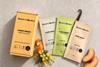
Bower Collective and Kelpi unveil paper sachet for liquids with biobased coating
Kelpi and Bower Collective have launched a recyclable paper sachet for liquid products that uses a biobased coating made from renewably sourced seaweed.
-
 Article
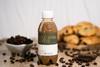
Avantium and Klöckner Pentaplast to explore plant-based polymer use in food packaging
Avantium has signed a capacity reservation agreement with Klöckner Pentaplast (kp films) to explore the use of its plant-based polymer PEF (polyethylene furanoate), Releaf, in thermoformed food packaging applications, including food trays and other packaging designed to protect fresh and prepared foods.
-
 Article
Unilever, P&G, Nestlé and more join recyclable, flexible paper consortium
Unilever, Nestlé, PepsiCo, Procter & Gamble, Colgate-Palmolive, and Mars are founding members of the Ellen MacArthur Foundation’s new PaperFlex Consortium, which aims to drive innovation in recyclable and biodegradable paper-based flexible packaging.
-
 Article
Inverted cup from Amcor and Ge Wu An to serve wet pet food in one clean piece
Amcor and premium pet food brand Ge Wu An have unveiled Li Kou, an inverted cup designed to help consumers transfer wet food into a bowl in one clean piece.
-
 Article
Südpack unveils mono-PP pouch solution for yoghurt drink market
Südpack has launched a recyclable, mono-material polypropylene (PP) flexible pouch aimed at the drinkable yoghurt market.
-
 Article
Aliplast recycles over 90% of Cantina Pizzolato’s flexible plastic from wine
Aliplast and Cantina Pizzolato report that they recovered and recycled over 90% of the plastic films used to package and transport wine in 2025, contributing to the development of a circular production model.
-
 Article
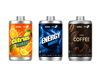
PET beverage can with EcoFloat sleeve revealed by ALPLA and CCL Label
ALPLA and CCL Label have developed a stackable, recyclable PET beverage can with a full-body shrink sleeve – designed to be a ‘quickly scalable’ alternative to aluminium cans.
-
 Podcast
Sustainability Perspectives: Unpacking PPRW requirements with Constantia Flexibles
August 12th was an important milestone for the PPWR, but the date was just a first step in an ongoing process, with further detailed requirements coming into force between now and 2030. Martina Schildendorfer, Innovation & Product Sustainability Manager at Constantia Flexibles, discusses industry readiness, requirements, challenges and next steps with Elisabeth Skoda.
-
 Article
Mondelēz International replaces PET cookie trays with FSC-certified paper
Mondelēz International has announced it has replaced the rigid PET trays for its flagship European cookies range with FSC-certified paper trays, spanning over 115 cookie products across eight brands.
-
 Article
Coveris develops mono-material sleeve with 30% less material for Dr Beckmann
Coveris has unveiled its mono-material sleeve solution developed for Dr Beckmann, said to use around 30% less material than conventional shrink sleeves and help address current and evolving regulatory requirements.
-
 Article
Exchange for Change reveals intended producer fees for UK DRS
The Exchange for Change organisation delivering the UK’s Deposit Return Scheme (DRS) has announced the intended producer fees for the scheme, due to launch in October 2027.
-
 Article
‘Flushable’ biobased packaging for household cleaning revealed by SmartSolve
SmartSolve has launched PureNil 0 – a biobased, printable and ‘flushable’ pouching material for single-dose household cleaning products, designed to disperse in water.
-
 Article
Amcor and Tiptree partner on 30% PCR shrink films and pallet wrap
Amcor has collaborated with jams and preserves brand Tiptree to deliver certified 30% post-consumer recycled (PCR) films for Tiptree’s shrink films and pallet stretch wrap, aiming to help the brand prepare for upcoming UK Plastic Packaging Tax (PPT) changes while maintaining logistics packaging performance.
-
 Article
SunDance expands flexible pouch solution for cereal market
Print, packaging and marketing company SunDance has expanded its Pouch flexible packaging solution into the cereal market, offering an alternative to the traditional bag-in-box format.
-
 Article
X-Rite Pantone’s portable spectrophotometer to optimize colour print
X-Rite Pantone has revealed its new portable spectrophotometer, eXact 2 Basic – a device set to unlock consistent colour workflows, reduce waste, and improve efficiency alongside digital workflow solutions.