




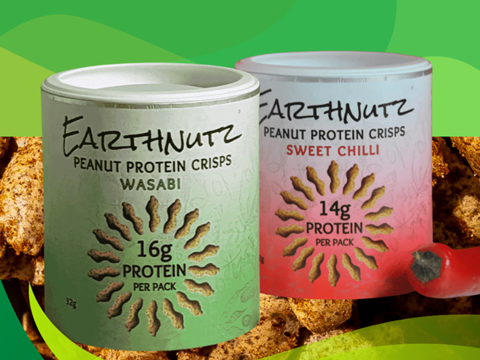
Earthnutz is the latest company to adopt Sonoco’s paper-based can, said to contain up to 64% post-consumer recycled content, for its high-protein peanut crisps.
Sonoco has designed its 95% paper-based can to minimize plastic content and shipping waste – thus keeping carbon emissions law in production and transit. Simultaneously, it aims to maintain the strength and durability to protect products during transportation and on the shelf.
As well as unlocking ‘strong’ branding visibility, the format aims to lessen the snacking category’s reliance on hard-to-recycle flexible plastics.
Earthnutz hopes that the format’s barrier protection will maintain the crispness retention of its products. At the same time, the pack is set to help the brand pursue its sustainability targets, with the can expected to be recycled in the UK’s household paper waste streams.
Transitioning into a paper can is also set to meet the preferences of consumer and retail channels for sustainable packaging design.
“We wanted to take something as familiar and satisfying as crisps and turn it into something you’d boast about eating,” said Abby Singh, founder of Earthnutz. “Having turned down hundreds of flexible plastic and mixed material options, we finally discovered Sonoco’s paper can. It’s allowed us to achieve both our health and sustainability goals without compromise.”
“We are proud to support brands that are rethinking nutrition, transparency, and sustainability,” added Siobhan Blinkhorn, UK sales manager at Sonoco. “Earthnutz brings a compelling proposition to a growing functional snacking market, and we’re pleased our packaging technology plays a role in Earthnutz’s mission.”
Last year, Sonoco helped several other brands adopt its paper-based can, including DoggyLove for its plant-based pet treats and NaturDrops for its natural dog snacks.
In similar news, Graphic Packaging recently launched its Boardio recyclable rigid paperboard canister. Believed to reduce over 90% of plastic compared to rigid containers, it also intends to replace glass and metal alternatives.
If you liked this story, you might also enjoy:
The ‘complex reality’ of reusable packaging in Europe
Single-use packaging versus reusable packaging: Which is more sustainable?
The ultimate guide to global packaging sustainability regulation














No comments yet