

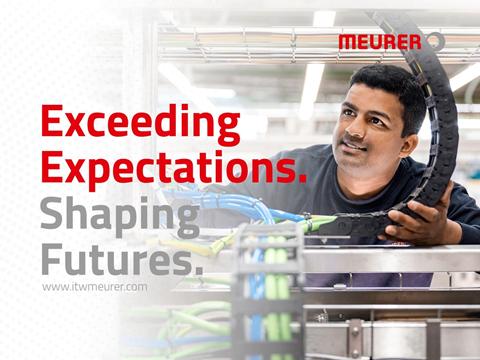
meurer’s approach to automation aims to stabilize line performance through eliminating structural variability, supporting manufacturers in identifying structural efficiency gaps and ‘unlocking hidden performance potential’. Read on to find out more in this edition of the Spotlight.
Designing stable packaging systems - why intelligent automation is redefining line performance
“Exceeding Expectations. Shaping Future.” is more than a brand claim for meurer – it reflects a clear way of working. meurer approaches automation as system architecture: stabilizing line performance by eliminating structural variability, not by optimizing isolated machine functions. In doing so, meurer acts as a technology-driven pace-setter, translating emerging production realities into scalable, high-performance solutions.
Rather than viewing automation as a standalone technology upgrade, meurer positions itself as a long-term system partner, supporting manufacturers in identifying structural efficiency gaps, stabilizing processes, and unlocking hidden performance potential. In increasingly complex production environments, sustainable performance is no longer defined by isolated machine functions, but by the intelligent interaction of mechanics, control systems, material flow, and human expertise.
Why automation is becoming a systemic imperative
Across industries such as FMCG, beverages, and liquid carton packaging, manufacturers face converging challenges. Production systems are becoming faster and more interconnected, while product diversity continues to increase. At the same time, operational realities are shaped by labour shortages, shift variability, staff rotation, and rising efficiency expectations.
Even in highly automated lines, efficiency losses often originate not from technical failures, but from predictable operational constraints: repetitive manual tasks, micro-delays, varying handling routines, and short-term staffing gaps introduce variability into otherwise tightly controlled systems. The strategic question is therefore shifting: not “How do we replace people?” but “How do we design processes that are inherently stable, reproducible, and less sensitive to variability?”
Stability as the new performance frontier
In many modern high-speed lines, forming, filling, sealing, and downstream handling operate at impressive cycle rates, supported by sophisticated line control systems. Yet overall line efficiency is frequently influenced by seemingly minor manual activities that remain embedded in the system architecture. One prominent example is manual magazine loading.
Operators replenishing magazines with blanks, trays, or die-cut parts perform an essential function. However, under high-speed conditions, even brief refill interruptions or micro-delays can propagate through the entire line dynamic. What appears to be a small operational step can evolve into a structural limitation – not because of individual performance, but because manual intervention introduces inherent discontinuity into otherwise continuous systems.
From structural insight to practical automation
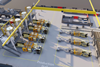
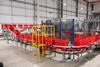
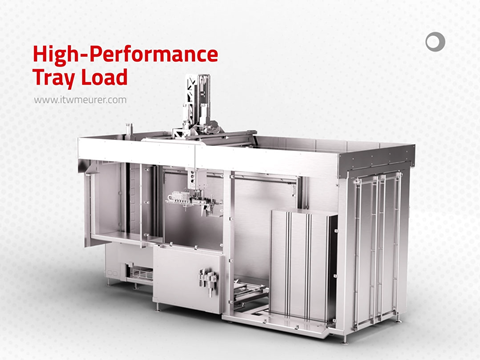
Addressing such constraints is precisely where meurer’s system-oriented automation philosophy comes into play.The High-Performance Tray Load was developed to automate the entire path from pallet to magazine, transforming a discontinuous manual process into a continuous, synchronized material flow.
Pallets with blanks or trays are automatically de-stacked, aligned, and transferred into the magazine – reproducibly and aligned with line speed. Rather than functioning as a standalone robotic add-on, the Tray Load is designed as an integrated building block of the overall system architecture.
Refilling becomes continuous instead of stop-and-go. Refill related micro-stoppages are significantly reduced. Variability caused by handling differences is minimized. The result is not simply automation, but measurable system stabilization.
Automation as capability amplification
Crucially, automation solutions such as the High-Performance Tray Load are not about eliminating the operator’s role. They are about redefining it. As repetitive manual tasks are reduced, operators gain the opportunity to focus on activities that increasingly define modern production excellence: monitoring and interpreting line data, identifying performance deviations, driving technical optimization, and ensuring reproducible operation.
Automation thus becomes a mechanism for capability amplification rather than substitution. Human expertise shifts from physical intervention toward analytical and process-oriented responsibilities – areas where it delivers the highest operational value.
Performance gains beyond labour reduction
For manufacturers, the impact of intelligent automation initiatives is multidimensional. Reducing refill interruptions improves availability and process continuity, directly supporting more stable OEE. High-performance equipment can operate closer to rated capacity, effectively unlocking hidden production potential without upstream investment.
From an economic perspective, many real-world scenarios demonstrate that savings from reduced manual handling combined with improved line stability generate substantial annual efficiency gains. Investment evaluations frequently indicate payback periods well below typical automation benchmarks.
Automation therefore evolves from a technology decision into a strategic investment lever.
Designed for real production environments
True to its practical orientation, meurer develops solutions for real plants rather than idealized greenfield scenarios.
The High-Performance Tray Load is engineered with brownfield integration in mind. Compact layouts and clearly defined interfaces enable retrofitting into existing lines, often without major structural modifications or extensive conveyor redesign.
This pragmatic design philosophy lowers investment barriers while accelerating the transition toward higher automation levels.
Designing stable systems as a strategic priority
With solutions such as the High-Performance Tray Load, meurer reflects a broader industry shift. The next stage of automation is defined less by isolated machine speed and more by system stability, reproducibility, and economic impact. By addressing structural constraints, manufacturers gain measurable output, improved predictability, and greater resilience against operational variability.
Automation, in this context, becomes not just an engineering discipline, but a core element of production strategy.
About meurer
meurer Verpackungssysteme GmbH develops and implements high-performance end-of-line solutions for demanding production environments. With a strong focus on integrated automation, compact layouts, and long-term operational reliability, meurer supports its customers in unlocking efficiency potential and future-proofing their packaging processes – fully aligned with its promise: Exceeding Expectations. Shaping Future.
For more information, please visit www.itwmeurer.com.
This content was sponsored by meurer.