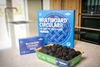





In this edition of the Spotlight, UPM Biochemicals details how its UPM Circular Renewable Black material, derived from lignin, remains detectable in NIR sorting systems used across Europe. It also aims to align with the upcoming PPWR legislation and UK Plastics Pact requirements.
The industry has long understood the problem: traditional carbon black pigments absorb near-infrared (NIR) light, making black plastics invisible to optical sorting systems used across Europe. What was once a recycling inefficiency is now a regulatory challenge.
Under the upcoming Packaging and Packaging Waste Regulation (PPWR), packaging must be designed so it can be “collected, sorted and recycled at scale” using existing infrastructure. Manufacturers will need to provide declarations of conformity demonstrating recyclability. In practice, packaging that relies on optical sorting must be NIR-detectable to meet this requirement.
At the same time, initiatives such as the UK Plastics Pact have placed non-NIR-detectable plastics on elimination lists, accelerating the need for compliant material solutions.
Designed for Existing European Systems
UPM Circular Renewable Black™ addresses this at the material level. Unlike fossil-based carbon black, the lignin-derived pigment remains detectable in NIR sorting systems commonly used in Europe.
Black packaging stays visible in established recycling streams without requiring infrastructure changes. This shifts black from a potential compliance risk to a circular solution aligned with current and forthcoming regulatory expectations.
Seamless Integration into Production
Adoption must be practical.
UPM Circular Renewable Black™ integrates into existing masterbatch and polymer processing workflows without requiring changes to processing conditions. It maintains expected melt behaviour, polymer performance, and deep, premium colour aesthetics.
The innovation lies in the chemistry — not in demanding redesign of equipment or processes. For converters and brand owners, this reduces transition risk while protecting product consistency.
Verified Sustainability and Traceability
Beyond detectability, sustainability claims must be documented and defensible. The pigment is derived from renewable lignin sourced from sustainably managed forests, supported by FSC® and PEFC certification and ISCC PLUS chain-of-custody transparency.
A cradle-to-gate life cycle assessment conducted in accordance with ISO 14040 and 14044 standards demonstrates a carbon-negative footprint for the pigment compared to fossil carbon black. In an environment of increasing regulatory scrutiny around environmental claims, this level of verification matters.
From Evaluation to Implementation
For stakeholders balancing regulatory compliance, climate targets, and brand expectations, the pathway is clear: maintain the premium black aesthetic while enabling recyclability within existing European systems.
UPM Circular Renewable Black™ turns black packaging from a limitation into a future-ready material choice.
Request your free sample and evaluate Circular Renewable Black™ at: www.upmbiochemicals.com/industries/packaging/upm-circular-renewable-black/
This content was sponsored by UPM Biochemicals.