



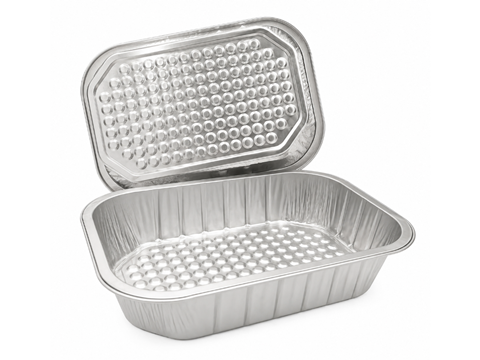
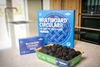
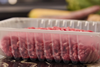
i2r Packaging Solutions has designed its new aluminium tray to replace hard-to-recycle absorbent soakaway pads in fresh meat and seafood packaging.
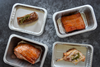
The Dimple Base Tray features an engineered base that captures and retains liquid within the tray itself – combining the functions of the traditional tray and absorbent pad combination.
Reportedly, testing has revealed that the pack can retain up to 16ml of liquid and match the performance of a conventional absorbent pad, all while delivering a 30% improvement in strength compared to a standard tray.
Furthermore, the simplified pack structure is anticipated to improve recyclability, avoid waste, and increase packaging strength. i2r describes aluminium as one of the world’s most recyclable packaging materials, and using it in an absorbent tray application negates the need for a hard-to-recycle absorbent pad.
i2r’s smoothwall trays are already said to contain 54% recycled content, and the company has set a target of 90% by the end of 2026.
After proving the concept with its first Dimple Base profile, i2r plans to extend the technology across further tray formats and fresh food applications.
“For decades, absorbent pads have been viewed as an essential part of fresh protein packaging,” said Tom Cliffe, sales director at i2r. “We challenged that thinking by redesigning the tray itself, creating a solution that delivers the same performance while removing an unnecessary packaging component.
“The Dimple Base Tray demonstrates how intelligent design can simplify packaging, improve recyclability and deliver practical benefits for manufacturers, retailers and consumers alike.
“With billions of fresh meat and seafood packs produced every year, even small design changes can have a significant impact. The Dimple Base Tray offers the industry a practical, scalable solution that improves sustainability without compromising performance.”
Previously, i2r released six new recyclable aluminium trays for ready-to-cook foods; its B Series range sought to replace single-use plastics while enhancing visual appeal and functionality.
In another development, Sirane’s Earthpad – an absorbent pad comprised of cellulose absorbent with an outer layer of paper applied using barrier coatings – was previously approved for recycling by OPRL.
Elliott Absorbent Products also sought to unlock the lowest carbon footprint of any high-absorbency pad on the market with its UniDry range. Designed for use with fresh meat and fish, these pads claimed to use half the cellulose and plastic required to make traditional pads, and to cut emissions from shipping miles by 66% compared to traditional airlaid pads.
Meanwhile, Faerch and Norfersk have just implemented 70% food-grade, tray-to-tray recycled PET into their new meat trays, and Flatlantic has adopted BEWI’s certified recycled EPS boxes to ship its fresh flatfish – a move hoped to reduce its carbon footprint by 30%.
If you liked this story, you might also enjoy:
The ultimate guide to packaging innovation in 2026
Packaging and Packaging Waste Regulation: what to know in 2026
Everything you need to know about global packaging sustainability regulation









No comments yet