

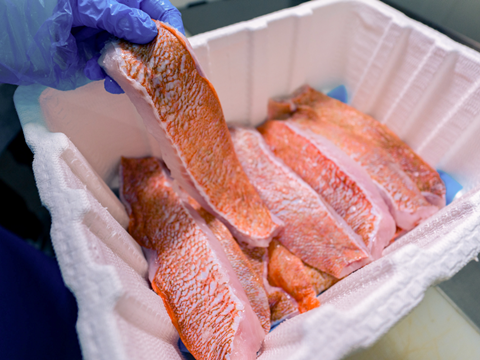
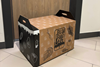
PAPACKS offers its Fiber Box, a moulded fibre transport container made from virgin wood fibres and industrial hemp, as a durable, nestable, and recyclable solution for transporting seafood.
According to PAPACKS, the material is food-safe in line with EU Regulation 1935/2004 and verified by independent laboratory testing. Its high fibre density is set to prevent the absorption of meltwater and condensation moisture.
Compared to conventional, non-nestable boxes, the Fiber Box’s nestable design is said to save up to 66% of storage space for empty containers. This is anticipated to reduce warehousing costs and empty transport runs significantly.
The box is designed to be single-use to avoid costs related to return logistics and tracking infrastructure. Once empty and cleaned, it is classified as paper/cardboard (PAP 21) and can reportedly be recycled via existing paper recycling infrastructure.
TransGourmet Seafood provided its knowledge of cold chain requirements in the seafood market to assist in developing the Fiber Box. In February 2026, it conducted a multi-day validation at its Bremerhaven site, including cold storage operations, transport and standard warehouse routines.
Apparently, the packaging met all requirements for over five days at 0–2 °C and 90–95% relative humidity. It will now be integrated into TransGourmet Seafood’s ongoing operations.
The Fiber Box is also an open initiative, with PAPACKS inviting other market participants to utilize the concept for their own transport operations. It also recommends that customers conduct their own tests to verify the box’s suitability for their specific applications.
Validation is currently underway for other logistics applications with food safety, water resistance, and nestability requirements, including fresh produce, fruit and vegetables, gift boxes, picnic boxes for ice and beverages, and floriculture.
The Fiber Box is manufactured at the BRCGS-certified PAPACKS Gigafactories in the Arnstadt/Erfurt region. Reportedly, these facilities achieve a production capacity of up to 30 million units per year and serve industry-wide demand, including worldwide delivery.
Customers can order standard sizes of medium (approximately 11L, 5,760 boxes per load) and large (approximately 24L, 2,880 boxes per load) by the truckload. Both are optimized for standard pallet configurations. Custom formats are also available on request.
Multiple patent families are in place for the Fiber Box’s design, formulation, and production technology. PAPACKS offers licensing partnerships for companies interested in local production.
PAPACKS was previously nominated for, and won, a Sustainability Award under the Pre-Commercialized Recyclable Packaging category for its moulded fibre bottle. Designed for liquid and non-liquid products such as dietary supplements, the bottle is available with an optional plant-based barrier, recyclable at end-of-life, and claims to reduce CO2 emissions.
In a similar development to the Fiber Box, DS Smith has launched DryPack, a corrugated board seafood box that claims to keep fish fresh at under 40°F for over 40 hours. At the same time, the solution is expected to help processors lower both costs and CO2 emissions.
If you liked this story, you might also enjoy:
The ultimate guide to packaging innovation in 2026
Packaging and Packaging Waste Regulation: what to know in 2026
Everything you need to know about global packaging sustainability regulation










No comments yet