



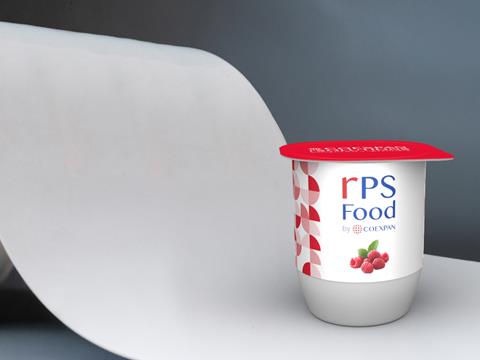
In this edition of the Spotlight, Coexpan (part of Grupo Lantero) details how its rPS Food enables up to 100% post-consumer recycled polystyrene in food-contact applications - combining performance, flexibility and a drop-in approach that ‘delivers circularity without compromise’.
As circularity moves from ambition to obligation, the packaging industry is under increasing pressure to deliver solutions that are not only sustainable, but also operationally viable at scale. For materials such as polystyrene, this means overcoming long-standing challenges around recycling, quality consistency and industrial feasibility.
Coexpan addresses this shift with rPS Food, an innovative solution designed to bring true circularity to food-contact polystyrene applications.
rPS Food enables the integration of up to 100% post-consumer recycled polystyrene in packaging processes such as form-fill-seal (FFS) and thermoforming, offering a practical and scalable alternative to virgin materials. Unlike conventional recycled solutions, it delivers the same functional performance required for demanding food applications, ensuring product protection, shelf life and consumer appeal remain unchanged.
A defining feature of rPS Food is its drop-in capability. Manufacturers can adopt the solution without modifying existing production lines, maintaining the same machinery, line speed and operational efficiency. This removes one of the key barriers to adoption and enables a faster transition towards more sustainable packaging.
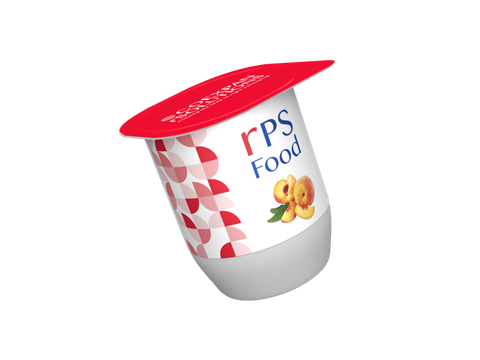
At the heart of the solution lies the concept of ‘Cup-to-Cup Circularity’ - a closed-loop system in which a yogurt cup can be mechanically recycled and transformed back into a yogurt cup, without loss of quality. This approach not only reduces reliance on virgin fossil resources but also strengthens the recycling ecosystem by giving real value to post-consumer material streams.
Coexpan supports this model through full in-house control of the value chain, ensuring consistent quality, traceability and a stable supply of recycled feedstock. This level of control helps overcome historical concerns around variability in recycled materials and provides brand owners and converters with the reliability they need.
“rPS Food demonstrates that circularity is not just a concept but an industrial reality,” says Walter Turci, R&D director at Coexpan. “We have developed a solution that enables our customers to move towards recycled content seamlessly, without compromising performance or efficiency.”
“With rPS Food, our customers can reinforce consumer trust, enhance brand value and demonstrate credible leadership in sustainability, while proactively anticipating future regulatory requirements,” said Iain Sturges, commercial director at Coexpan.
In addition to operational benefits, rPS Food supports companies in addressing today’s regulatory and market expectations. By incorporating high levels of post-consumer content, it helps reduce the carbon footprint, lower dependence on virgin material and anticipate evolving sustainability requirements. At the same time, it strengthens brand positioning as a credible leader in circular packaging.
Flexibility is another key advantage. With adaptable rPS content levels, companies can choose the option that best fits their objectives, operational needs and sustainability strategy.
By combining circular design, industrial feasibility and performance consistency, rPS Food enables a new generation of polystyrene packaging aligned with the future of the industry - where circularity is not just an ambition, but a scalable reality.
This content was sponsored by Grupo Lantero.