





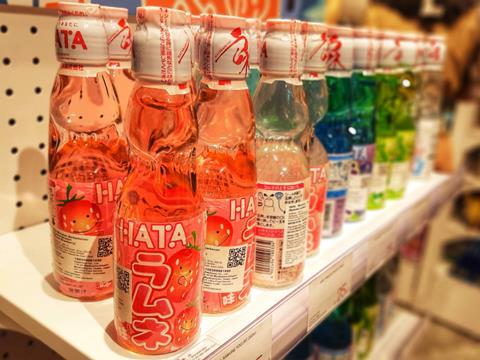
In the latest edition of our Iconic Packs series, we take a look at the Ramune soda bottle, made famous in Japan due to its unusual shape and opening system. We detail the journey from its British origins in the 19th century to the creation of its ‘Ramune’ name, and the shifts between the ‘classic’ glass bottle to PET and back again.
The start of ‘Lemonade Ramune’
Ramune as a flavour is believed to have originated from Scottish-born pharmacist Alexander Cameron, who relocated to Kobe, Japan and developed a carbonated lemonade beverage in in 1869, known as ‘Lemonade Ramune’. A blog post by Shonen Cream Soda states that the name ‘Ramune’ is derived from the English word ‘lemonade’.
The blog adds that in the early 20th century, the Codd-neck bottle was introduced to contain carbonated beverages by British inventor Hiram Codd. The bottle consists of a marble held in place by the pressure of the carbonation. To open the bottle, a plastic device is provided to push the marble into the bottle, creating a fizzy splash.
The ramune ‘ball’ bottle
However, an article by Japanese ramune producer Hata Kosen provides a different origin story. The article displays a timeline of the history of ramune from 1809 to the present day.
The company states that in 1843, a ramune bottle with a ball was invented in England by Hyrum Gott who devised a manufacturing method of plugging with marbles, which became popular mainly in Europe. A decade later, Hata Kosen says ramune was introduced to Japan when Admiral Perry arrived in Uraga on a black ship and entertained the officials of the shogunate with the ‘carbonated lemonade’ that was on board.
Apparently, in 1865 Hanbei Fujise of Nagasaki sold lemonade under the name ‘Lemon water’, but the name did not take and ‘Ramune’ became popular later on. By 1904, Hata Kosen states that only Japan and India still used the ramune bottle with a ball cork as a sealing method, due to the spread of cider. With the advent of cider bottles using a cap, a distinction developed between bottles with caps being referred to as cider bottles, and those with a ball being referred to as a ramune bottle.
In 2013, Hata Kosen began developing all-glass bottled ramune, but the company claims that the gasket proved difficult, which is essential for the marble stopper. The company searched for the ‘optimal combination’ for the bottle, including selecting a material and shape that could withstand a variety of anticipated conditions.
Following this, in 2025 the all-glass bottled ramune was revived as ‘HATA PREMIUM’, featuring a wooden ball stopper. The company says it selected a shape that fit the hand and the length and diameter of the ball part that was optimal for opening the bottle and made multiple prototypes. The plug is completed by carving out each piece of wood.

Cultural impact and PET bottles
Last year Japanese tableware company Musubi Kiln published an article describing the beverage as a “nostalgic time machine” for many people in Japan, with the glass bottle evoking memories of “neighbourhood festivals, hot summer days, and the screeching sound of cicadas”. Author Hirata Paku Kayoko notes that May 4th is ‘Ramune no Hi’ or Ramune Day in Japan.
Kayoko says that although ramune’s popularity peaked in the 1950s, it never completely disappeared and is enjoying a resurgence among younger generations, thanks to a renewed interest in retro Shōwa-era culture (a period of Japanese history corresponding to the reign of Emperor Shōwa).
Opening a bottle of ramune is described as an experience for the consumer:
“Using the included plastic plunger to press down firmly on the marble sealed in the neck, you release a satisfying “whoosh” of carbonation as the marble drops to a chamber in the bottle. The marble clinks inside the bottle as you drink, adding a playful charm to the enjoyment. It’s a unique ritual that makes every sip of ramune special.”
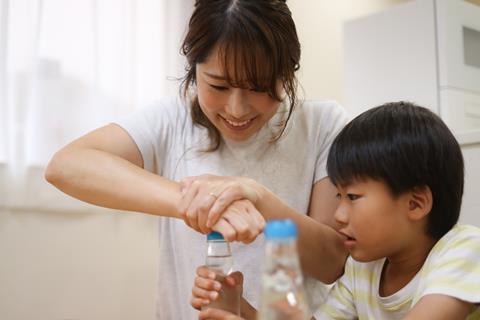
The article adds that the classic glass bottle design is slowly becoming rarer due to manufacturing costs and convenience - most ramune manufacturing companies have shifted their production overseas, and some have replaced the bottles with cheaper and lighter PET bottles. Kayoko says that while domestic brands such as Mitsuya Cider and Calpis Soda are available year-round in convenience stores and supermarket shelves, ramune is often tied to summer festivals and childhood memories.
“From melon to strawberry, yuzu to wasabi, curry to takoyaki sauce, the range of flavours is as diverse as Japan,” the author adds. Regional editions of the drink often incorporate local ingredients or specialties such as Hiroshima’s momiji manju-flavoured ramune.
It seems the association of the bottle with a certain time of year adds to its appeal for consumers, as well as its novel neck shape and opening mechanism. It will be intriguing to see whether the ‘iconic’ glass ramune bottle manages to persist in the current market, or if it will eventually be phased out by its PET counterpart.
If you liked this story, you might also enjoy:
The ultimate guide to packaging innovation in 2026
Packaging and Packaging Waste Regulation: what to know in 2026
Everything you need to know about global packaging sustainability regulation









No comments yet