
Kneipp trials Sonoco’s fibre-based can for limited-edition bath crystals
Kneipp has launched its limited-edition bath crystals in Sonoco’s fibre-based GreenCan packaging in a bid to unlock
Kneipp has launched its limited-edition bath crystals in Sonoco’s fibre-based GreenCan packaging in a bid to unlock

BioPak’s Huskee brand has developed an intelligent, IoT-enabled Smart Bin for reusable cups and containers – intended to simplify

What makes Coca-Cola’s glass bottle design so instantly recognisable? How did the design come about, and why has it done so well? We explore all these questions and more in the first of our Iconic Packs series, focusing on the history of significant packaging designs and why they’ve been so successful.
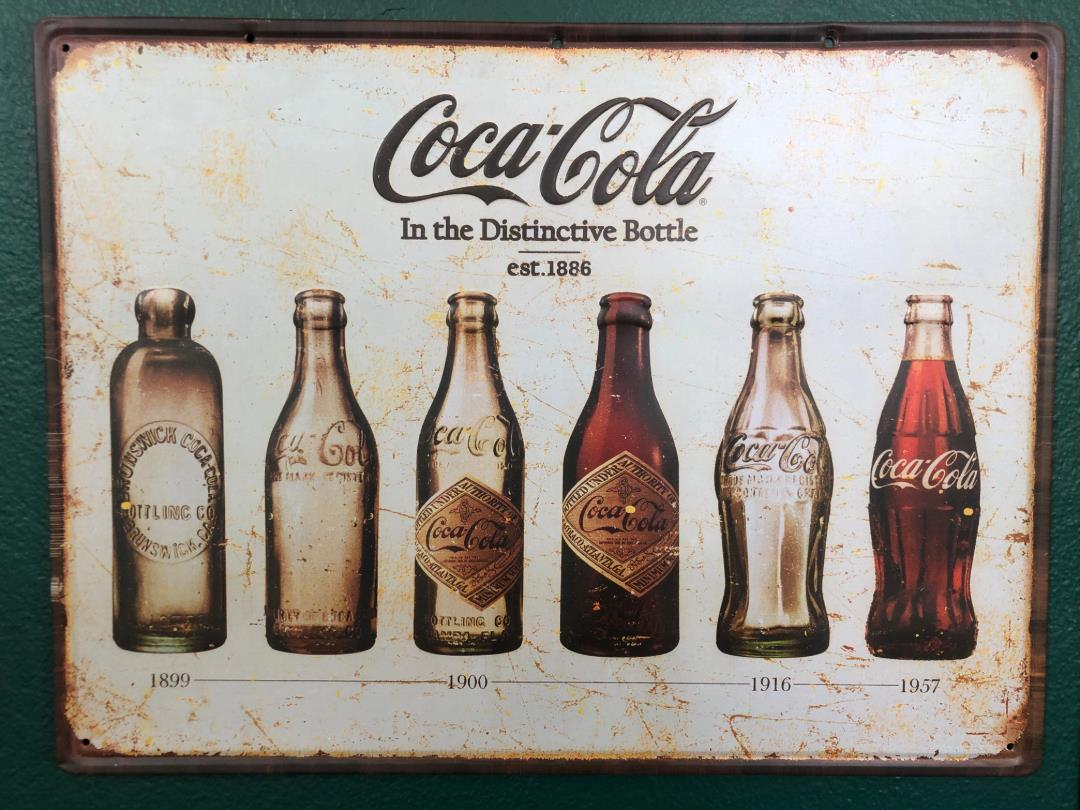
According to the company, the bottling of Coca-Cola began in 1899, when Chattanooga lawyers Joseph Whitehead and Benjamin Thomas negotiated the rights to bottle the drink, aiming to capitalize on its popularity in fountain form. By 1920, over 1,200 Coca‑Cola bottling operations had been established, using straight-sided brown or clear bottles.
The Coca‑Cola Company required that bottlers emboss the Coca‑Cola logo onto every bottle - however, competitor brands such as Koka-Nola, Ma Coca-Co, Toka-Cola and Koke apparently copied or modified the Spencerian script logo, creating confusion among consumers. In 1906, the company introduced a diamond shaped label with a colourful trademark in an effort to differentiate themselves.
Unfortunately, Coca‑Cola was often sold out of barrels of ice-cold water that would cause the labels to peel off. By 1912, the Coca‑Cola Bottling Company sent a note all of its members noting that while The Coca‑Cola Company had a distinctive logo, they did not have any way to protect their business.
In 1915, the Trustees of the Coca‑Cola Bottling Association voted to expend up to $500 to develop a specific Coca‑Cola bottle, with 8-10 glass companies across the U.S. receiving a brief to develop a “bottle so distinct that you would recognize if by feel in the dark or lying broken on the ground.” The winning entry came from The Root Glass Company, which created a contoured glass bottle with bulbous shape and ribbed exterior, inspired by the shape of a cocoa pod.
A patent registration was granted on November 16th, 1915, with the date was incorporated into the lettering on the final design of the bottle. Coca-Cola and the Root Glass Company entered a contract for six glass companies in the U.S. to use the bottle shape, with the name of the city placing the glass order to be embossed on the bottom of the bottle.
In 1951, the patents had expired – so the company approached the Patent Office arguing that that the bottle’s shape and “distinctively shaped contour” was so well known that it should be granted Trademark status. This was granted in 1961.
“The brilliance of the Coca-Cola bottle design lies in how seamlessly it connects form, function, and brand meaning. It’s one of the few packages that can be identified purely by outline,” states an article from Time Proof Design’s website. The company notes that the ‘ribs’ of the bottle add structural integrity, reducing breakage during shipping and cooling, and the form is ergonomically balanced, distributing pressure evenly across the glass.
The article highlights the contour design’s ability to scale across sizes, materials, and technologies without losing recognition. It adds that the design has integrated into global culture including Hollywood films, and the Coca-Cola bottle represents “togetherness, nostalgia, and happiness.”
“The bottle doesn’t just contain a product; it creates an experience. It feels right in the hand, and its sound when opened has become part of Coca-Cola’s emotional identity.”
In 2015, the Coca-Cola Bottle reached its 100th anniversary. The High Museum of Art presented an exhibition titled ‘The Coca-Cola Bottle: An American Icon at 100’, highlighting the changes and developments of the bottle’s design over the years.
The display pointed out that the 1915 patent contour bottle was too large to fit into delivery crates, due to its bulging centre. As a result, the Root Glass Company slenderized the original design for production. Advertisements proclaimed the new development, asking consumers to “demand it in the bottle.”
In 2002, the company reached out to Japanese design company Nendo to repurpose recycled glass from Coca-Cola bottles that had deteriorated over the course of extensive recycling. Nendo repurposed the old glass into a set of nesting bowls, which retained the ‘Georgia Green’ tint of the original glass and preserved the bottle’s lower shape, including the distinctive ridges produced in the bottle’s manufacturing.
As well as marking the transition from fountains to a bottled format, Coca-Cola’s glass bottle has had a significant cultural impact, both within the U.S and abroad. In 2015, an article by Jonathan Glancey for the BBC pointed out its use during World War II campaigns, statting that wartime posters depicted “grinning GIs setting off to war, Coke bottles in hand, and sharing a Coke with newly liberated children in Italy. Press photographers, meanwhile, sent back shots of battle-hardened infantry swigging Coke as they pushed towards the Rhine.”
Glancey added that during World War II, US forces drank an alleged “five billion bottles of Coke, shipped at a fixed price of five cents a pop”. Design wise, he said that the only significant change in the bottle’s 100-year history came in 1957 when Raymond Loewy and John Ebstein, his chief of staff, replaced the embossed Coca-Cola logo with bright white applied lettering.
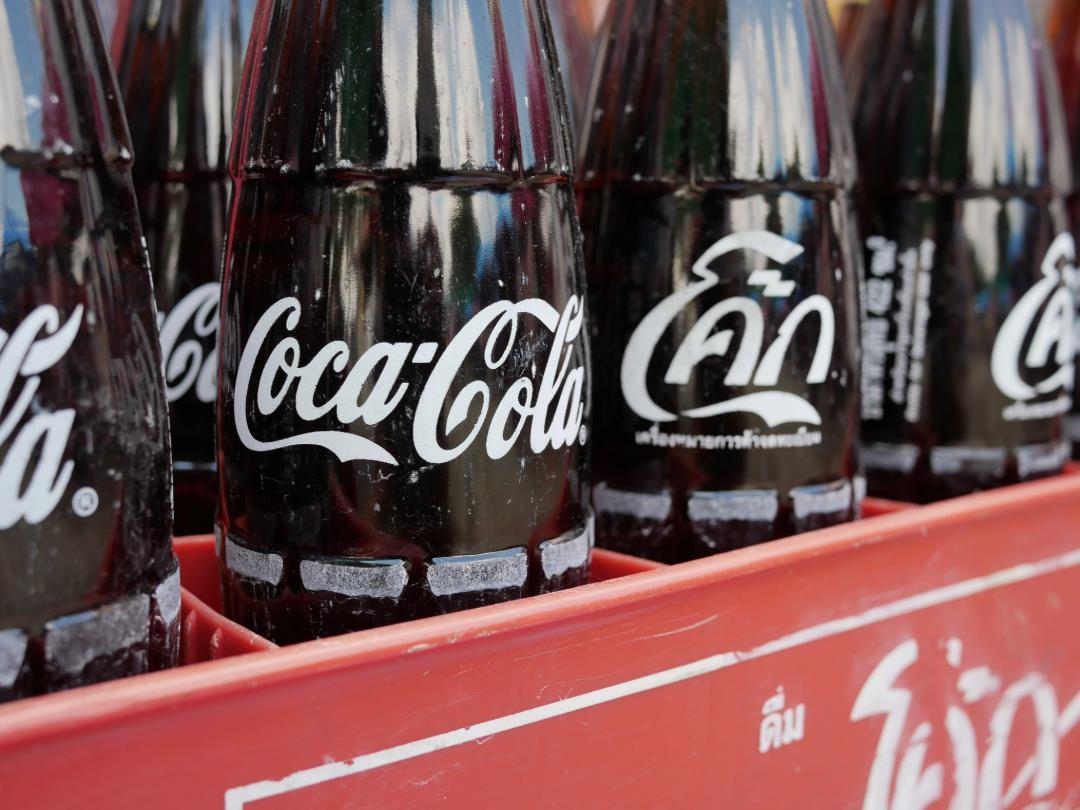
Of course, it’s impossible to talk about cultural significance without mentioning the brand’s many years of Christmas adverts, usually featuring a Santa figure. The Coca‑Cola Company began its Christmas advertising in the 1920s, with shopping-related ads in magazines like The Saturday Evening Post. In 1995, the glowing Coca-Cola truck first featured in TV adverts, accompanied by singing and eventually transitioning into real-life truck tours in the 2000s.
Aiming to reduce its environmental impact, Coca-Cola began using plastic bottles in the mid-80s. It was hoped that the move would increase recycling and improve efficiency.
However, glass bottles have seen a resurgence in recent years. In early 2022, The Coca-Cola Company revealed its intention to transition 25% of all beverage packaging across its global portfolio into refillable or returnable glass or plastic bottles and containers by 2030, and the following year Coca-Cola HBC invested €12 million into opening a new, high-speed line for returnable glass bottles at its Edelstal plant in Austria.
It will certainly be interesting to keep an eye on the company’s bottle designs over the coming years – while strong consumer recognition of the traditional glass bottle makes it unlikely any big aesthetic changes will take place, the use of both plastic and glass and the introduction of more returnable and reuseable containers marks the company’s aim to reduce its carbon footprint and implement both materials in its future plans.
If you liked this story, you might also enjoy:
The ‘complex reality’ of reusable packaging in Europe
Single-use packaging versus reusable packaging: Which is more sustainable?
The ultimate guide to global packaging sustainability regulation


In this edition of The Spotlight, Markem-Imaje examines how 2D coding is redefining the role of flexible packaging and


The material that consumer and industrial (C&I) applications rely on just got a sustainability upgrade. DuPont talks us


Utilizing vacuum aluminizing and laser-writing technologies, Shunho Creative (a sub-brand of Shanghai Shunho International) has developed a plastic-

Seeking to meet the challenges of the climate crisis and regulatory changes, Smurfit Westrock is investing in its manufacturing network,

ATS-Tanner’s banding solutions aim to reduce packaging waste, provide a practical alternative to plastic and improve recyclability. In

BioPak’s Huskee brand has developed an intelligent, IoT-enabled Smart Bin for reusable cups and containers – intended to simplify

How do sustainable packaging topics in the United States fit into the global conversation, and what can different regions learn

Pulpex has opened its first commercial manufacturing facility for fibre bottles, scaling up from pilot-scale production with an initial

ACG Packaging Materials has released RecycloPod PP Ultra, a polypropylene-based blister packaging system that offers recyclability and barrier protection