




All Beverages articles
-
 Article
Arpanon’s new lightweight bottle ‘cuts energy consumption by 50%’
Arpanon has launched a new ultra-lightweight 600 ml bottle that is 30% lighter and 50% less energy intensive than its previous version.
-
 Article
Capri Sun unveils limited-edition Big Pouch format
Capri Sun has revealed a limited-edition Big Pouch, said to be nine inches tall, twice as wide and hold roughly three times the amount of juice compared to a standard pouch.
-
 Article
Sustainability Awards Finalist Interview: Plastipak’s PET oxygen barrier technology
Plastipak is a finalist in the Circular Plastics category of this year’s Sustainability Awards with its O2Blox PET oxygen barrier technology, said to be compatible with PET recycling systems and support bottle-to-bottle recycling. We asked Plastipak’s director of International Packaging Development, Miguel Vieira, a few questions to find out more about this entry.
-
 Article
Tap&Reuse reusable cup scheme nominated for environmental contribution award
Circular&Co and the University of Chichester’s Tap&Reuse scheme for reusable cups – reported to have prevented the use of 28,000+ disposable cups so far – has been nominated for a Times Higher Education Award.
-
 Article
Inside the single-use cup investigation that put McDonald’s in hot water
The Fair Resource Foundation filed an enforcement request against McDonald’s Netherlands for breaking Dutch law and serving single-use cups to dine on-site. It resulted in a penalty notice.
-
 Article
Sustainability Awards Finalist Interview: Polytag’s UV tag system for recycling data
Nominated in the Thinking Big category of this year’s Sustainability Awards, we asked finalist Polytag a few questions to find out more about its UV tag and detection system to trace and provide packaging recycling data.
-
 Article
Husky launches tooling platform for lightweight beverage closures
Husky Technologies has announced the launch of its next-generation HyCAP 4.0 tooling platform, said to combine precision engineering, enhanced durability and production flexibility for beverage closure manufacturing.
-
 Article
Local associations support dropping mandatory plastic bottle deposit in France
France Urbaine, l’Association des Maires de France, Intercommunalités de France and the Cercle National du Recyclage praise the decision to scrap a mandatory deposit return system for plastic bottles in France, instead supporting such measures as extended producer responsibility and more funding for waste management services.
-
 Article
How did bottle caps become the latest victim of the culture wars?
Tethered bottle caps are a hot topic once again. One of our journalists has taken a closer look at the controversy through a consumer lens, but The Guardian posits that the controversy reflects a broader accusation in EU politics: overregulation.
-
 Article
Sealed aluminium foil excluded from EU’s tethered lid requirements
The European Commission has updated its single-use plastic guidelines to clarify that aluminium foil lids sealed onto a plastic beverage container are excluded from tethering requirements.
-
 Article
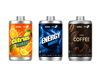
PET beverage can with EcoFloat sleeve revealed by ALPLA and CCL Label
ALPLA and CCL Label have developed a stackable, recyclable PET beverage can with a full-body shrink sleeve – designed to be a ‘quickly scalable’ alternative to aluminium cans.
-
 Article
Self-cooling can chills drinks at the push of a button and remains recyclable
deltaH Innovation’s self-cooling beverage can is designed to chill drinks at the push of a button while remaining both cost-effective and recyclable.
-
 Article
McDonald’s receives penalty notice for serving single-use cups on-site
McDonald’s Netherlands has received a penalty notice and must stop serving disposable cups for on-site dining after the Fair Resource Foundation filed an enforcement request with the Human Environment and Transport Inspectorate.
-
 Article
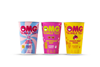
Bubble tea brand embraces Greiner Packaging’s separable cup and sleeve
OMG Bubble Tea has adopted Greiner Packaging’s K3 cups – complete with a separable cardboard sleeve and tear tab – for its ready-to-drink, on-the-go beverages.
-
 Article
Exchange for Change reveals intended producer fees for UK DRS
The Exchange for Change organisation delivering the UK’s Deposit Return Scheme (DRS) has announced the intended producer fees for the scheme, due to launch in October 2027.
-
 Article
‘Wearable’ Jason Voorhees mask built into Pabst Blue Ribbon box
Pabst Blue Ribbon and Horror, Inc. have revealed a limited-edition run of ‘wearable’ packaging themed around the iconic slasher villain Jason Voorhees – serving as a makeshift Halloween costume while celebrating the upcoming launch of Peacock and A24’s Crystal Lake series.
-
 Article
Sustainability Awards Finalist Interview: Constantia Flexibles’ lid made from low carbon aluminium
Constantia Flexibles’ ComforLid is a finalist in this year’s Sustainability Awards, nominated in the Climate category and said to deliver up to 43% lower CO2 emissions cradle-to-gate. We spoke with the company to find out more about this solution.
-
 Article
Taking a closer look at Grolsch’s swing-top bottle
Grolsch’s swing-top beer bottle has become an integral part of the brand – but how? We take a look at its origins, its development over the years, and its ongoing relevance in today’s market.
-
 Article
Strategic partnership to recycle PET bottles into preforms in Thailand
Indorama Ventures is entering a strategic partnership with Suntory Holdings, Suntory PepsiCo Beverage, and Iwatani Corporation to recycle PET bottles into preforms at commercial scale in Thailand.
-
 Article
Submissions open for Starbucks’ global innovation challenge
Starbucks has opened submissions for its global Innocentive challenge, searching for a transparent, plastic-free compostable material for single-use cold cups and lids.