
The European Union funded Circular project has announced three research grants totalling €110,000 to support university-led studies in Sri Lanka on the use, flow and impacts of single-use plastics (SUPs) in the country’s food sector.
Led by teams from the Faculty of Agriculture at the University of Ruhuna and the Faculty of Medicine and Faculty of Computing at the University of Kelaniya, the new research is expected to generate evidence to inform policy and business practices. The studies will examine how and where single-use plastics are used in the food sector, how they move through the food value chain and where interventions could have the biggest impact.
Focusing on selected food and beverage value chains in the Colombo and Galle districts, the research will also seek to identify practical opportunities to reduce plastic use, promote more sustainable alternatives and strengthen circular economy practices. Apparently, current data on plastic waste in Sri Lanka does not provide sufficient detail on the sectors, sources and types of plastics involved, limiting the ability of policymakers, businesses and other stakeholders to identify where plastic use can be most effectively reduced.
The three research teams will use data collection, waste-flow mapping, environmental and public health assessments and life-cycle approaches to examine these challenges, hoping to identify opportunities to improve resource efficiency and promote more sustainable packaging and waste management practices. The project is co-funded by the German Federal Ministry for Economic Cooperation and Development (BMZ) and jointly implemented by Expertise France (EF), the Food and Agriculture Organization (FAO) and Deutsche Gesellschaft für Internationale Zusammenarbeit (GIZ) GmbH.
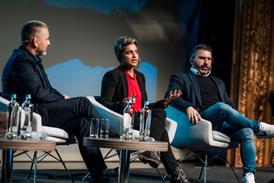
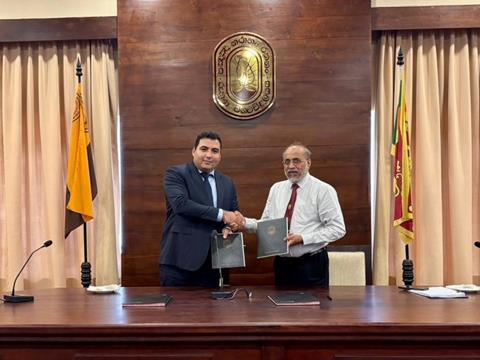
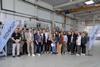
Speaking at the grant signing ceremony at the University of Ruhuna, Mahmoud Gaballah, CIRCULAR project manager at Expertise France, said:
“Through our research grant programme, we aim to generate evidence that can contribute to better policy, planning and decision-making, while also strengthening collaboration between researchers, policymakers and practitioners.”
In similar news, international consortium and EU flagship project BIOWRAP launched in June, aiming to develop and scale up PapairWrap - said to be the ‘first’ fully paper-based bubble wrap - to an industrial scale. The project consists of 14 partner organisations from Germany, Portugal, Austria, the Netherlands, Spain, Denmark and Poland including paper manufacturers, mechanical engineering firms, and research institutions.
This month, a pilot conducted by the EU-funded ReBioCycle project has reportedly proven that mixed plastic waste can be chemically recycled into ‘virgin-quality’ PLA under industrial conditions. Working alongside TotalEnergies Corbion, Torwash and other industrial partners, the consortium claims to have demonstrated that a PLA recycling process is technically viable beyond the laboratory and unlocked a ‘practical pathway’ for integrating bioplastics into existing waste streams and recycling systems.
If you liked this story, you might also enjoy:
The ultimate guide to global packaging sustainability regulation in 2026
PPWR timeline: the key dates to know








No comments yet