
Recycled plastic pallet to slot into automated fresh produce supply chains
Tosca’s recycled and reusable euro-size pallet, developed alongside Cabka, aims to help fresh produce supply chains comply with
Tosca’s recycled and reusable euro-size pallet, developed alongside Cabka, aims to help fresh produce supply chains comply with

Pulpex has opened its first commercial manufacturing facility for fibre bottles, scaling up from pilot-scale production with an initial
The New European Reuse Alliance (New ERA) is spearheading an industry-led initiative that seeks to develop shared principles, a

Ayuda enAcción and adaPETation (IMG Group) have announced the second phase of the Bamagreen project in West Africa, which transforms plastic waste into products for construction and electrification and recycled flakes that can be re-introduced into the value chain.
The project has received funding from the Spanish Agency for International Development Cooperation (AECID), in line with its Sixth Master Plan and the Country Partnership Framework for Mali. It is expected to create jobs, promote the social inclusion of young people and women and strengthen the resilience of vulnerable and displaced communities in Bamako and the Ségou region.
Bamagreen: Phase II is part of Plastic2Prosperity, adaPETation’s global initiative to provide advanced recycling technology adapted to local conditions, combined with a community-centred approach. The project is expected to recover and valorise more than 960 tonnes of plastic waste annually, provide training in recycling and circular production to 150 people, directly benefit 8,500 people and indirectly improve the lives of more than 28,300 residents of Bamako.
The Bamagreen project adds to IMG Group’s experience in Portugal, where more than 200,000 tonnes of plastic waste have reportedly been recycled and transformed into high-quality products. In Mali, the Group says this technology is being adapted through semi-industrial machinery and scalable modular systems capable of processing up to 80 tonnes of plastic per month.
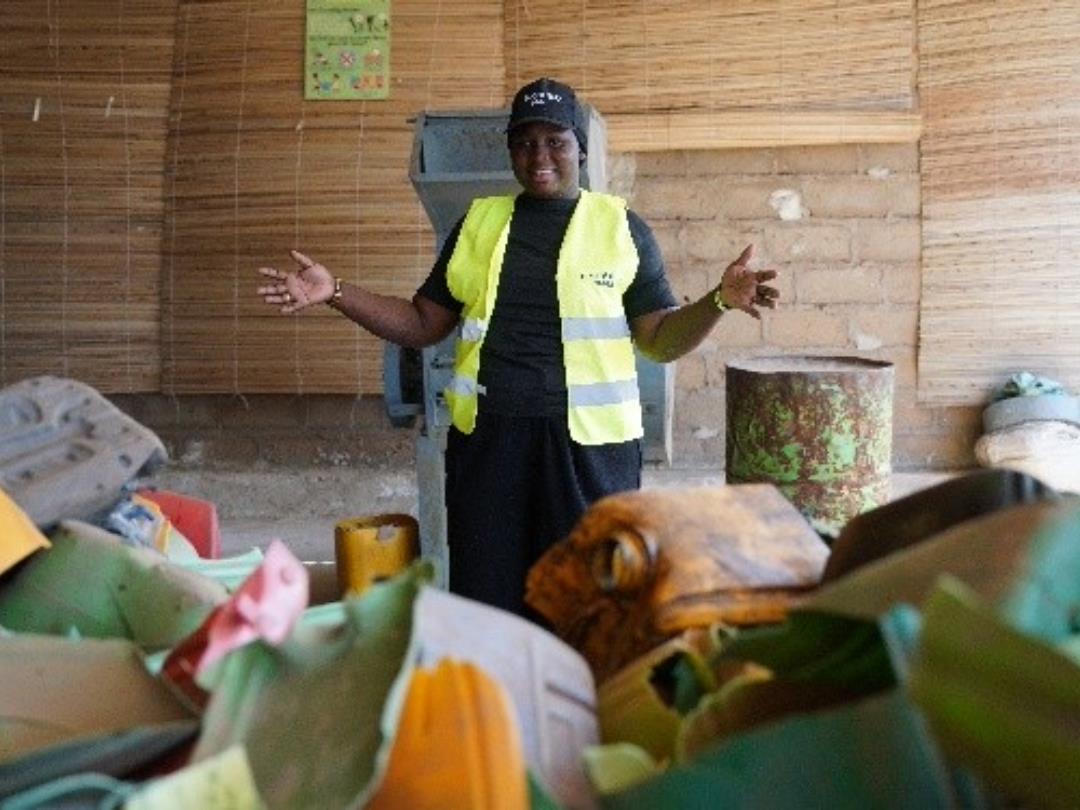
The intervention is based on a multi-stakeholder approach that brings together civil society organisations, the private sector, social enterprises, local authorities and government technical services to promote sustainable and replicable solutions. The anticipated outcomes of the Bamagreen project include strengthening the recycling value chain through collection, processing and commercialization activities; creating ‘green’ training and employment opportunities; promoting reforestation and environmental awareness initiatives and encouraging local innovation and knowledge management.
Bamagreen seeks to close the plastic loop from collection to the production of certified materials, reducing dependence on imports and lowering the carbon footprint. It is also said to contribute to the United Nations’ Sustainable Development Goal (SDG) 12.5 by promoting the reduction, recycling and reuse of plastic waste.
Back in March, Indorama Ventures, Nigerian Breweries and Genesis Energy entered a strategic partnership to establish ‘one of Africa’s largest’ recycled PET (rPET) production facilities in Lagos, Nigeria, anticipated to produce up to 45,000 tonnes of food‑grade rPET resin annually. The initiative aligns with Nigeria’s National Policy on Plastic Waste Management, introduced in 2020 to strengthen collection, recycling, and circular economy solutions, with the goal that all plastic packaging be recyclable, biodegradable, compostable, or reusable by 2030.
In other news, Project STOP, co-founded by Borealis and Systemiq, says it expanded access to end-to-end waste management services to 772,485 people in 2025, aiming to establish Indonesia’s first regency-wide circular waste management system in Banyuwangi Regency, East Java. The programme has apparently created 276 full-time-equivalent jobs, strengthening local economies.
If you liked this story, you might also enjoy:
The ultimate guide to packaging innovation in 2026
Packaging and Packaging Waste Regulation: what to know in 2026
Everything you need to know about global packaging sustainability regulation


In this edition of The Spotlight, Markem-Imaje examines how 2D coding is redefining the role of flexible packaging and


The material that consumer and industrial (C&I) applications rely on just got a sustainability upgrade. DuPont talks us


Utilizing vacuum aluminizing and laser-writing technologies, Shunho Creative (a sub-brand of Shanghai Shunho International) has developed a plastic-

Seeking to meet the challenges of the climate crisis and regulatory changes, Smurfit Westrock is investing in its manufacturing network,

ATS-Tanner’s banding solutions aim to reduce packaging waste, provide a practical alternative to plastic and improve recyclability. In

Tosca’s recycled and reusable euro-size pallet, developed alongside Cabka, aims to help fresh produce supply chains comply with

Pulpex has opened its first commercial manufacturing facility for fibre bottles, scaling up from pilot-scale production with an initial

The New European Reuse Alliance (New ERA) is spearheading an industry-led initiative that seeks to develop shared principles, a

The artience Group, through its packaging solutions subsidiary Toyo Ink Co., Ltd., and DIC Corporation has announced the development of