



A pilot conducted by the EU-funded ReBioCycle project has reportedly proven that mixed plastic waste can be chemically recycled into ‘virgin-quality’ PLA under industrial conditions.
Working alongside TotalEnergies Corbion, Torwash and other industrial partners, the consortium has used existing technologies to sort mixed plastic waste at pilot scale in an operational environment.
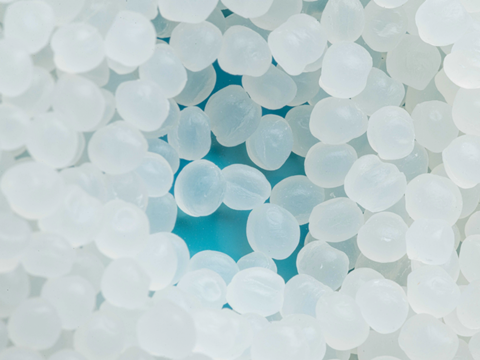
The recovered material was broken down into lactic acid using Torwash’s hydrolysis technology, with TotalEnergies Corbion repolymerizing it into recycled PLA – said to offer the same properties as virgin material.
The consortium claims to have demonstrated that a PLA recycling process is technically viable beyond the laboratory and unlocked a ‘practical pathway’ for integrating bioplastics into existing waste streams and recycling systems.
This is set to be beneficial under increasing regulatory pressure, as the Packaging and Packaging Waste Regulation (PPWR) requires all packaging sold on the European market to be recyclable by 2030.
The consortium’s approach is hoped to help close the loop on real mixed waste streams and produce high-quality bioplastics for industrial use.
The technologies can apparently be integrated into existing infrastructure, lowering barriers to adoption while supporting the EU’s environmental ambitions such as the Green Deal and Bioeconomy Strategy.
This process of recycling mixed waste into PLA is described as a ‘working reality’ and ‘timely evidence’ that bioplastics can play a ‘central role’ in a circular economy for the packaging sector.
“Demonstrating that recycling PLA from mixed waste collection to new high-quality PLA material is a reality is a major step in fulfilling the ambitions of the PPWR in terms of packaging recyclability,” says Maelenn Ravard, Regulatory and Sustainability manager at TotalEnergies Corbion. “Achieving circularity is all about having a strong value chain and this is the strength of the ReBioCycle consortium.”
“This is about making circularity real for industry,” adds project coordinator Kevin O’Connor. “We’ve connected the full value chain in a way that supports both regulatory compliance and the transition away from fossil-based to bio-based materials.”
Going forward, the consortium plans to develop and validate new applications for PLA, scale its recycling process towards full industrial deployment, and turn its pilot into a ‘market reality’.
The news comes after TotalEnergies Corbion unveiled Luminy FOAM 50F, its biobased, high-melt-strength PLA grade. It is intended to serve as a recyclable, industrially compostable, and lower-carbon alternative to polystyrene in extrusion foaming applications such as food packaging.
In another EU-funded initiative, AIMPLAS, the Institute of Marine Sciences, and the Institute of Advanced Chemistry of Catalonia are participating in the OCEANZYME project – aiming to recycle degraded waste retrieved from the ocean using enzyme-based technologies.
If you liked this story, you might also enjoy:
The ultimate guide to packaging innovation in 2026
Packaging and Packaging Waste Regulation: what to know in 2026
Everything you need to know about global packaging sustainability regulation














No comments yet