


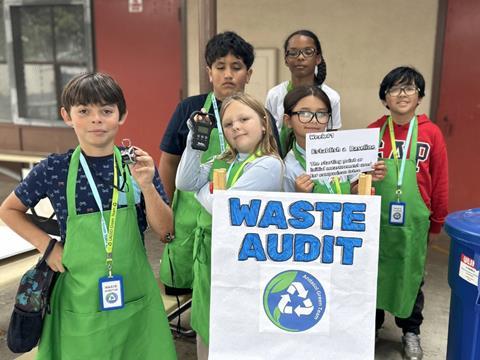
The Carton Council has opened applications for its 2026 School Carton Recycling Grant Program, providing funding to help kindergarten to 12th grade (K-12) schools across the United States and Canada establish or expand food and beverage carton recycling programmes.
The Carton Council is a coalition of carton manufacturers Elopak, SIG, Novolex and Tetra Pak. The grant programme aims to support schools in improving the recovery of recyclable cartons used for milk, juice, and other common food and beverage products consumed in cafeterias.
The Carton Council says funding may be used for cafeteria recycling stations, collection bins, signage, education and outreach programmes and other initiatives. It adds that eligible applicants for the grant include public and private K–12 schools, school districts, boards of education, and school administrators or sustainability coordinators applying on behalf of a school or district. Applicants are required to be in communities where cartons are accepted for recycling.
Funding decisions will consider factors including student participation, education and engagement plans, project readiness and the anticipated increase in carton recovery. The coalition states that grant amounts will vary based on project scope and anticipated impact.
Applications are open until the 30th June, with funded projects expected to be implemented during the 2026–27 school year.
Earlier this year, the European association of cartonboard and carton manufacturers Pro Carton announced that the carton packaging industry has achieved an 8% reduction in cradle-to-gate fossil carbon emissions since 2021. The association’s Carbon Footprint of Carton Packaging Study evaluated the sector’s environmental performance between 2021 and 2024, drawing on data from 70 sites representing 60% of European cartonboard production and 16% of Europe’s folding carton production sites.
Last month Tetra Pak and Italian dairy company Sterilgarda Alimenti unveiled the ‘first ever’ 1 litre package featuring a paper-based barrier, said to increase the renewable content to 90% when combined with plant-based polymers. The carton is designed for ambient distribution and is said to reduce the carbon footprint by up to 50%, verified by the Carbon Trust.
If you liked this story, you might also enjoy:
The ultimate guide to packaging innovation in 2026
Packaging and Packaging Waste Regulation: what to know in 2026
Everything you need to know about global packaging sustainability regulation











No comments yet