




All Sustainability articles – Page 73
-
 Article
Smart Planet Technologies produces recyclable coating for flexible paper
Smart Planet Technologies aims to facilitate a transition into paper-based flexible packaging with its recyclable nanocomposite coating – said to offer ten times the moisture barrier and twenty times the oxygen barrier performance of conventional polyethylene coatings.
-
 Article
Dow, Henkel, and Kraton cut carbon footprint of hot melt adhesives
Dow, Henkel Adhesive Technologies, and Kraton Corporation have apparently reduced the carbon footprint of two of Henkel’s hot melt adhesive formulas for end-of-line packaging.
-
 Article
Starbucks joins Podback’s coffee pod recycling scheme
Starbucks has partnered with Podback to collect used Starbucks At Home coffee pods from drop-off points or at kerbside, recycling them into beverage cans, supermarket crates, and more.
-
 Article
Compostable crisp packet displays mental health messages when opened
Beavertown has revealed a limited-edition crisp packet made from Parkside’s compostable films, with on-pack designs offering conversation starters surrounding mental health in a partnership with the Campaign Against Living Miserably (CALM).
-
 Article
Unpacking the positive and negative developments from INC-4
The latest round of negotiations on the creation of the United Nations’ legally-binding treaty on plastic pollution has ended. And, while important progress has certainly been made, there were still a number of setbacks and shortfalls. To learn more about all of this, we spoke with Erin Simon, Vice President and Head of Plastic Waste and Business at WWF, who was present at INC-4.
-
 Article
UPM Raflatac unveils Carbon Action portfolio in global decarbonization drive
UPM Raflatac has launched its Carbon Action Plastic Labels portfolio in a bid to help its customers reduce the carbon footprint of their packaging materials and demonstrate its own commitment to the United Nations’ climate action initiatives.
-
 Article
Siegwerk prints mono-PE pet food bag with recyclable barrier coatings
Aiming for a high-barrier, fully recyclable packaging solution for dry pet food, Siegwerk has applied its CIRKIT functional coatings to a mono-PE bag developed alongside Windmöller & Hölscher and B&B.
-
 Article
The ‘hidden danger’ of recycled plastic imports
In this article, Professor Edward Kosior of Nextek and NEXTLOOPP tells us about the importance of control and verification mechanisms to safety for food-grade recycled content – and how the NEXTLOOPP project is achieving this.
-
 Podcast
Scaling novel packaging feedstocks, with Fredric Petit
Why can it be so difficult to scale up some of the more novel or ‘niche’ feedstocks for packaging materials, what role can investors play and how can startups secure this investment? Victoria Hattersley explored these questions with Fredric Petit of Emerald Technology Ventures.
-
 Article
Global Plastics Treaty negotiations too slow to counteract pollution, WWF fears
From WWF’s perspective, discussions of a Global Plastics Treaty at INC-4 ‘yielded some success’ in combating the plastic waste crisis, yet negotiations ‘moved at too slow a pace’ to match current pollution levels.
-
 Article
€213 million open call from CBE JU aspires for circular biobased economy
Circular Bio-based Europe Joint Undertaking (CBE JU) has opened a call for project proposals in a bid to stimulate a circular economy for biobased materials in Europe, offering a total of €213 million to eighteen successful applicants.
-
 Article
Is the ‘plastic tap’ under pressure?
On the final day of the 4th round of negotiations for the United Nations’ Global Plastics Treaty in Ottawa, Willemijn Peeters, founder of Searious Business, gives us an update on her highlights from INC-4 thus far.
-
 Article
Recycler SGÅ bought by Ardagh Glass Packaging Europe to close glass loop
Ardagh Glass Packaging Europe has agreed to purchase glass recycler Svensk Glasåtervinning, aiming to secure its supply of high-quality glass cullet and prevent exports from taking recyclate out of Sweden.
-
 Article
Paper insert from BOTTA EcoPackaging to protect premium goods in transit
BOTTA EcoPackaging has designed a replacement for traditional foam inserts with its Patented Eco-Paper Watch Holder, utilizing FSC-certified soft paper pads to protect premium products during transportation.
-
 Article
Unilever’s reduced and extended plastic reduction target causes controversy
Unilever has revised its goal to halve virgin plastic consumption by 2025, shifting the target to one-third by 2026. This is feared to result in a further 100,000 tons of fresh plastic being produced every year and has sparked backlash – yet others have defended the move as a realistic decision.
-
 Article
Cobot palletizing system for plastic bottle trays revealed by Proco Machinery
A new cobot palletizing system from Proco Machinery seeks to improve efficiency and profitability, lower manufacturing costs, and reduce reliance on manual labour by palletizing trays and tier sheets for plastic bottles.
-
 Article
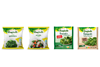
Recyclable freezer film produced by Bonduelle, ExxonMobil, and Drukpol
Plant-based food provider Bonduelle has collaborated with ExxonMobil and Constantia Drukpol to develop a mono-PE freezer film as a recyclable, non-laminated alternative to traditional laminated metallized films.
-
 Article
Groundbreaking ceremony held for ‘world’s first’ PET bio-recycling plant
A groundbreaking ceremony has taken place for Carbios’ industrial-scale PET bio-recycling plant in Longlaville, with its construction process said to be on schedule to deliver ‘significant quantities’ to customers in 2026.
-
 Article
Nestlé reveals light-blocking, recyclable shrink sleeve label for milk drinks
Nestlé has applied a new, recyclable shrink sleeve label with light-blocking print technology to its ready-to-drink Nesquik portfolio, aiming to help consumers recycle 4,500 metric tons of PET every year while maintaining product quality.
-
 Article
SnapSlide’s no-torque caps unlock one-handed opening for disabled consumers
In a move expected to benefit adult consumers with physical disabilities, SnapSlide has revealed a line of no-torque caps that enable single-handed opening and closing without sacrificing child resistance.