



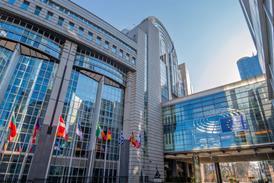

The European Commission has adopted a legislative proposal for the Industrial Accelerator Act – aspiring to boost demand for EU-made, low-carbon materials while stimulating European jobs and competitiveness.
Designed to align with the Draghi Report, the legislation aims to introduce ‘targeted and proportionate’ requirements for public procurement and public support schemes – applying to strategic, energy-intensive sectors like steel, aluminium, and net-zero technologies.
It is expected to stimulate European and sustainability-minded manufacturing, help grow businesses, and create jobs in the EU. At the same time, it is hoped to help industries adopt cleaner and future-ready technologies.
The Act aims to ensure that direct foreign investments bring value to the EU. For example, it stipulates that €100 million+ investments in strategic sectors where a single third country controls over 40% of global manufacturing capacity must a) comply with local content requirements; b) facilitate technology and knowledge transfer; c) create high-quality jobs; and d) drive innovation and growth.
Businesses will also be expected to guarantee a minimum level of 50% European employment. This is set to ensure that businesses and citizens benefit from access to the Single Market, strengthen the EU’s economic security, and reinforce supply chain resilience.
Additionally, the legislation requires Member States to set up a single digital permitting process in order to streamline and simplify permitting procedures for industrial projects.
The proposed Regulation will be negotiated by the European Parliament and the Council of the European Union before it is adopted and enters into force.
Responding to this development, the European Container Glass Federation (FEVE) asserts that the Commission’s intent for manufacturing to account for at least 20% of the EU’s GDP by 2035 represents ‘an important signal of renewed industrial ambition’.
Even so, it goes on to argue that ‘urgent action’ is required ‘on multiple fronts’ to achieve this goal while unlocking decarbonization at scale and protecting industrial competitiveness.
According to FEVE, 6.1% of total EU exports are packed in glass. The high-value goods like food, beverages, pharmaceuticals, and cosmetics shipped in glass containers are thought to be worth over €140 billion in total.
However, high energy and carbon costs have led to a decrease in production and an increase in furnace closures across the continent. FEVE calls for framework conditions that would unlock non-toxic, low-carbon, and circular packaging solutions – all while preserving industrial capacity, strategic autonomy, and jobs in Europe.
“Europe’s glass packaging industry is fully committed to decarbonization and is investing to make it happen,” said Carlo Pirrone, secretary general of FEVE. “While today’s proposal is a step in the right direction, we need bolder action to lower energy prices, boost grid development and simplify rules to maintain our competitive edge.”
The development comes shortly after the European Industry Summit in Antwerp, where businesses sought out solutions for high energy and carbon costs, unfair trade practices, site closures and job losses across Europe. President of the European Commission Ursula von der Leyen also lay out her vision for a more globally competitive, affordable, self-sufficient and sustainable industry for Europe’s energy, steel and chemicals sectors.
In other news, the PRO Circularity Alliance has released a position paper about the upcoming Circular Economy Act. It argues that a Central European EPR Register would harmonize national EPR systems, reduce compliance costs, and improve transparency across Europe.
If you liked this story, you might also enjoy:
The ultimate guide to packaging innovation in 2026
The ‘complex reality’ of reusable packaging in Europe
Everything you need to know about global packaging sustainability regulation
















No comments yet