


All Carbon Emissions articles
-
 Article
BASF reveals paper coating dispersions with reduced product carbon footprint
BASF is launching a portfolio of dispersions for paper coating that claim to reduce product carbon footprint by approximately 20-45%.
-
 Article
Amcor and Dow join forces in low-carbon packaging project
Materials company Dow and packaging manufacturer Amcor have announced a new strategic collaboration that aims to produce new low-carbon packaging solutions.
-
 Article
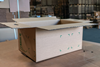
Reuseabox partners with Faith In Nature to reuse over 13,000 boxes annually
Natural beauty company Faith In Nature is sending its excess cardboard packaging to Reuseabox in a bid to reuse over 13,000 boxes and save 12 tonnes of CO2e emissions every year.
-
 Article
Everything you need to know about the EU’s upcoming environmental claim law
The European Commission has published an FAQ document for the Directive on Empowering Consumers for the Green Transition, clarifying the rules around environmental claims and greenwashing that will apply from September.
-
 Article
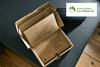
A look at Telefónica Germany ‘s new SIOC home router packaging
The company’s HomeBox 4 router has won a Green Product Award. We take a look at the role the packaging played to boost the product’s sustainability credentials and user friendliness.
-
 Article
Flagship project targets drop-in bioethanol intermediate to reduce emissions
The Circular Bio-based Europe Joint Undertaking (CBE JU) has funded RenewChem, a two-year flagship initiative anticipated to unlock higher-value bioethanol as a cost-effective, carbon-negative drop-in substitute for petrochemical intermediates.
-
 Article
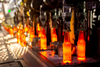
Draft standard for more sustainable glassmaking now open for consultation
ResponsibleGlass has published the first draft of its International Standard for Glassmaking, with its global sustainability standard, certification and labelling system now open for stakeholder consultation.
-
 Article
Funding for Wayout’s drinking water infrastructure set to tackle plastic waste
Wayout has successfully closed an oversubscribed Series A extension, set to support the deployment of its distributed drinking water infrastructure and tackle single-use plastic waste.
-
 Article
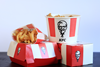
KFC and Pizza Hut’s packaging progress revealed in parent company's report
From Pizza Hut implementing recycled polypropylene into its wing bowls to KFC investing in reuse models, Yum! Brands’ latest sustainability report details the packaging progress of multiple fast food giants – but reveals ‘limitations’ in its data and transparency.
-
 Article
Flatfish shipped in certified recycled EPS to cut carbon emissions by 30%
Flatfish producer Flatlantic is transporting fresh seafood in BEWI’s certified recycled EPS boxes – a move hoped to reduce carbon footprint by 30% while securing food safety and optimal transport.
-
 Article
Barrier lining applied to lightweight plastic buckets, including PCR version
Cambrian Packaging’s range of barrier buckets for solvent- and water-based products, complete with a 100% post-consumer recycled liner, is said to improve storage efficiency and reduce emissions in transit.
-
 Article
Global business coalition presents policy recommendations ahead of INC-5.4
The Business Coalition for a Global Plastics Treaty has published its latest policy recommendations ahead of INC-5.4 – encouraging negotiators to focus on clarifying obligations, improving transparency, and establishing a list of ‘problem’ substances during interim work.
-
 Article
How the EU Commission plans to regulate biobased feedstock in the PPWR
Are bioplastics a viable contribution to the Packaging and Packaging Waste Regulation’s sustainability goals? This edition of the Brief dives deep into the European Commission’s analysis of biobased feedstock in plastic packaging, detailing its current view of the benefits, restrictions, and questions surrounding bioplastic packaging laws.
-
 Article
Fresh-fibre fluting added to Holmen’s ‘ultra-lightweight’ cartonboard lineup
Holmen has added a fresh-fibre fluting to its ‘ultra-lightweight’ cartonboard range, intended to help reduce material consumption and emissions without impacting performance.
-
 Article
Seaweed-based top film set to comply with PPWR’s fruit and veg plastic ban
noriware offers a seaweed-based top seal film for fruit and vegetable packaging, intended to help retailers align with the Packaging and Packaging Waste Regulation’s single-use plastic ban for fresh produce.
-
 Article
GEA presents thermoforming machine for simple, flexible production at interpack
GEA will display its PowerPak 5000, a new thermoforming packaging machine for medium-sized food producers, at interpack 2026 – targeting easy operation, repeatable output, and predictable lifecycle costs.
-
 Article
Colour-changing ‘stoplight’ label tracks freshness of airline perishables
Vitsab International has developed its Freshtag Flight Label to change colour based on temperature exposure and tackle food waste in perishable airline meals.
-
 Article
Stora Enso lightweights tray board and presents unbleached version
Stora Enso has added an unbleached variant to its Trayforma tray board range, as well as reducing the basis weight across the existing range – aiming for a natural aesthetic and improved material efficiency.
-
 Article
Apple’s ‘highest-ever’ use of recycled materials includes plastics phase-out
Apple reports that 30% of all material across its shipped products came from recycled content in 2025, and claims to have successfully removed all plastics from its packaging in favour of fibre-based alternatives.
-
 Article
Norfersk implements Faerch’s 70% tray-to-tray rPET into meat trays
Faerch and Norfersk have launched meat trays containing 70% food-grade, tray-to-tray recycled PET, anticipating a dedicated material loop for thermoformed food packaging.