
How does the PPWR align with other global regulations?
Ahead of the 2026 Sustainable Packaging Summit, we spoke with Renata Daudt Chief Executive Officer at AWEN Packaging Consulting, to
Ahead of the 2026 Sustainable Packaging Summit, we spoke with Renata Daudt Chief Executive Officer at AWEN Packaging Consulting, to

Swaay Technologies has closed an equity investment round of more than €2 million, which is set to fund the commercialization

This summer, the first of the Packaging and Packaging Waste Regulation’s (PPWR) requirements will become mandatory in all 27 EU Member States and for those who supply EU markets.
On 12th August 2026, the European Union will begin a phased introduction of requirements that stretch through to 2040. The PPWR’s rules impact every stage of the packaging lifecycle, from the per-and poly fluoroalkyl substances (PFAS) thresholds for food-contact packaging and the percentage of recycled content for plastic packaging, through to the ‘empty space ratio’ of transport packaging.
The regulation’s impact on packaging manufacturers is monumental but understanding and adaption is particularly critical for those in plastic packaging due to the push for its complete transformation. With the deadlines ever closer, those who have not yet planned for the requirements must do so urgently. An area that must not be overlooked is the test and measurement required for plastic packaging made with post-consumer resin (PCR) plastic.
Here, Cooper Henderson, Director of Segment Strategy at Industrial Physics, discusses the risk to packaging production as a result of introducing PCR plastic to meet the PPWR’s requirements, and how this can be managed through testing to minimize waste and operation disruption.
Material variability
Within the packaging lifecycle, one of the first hurdles to overcome when introducing recycled content to the raw material is that the resin manufacturers will be using is going to be different every time.
To accurately understand the behaviour of the resin, manufacturers should introduce a melt flow test, which measures how easily the plastic flows when it’s melted. With PCR resin, this is going to vary considerably. For example, a batch of recycled polypropylene might arrive at 8 grammes every ten minutes and 14 grammes every ten minutes the next week. Whereas with virgin polypropylene, the variation would be much tighter. With heterogenous feedstock, the viscosity is going to be unpredictable. When the melt flow index is variable, it is difficult to blend other materials to the compound to achieve the desired thickness, colour etc. for the plastic packaging produced. However, by introducing this test, manufacturers can gain an understanding of the resin’s behaviour and set criteria for acceptable variation for PCR, versus what gets rejected before it gets processed.
At the production site, being unable to predict the behaviour of the resin can cause many different issues which lead to expensive waste, downtime and repairs, for example: the extruder could jam if the viscosity is too low and the inconsistent film gauge will mean that thickness is going to vary. Conducting melt flow testing on every batch of PCR resin incoming will allow manufacturers to get a leading indicator of those costly problems that could happen downstream. This will also help with holding suppliers accountable to what feedstock is being received. Currently, most converters don’t test so frequently because virgin resin is so homogeneous that testing isn’t required to ensure high quality production. But as they move to PCR, businesses are going to have to introduce this additional test and measurement.
Balancing recyclability with safety
Across the food and beverage packaging industries, multi-layer plastic structures are used to keep the contents of packaging safe for human consumption. However, to meet recycling requirements in the PPWR, manufacturers will need to remove aluminium foil and EVOH barriers from plastic packaging, because they can’t be melted down to recycle effectively. If the multi-layer structures used today are replaced with mono-material alternatives plus a barrier coating to meet these requirements, it must be ensured that oxygen and water vapour cannot permeate the containers.
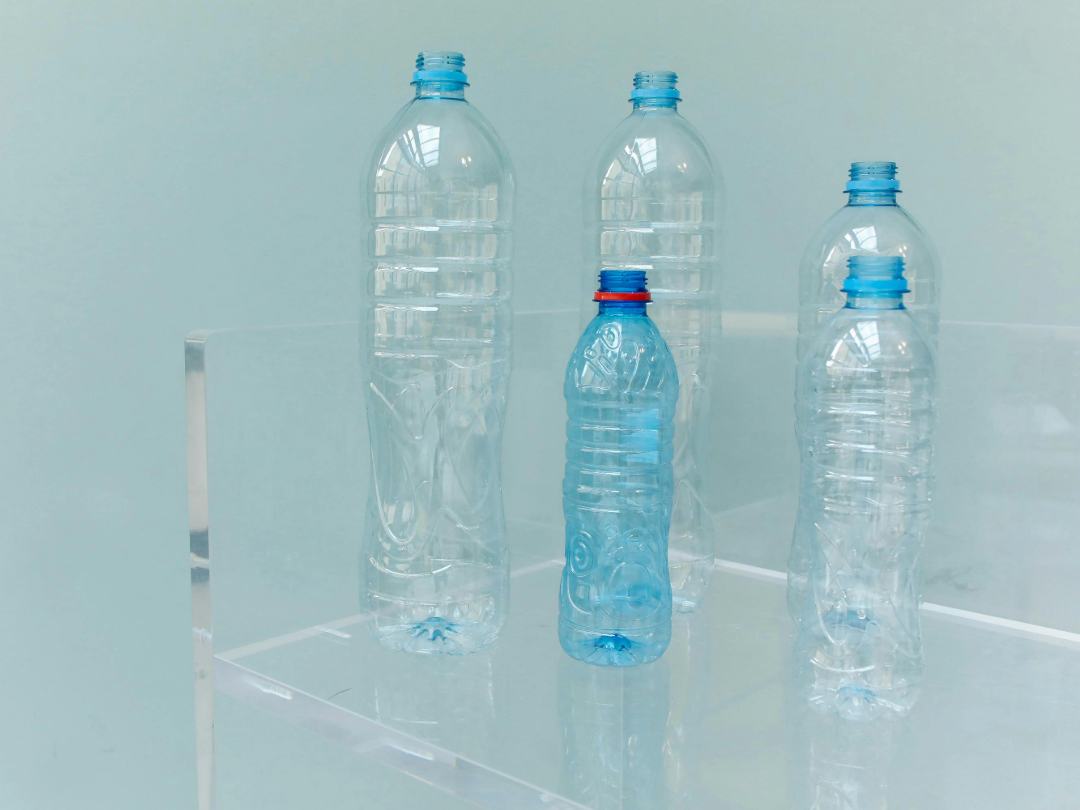
To prevent a trade-off between making the packaging more recyclable, but also easier to permeate, manufacturers will have to test the effectiveness of the barrier coating rigorously. Oxygen transmission rate and water vapour transition rate testing will provide valuable insight as the data provided can be compared against the previous results achieved with the multi-layer laminate packaging, to determine the acceptable threshold to guarantee food safety and expiration dates, for example. Although not a new testing method for those in the food and beverage industry, establishing thresholds for safe, high-quality packaging with the new material composition is critical to meet customer’s requirements and prevent mass failures.
Seal temperature shifts
Once the packaging has been made and filled, it must be sealed to prevent leaks and contamination. Introducing material that behaves variably also introduces risk to the sealing process, where manufacturers must guarantee it will hold until opened by a customer.
For example, for plastic packaging that is heat sealed, e.g. crisps packets, the multi-layer structures that are being used currently have a wider threshold of the temperature that can be used to seal it effectively. However, when a more recyclable substrate is introduced, the result is more burn-through, weak seals and puckering. This is due to the inconsistency of the material’s behaviour, where the seal temperature shifts from batch to batch. If manufacturers don’t have strong insights and control over raw materials, the temperature required to get the right seal is going to be a moving target in a way that it was not previously. Ultimately, the margin for error is lower because there are less layers to hold the seal.
To prevent leaks, packaging waste and reputational damage, manufacturers should complete heat seal and hot tack testing to dictate the exact dwell time and temperature window for each film formulation when sealing. This will have to be retested every time raw material suppliers change or every time a batch of PCR that has a different melt flow index is received. It might still be within the acceptable threshold of variation to be used for production, but it might need to be sealed differently. It can’t just be done the same way every day as it could previously with virgin plastic. At the point of sealing, packaging has already passed through production and filling, so waste created at the sealing stage is even more costly and disruptive to production targets.
Moving forwards
Under the PPWR, the materials used in plastic packaging must change. When the material changes, even though it looks the same and it was fed into the same process, it is going to fail differently.
So even if the same tests are being used in production, the targets must change. For example, melting down the raw material to check its viscosity from the melt flow index will determine its suitability for extrusion. However, even the recycled content resin that passes the melt flow test as an acceptable threshold will pose risk for production when other additives are folded in and a chemical reaction happens, or another chemical property is present that changes how it seals or permeates. In any of these scenarios, failure will create significant packaging waste, production delays and severe financial impact.
To be compliant with the Packaging and Packaging Waste Regulation, manufacturers must increase testing rigour at all three stages: incoming materials, process parameters, and the finished packaging.
It’s only three and a half years until the recycled content mandates start to kick in. Although the requirements vary slightly with different packaging types to acknowledge material science limitations, many producers today are manufacturing plastic bottles with 0% PCR content. To get to 30% in this period is not a trivial change, therefore research and development teams, material scientists and packaging engineers must work together and consult testing specialists where required to start gathering data and increasing levels of PCR to be able to comply by 2030.
If you liked this story, you might also enjoy:
The ultimate guide to packaging innovation in 2026
Packaging and Packaging Waste Regulation: what to know in 2026
Everything you need to know about global packaging sustainability regulation

PPWR is a data challenge. In this Spotlight, we find out how Centric Software® tackles the challenge through a connected

In this Spotlight, Plastipak discusses the opening of its PET material centre in Verbania, Italy. Home to pakPET™ Single Pellet

In the latest edition of the Spotlight, Matthew Wright, Founder and CEO of FOREST-PKG, shares why finding the right

Duynie has decades of experience in developing applications for side-stream potato starch. With Novinexx CPB, the company is applying


In this edition of The Spotlight, Markem-Imaje examines how 2D coding is redefining the role of flexible packaging and


The material that consumer and industrial (C&I) applications rely on just got a sustainability upgrade. DuPont talks us

Ahead of the 2026 Sustainable Packaging Summit, we spoke with Renata Daudt Chief Executive Officer at AWEN Packaging Consulting, to


Swaay Technologies has closed an equity investment round of more than €2 million, which is set to fund the commercialization

The European Council has set its position on a proposal to exempt businesses producing less than one tonne of packaging