



With cost now the biggest driver for many retailers and brand owners in Europe, has the environment taken a back seat? Neil Osment, Managing Director of packaging market research company NOA, investigates.
Most recent surveys show that cost is now the number one consideration for European retailers and brand owners. Inflation, higher interest rates, four years of the Ukraine war, and now a war in the Middle East, plus the impact of tariffs… costs have been rising sharply, and continue to do so.
In response, retailers and brand owners are focusing on bringing costs down, and one way to do so is to reduce the weight of materials used in packaging. Sustainability still features but is much lower down the list of considerations.
However, with reducing the weight of packaging comes a ‘but’. Because lightening the weight of materials in packaging isn’t – as one might suppose – necessarily better for the environment. There are hidden costs from over-engineering packaging as a whole.
Here’s one example: our research shows that work being done to create lighter weight packaging (such as plastic bottles), means stronger corrugated boxes are needed for transport – when the thickness of the plastic bottle is reduced, it is no longer self-supporting inside a box, so the box that carries it has to be more robust (and, of course, can become a bit more expensive) to compensate for the lightweighting of the bottle.
And here is another example. Extended Producer Responsibility has encouraged brands to move towards mono-materials for packaging, to improve their recyclability. However, once again, there can be unintended consequences.
For instance, the trigger for a bathroom cleaning product includes a metal spring. There is a move towards replacing the spring with a (more expensive) plastic alternative. But while this has the benefit of creating mono-material packaging, it increases the amount of plastic being used.
Retailers are also trying to reduce costs. One example is with in-store bakeries. Here, they are moving away from bringing in ambient product, which is finished off on site, to bringing in frozen product. This reduces waste and needs fewer and less skilled staff; it also means a little more packaging might be needed.
Let’s look at the broader European picture. As a consequence of President Trump’s tariffs, China is switching its export of paper for packaging from the United States and into Europe. The Chinese have been discounting their paper into Europe by double digit amounts.
Converters in various sectors of the fibreboard purchasing market in Europe have been taking advantage of these cheaper prices. This means, orders into European paper mills are drying up and – for those which haven’t invested - their future prospects look more precarious. We could even see some European paper mills go under.
And Europe – which is trying to become a climate-neutral continent by 2050 – may no longer be able to supply its own paper needs, becoming more reliant on imports and increasing its carbon footprint.
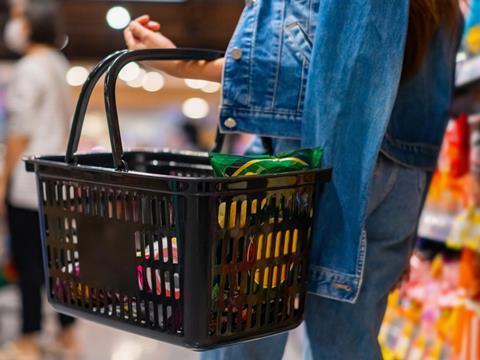
Finally, let’s look at FMCGs. Across Europe, the prices of food and FMCGs have risen, so consumers are feeling the pinch and trying to make savings by cutting back on their weekly shopping. Producers are also adopting ‘shrinkflation’ as a tactic to save costs.
At the same time, we understand that growth in demand for food has been undermined by as much as 1% by the recent diet culture and wide availability of weight-loss jabs. As an aside some – such as the bakery Greggs – are making a virtue of this and proactively marketing smaller portions to appeal to the dieters.
So, the current picture is this: retailers and brand owners are heavily focused on cost reductions and are giving less focus to environmental concerns.
When will this change?
We had already predicted that recovery for the packaging industry will only begin in 2026/27, but we won’t be back to the demand levels of 2021 until 2029/30. Now we are nearly at the end of Q1 for 2026, we stand by that prediction.
Outputs since the heyday of 2021 are 10% down, so businesses are still looking to trim costs and ‘right size’ their capacity. However, we predict that growth will begin, if not this year, then in 2027.
And when it does, it will be accompanied by growing confidence among consumers, who will once again put pressure on retailers and brand owners to pay more than lip service to sustainability and the environment.
If you liked this story, you might also enjoy:
The ultimate guide to packaging innovation in 2026
Packaging and Packaging Waste Regulation: what to know in 2026
Everything you need to know about global packaging sustainability regulation









No comments yet