
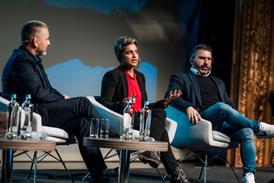


Fortnum & Mason’s hampers are iconic across the globe, and immediately communicate quality, craftsmanship, and expert curation to consumers. But what goes into creating them, and how is the company tackling sustainability issues? Speaking from London Packaging Week, Yvonne Isherwood, Head of Product and Packaging Design at Fortnum & Mason, tells us more.
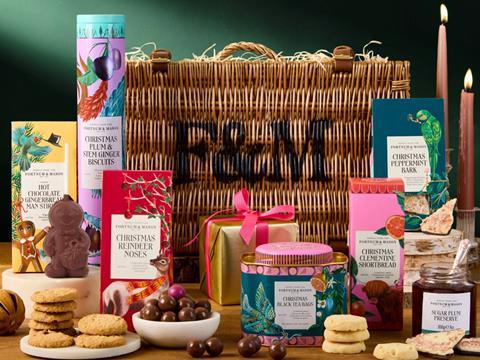
For nearly 300 years, the Fortnum & Mason hamper has been a portable parcel of comfort and joy that has traversed the globe.
Every basket is filled with delicacies including game pies, hothouse fruits, rich fruitcakes, Scotch eggs, and fine teas. The magic lies not just in the contents, but in the choreography of its creation, the arrangement, the tactile ribbons, and the careful balance of colour and texture.
Yet even a brand steeped in nearly three centuries of heritage cannot escape the pressures of modern sustainability. Across the luxury sector, companies are grappling with complex environmental expectations, shifting consumer demands, and a constant stream of new materials and technologies. The path forward is rarely clear, and the temptation to adopt every promising innovation can be overwhelming.
“Actually, this is a whole learning curve for us,” said Yvonne Isherwood, Head of Product and Packaging Design, after participating in a panel session at London Packaging Week. “None of us has a solution, and we cannot pretend that we do. It is important to be open and candid. I think we should be collaborating more, not just internally, but across the industry, because that is how we are going to make a difference. It is also valuable to have those conversations with groups of people you would not normally speak to.”
The path is rarely straightforward. In a market brimming with innovation, brands are constantly bombarded with new materials, technologies, and ideas, each one touted as the next essential solution. Every week brings fresh proposals, and packaging shows glitter with promise, and suppliers jostle to position their offering as something a brand simply must adopt.
Amid the allure of the latest sustainability trend, it can be difficult to separate the truly practical options from the impractical, expensive, or untested. It is a landscape where pressure and expectation collide, and the temptation to chase every idea is strong.
“Constantly, people are saying, ‘We have this new material, why don’t you try it?’ But often it is either super expensive, untested, impractical, too large in volume, or simply does not fit our market. Navigating that requires finding a way through without jumping to solutions that are not really there.
“At the start of this programme, we tried to do everything and quickly realised we were not achieving much. The approach now is to focus on the big changes where we can make a difference and then move on. It is a slow process, though we do need to accelerate it to some extent.”
Even well-intentioned changes can bring sleepless nights. “For instance, at the moment we have removed magnets and made other adjustments like laminates to improve sustainability. But the solution we have implemented is breaking as it reaches the customer, which keeps me up at night.
“Even though we are trying to do the right thing, and I think customers would understand if we explained it, ultimately, it is a beautiful box they might have kept for a long time. It is that sort of challenge, we are always edging toward solutions, but they take careful thought and time.”
“That does not mean you compromise on the quality of the materials you are using,” said Isherwood. “You can still include all those finishes and maintain the craftsmanship in how it is made. There is still that closing feature that people love. It does not need to be all magnets and pop-ups.
“When you open a box, it is about discovering a detail inside, or perhaps finding a little extra once it is empty, that makes you smile. It is about continuing to employ all of those thoughtful touches.”
F&M seeks to carry this dedication through even in products produced at scale. “There is a balance. At Fortnum’s, we have products with a lot of volume behind them, as well as the ones or twos. It is about celebrating craftsmanship in those smaller runs and telling a story. I am going to keep emphasising that. Even the hampers, which are made in larger volumes, are handmade, and we almost forgot that.”
Craft can sometimes take a backseat when practicality and scale collide. In a world where packaging trends shift rapidly and every innovation promises to be the next must-have, it is easy for the artistry behind each hamper to be overshadowed.
“The hamper just became a vehicle to transport goods. But then you think, hang on a minute, this in itself is a beautiful thing, and it is kept in people’s homes. So let us celebrate it.”
Even as industry trends evolve, Fortnum’s tries to remain deliberate in its approach, resisting the temptation to chase every label of “handcrafted” or “artisanal” that others now tout. “I think so, yes. And, not wanting to jump on a bandwagon, many people are now saying, ‘Oh yes, now we can say it is hand-stitched or crafted.’ But we did forget. It became all about very elaborate packaging, and that is what we were selling. We have had to pare back on that. It is lighter, yet it still retains its essence. And I think, as a major player in the luxury market, it is our responsibility to lead the way. Our customer base expects it of us, assumes we have done good work, so we need to carry that on.”
The same care extends to the meticulous orchestration of the Christmas hamper, a process that spans an entire year. Every detail, from selecting ingredients and coordinating with suppliers, to packing, testing, and shipping, is considered. Even the smallest hiccup, such as a missing component, can hold up the whole line, underscoring the scale of the challenge.
“It takes all year to pack a Christmas hamper. From deciding what goes in it and being thoughtful about the intention, whether it is to celebrate an occasion or simply to lay on a feast, there is a lot of consideration involved. Then comes liaising with all our suppliers, ordering everything, preparing the basket, packing, testing, shipping, looking after it, and finally packing again in mass. Even a missing component can hold up the entire line. It is a complex process, but it is exciting. A hamper is exciting. It is a gift you can give to everyone, and I feel a great sense of satisfaction.”
If you liked this story, you might also enjoy:
The ultimate guide to packaging innovation in 2026
Packaging and Packaging Waste Regulation: what to know in 2026
Everything you need to know about global packaging sustainability regulation















No comments yet