




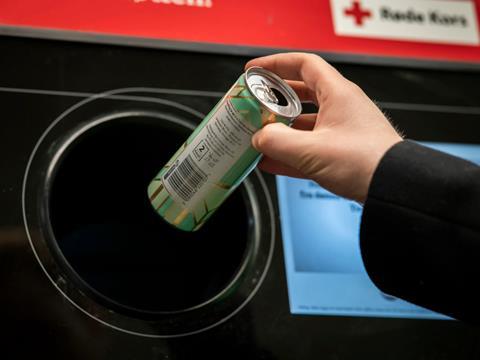
Novelis has extended its partnership with Infinitum, Norway’s deposit return system for beverage containers. The agreement aims to ensure that all aluminium beverage cans used in Norway are efficiently collected, recycled, and returned into the production loop.
Through the collaboration, aluminium collected at Infinitum’s recycling facilities in Norway is transported to Novelis’ recycling plant in Latchford, United Kingdom. The material is then processed into new aluminium can sheet.
The new agreement seeks to provide long-term stability for both companies and opportunities to further optimize material flows, logistics, and environmental performance. It also supports Novelis’ Vision 3×30 ambition to increase average recycled content to 75%, reduce emissions intensity to below 3 tonnes of CO2e per tonne of flat-rolled aluminium shipped, and lead aluminium circularity through first-mover investments by 2030.
“Novelis is a critical partner in closing the loop for beverage cans collected through our deposit system,” said Kjell Olav A. Maldum, CEO of Infinitum. “We have full transparency on volumes, quality, and lead times, which enables us to operate a stable and cost-efficient system while delivering predictable, low-carbon outcomes.”
In related news, European Aluminium (EA) and Metal Packaging Europe (MPE) released a report in April which shows the overall recycling rate for aluminium beverage cans in the European Union, United Kingdom, Switzerland, Norway and Iceland reached 76.3% in 2023, representing a Greenhouse Gas emissions saving equivalent to 5.7 million tonnes of CO2. EA and MPE state that the continued increase in recycled aluminium volume reflects a general increase in recycling performance, particularly in countries with Deposit Return Schemes (DRS) for aluminium beverage cans.
This month Sustainaholics introduced its Alumini bottle, made entirely from post-consumer recycled aluminium and intended to be a recyclable, reusable alternative to conventional 5cl bottles. Also said to reduce carbon footprint by up to 90%, the pack is designed to be light and compact to lower emissions and reduce transportation and Extended Producer Responsibility (EPR) costs.
If you liked this story, you might also enjoy:
The ultimate guide to packaging innovation in 2026
Packaging and Packaging Waste Regulation: what to know in 2026
Everything you need to know about global packaging sustainability regulation
















No comments yet