




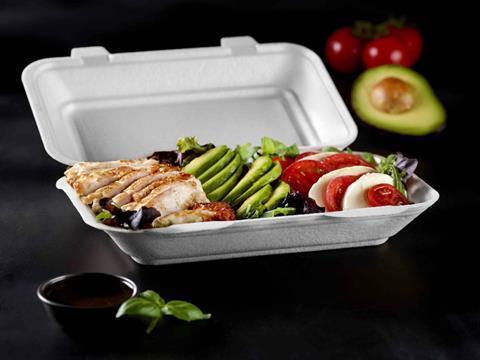
Klöckner Pentaplast (KP) has launched kp Infinity HP3, the largest and most rigid addition to its Hotpacs range, designed to provide robust protection for generous portions of food-to-go.
Manufactured in the UK, the new solution aims to support operators seeking locally made packaging solutions, such as foodservice operators serving loaded fish and chips, burgers and chips, jacket potatoes, and Asian noodle-based dishes. According to the company, the HP3 is manufactured from Expanded Polypropylene (EPP), a recyclable material not subject to the UK’s ban on EPS/XPS single-use foodservice packaging.
KP says the pack’s mono-polymer construction means it is recyclable in existing PP waste streams, and each pack carries embossed ‘Recycle Me’ messaging to guide consumers at point of disposal, with recycling code 5 on every unit confirming compliance and recyclability. The HP3 is said to keep food more than 10°C hotter than alternative packaging solutions while its exterior stays cool and comfortable to handle.
KP adds that it is naturally waterproof and resistant to hot oils, acids and alkalis, important properties for the loaded and often sauce-based dishes the HP3 is designed to carry. It is also microwaveable, aiming to give consumers the added convenience of re-heating at home.
The KP Infinity Hotpacs HP3 will be available for delivery at the end of April through the company’s distributor and wholesaler network.
In related news, the company recently completed its financial restructuring after filing for Chapter 11 bankruptcy last year, reportedly eliminating around €1.3 billion of funded debt. Klöckner Pentaplast has executed a transition of ownership to a group of its financial partners, led by funds affiliated with Redwood Capital Management.
At the end of last year, we spoke to Sustainability Awards finalist NantBioRenewables about its compostable protein tray, nominated in the Pre-Commercialized Renewables category and said to have negative carbon emissions. The trays are made in the U.S. from the company’s patented industrially compostable blend of biopolymers and Ocean Calcium Sand (OCS) a renewable, carbon-negative material.
If you liked this story, you might also enjoy:
The ultimate guide to packaging innovation in 2026
Packaging and Packaging Waste Regulation: what to know in 2026
Everything you need to know about global packaging sustainability regulation














No comments yet