


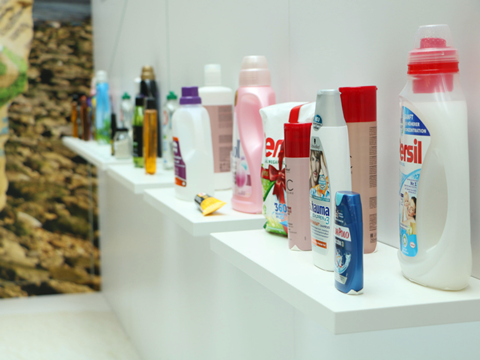
Henkel has updated its design-for-recycling and recycled plastic content targets after narrowly missing its goals for 2025 – attributing the outcome to infrastructural issues, recyclate availability, and more.
Previously, the company sought to design 100% of its packaging for recycling or reuse by 2025. Last year’s efforts included replacing toilet rimblock brand Blue Star’s plastic-paper-blister with a paper box in Austria; the new packaging is considered fully recyclable in paper waste streams.
Henkel reached 88% recyclable or reusable design by the end of the year. Moving forward, it sets its sights on designing all its packaging for recycling by 2030, excluding dangerous foods and products where ingredients or residue could contaminate recycling streams.
Reusability is no longer a target, but a commitment. The company aims to ‘emphasize sustainable packaging designs that minimize the use of packaging material and support reuse’.
“Regarding the design for recycling and reusability target, Henkel made substantial progress in many regions and on many brands,” Henkel writes in its 2025 Annual Report. “However, we have to acknowledge that complex technical hurdles and the absence of viable recycling solutions for certain formats – such as small-sized and flexible packaging – require extended development timelines.”
Henkel has also updated its previous target to achieve at least 30% recycled plastic in its consumer product packaging by 2025.
In Europe, Henkel claimed to use 45% recycled material in its consumer goods packaging. Liquid detergent and hair care brands, including Persil, Weißer Riese, Spee and Gliss, reportedly increased their recycled content.
At the same time, the bottle for Dial’s liquid hand soap was said to utilize 100% recycled plastic in North America.
By the end of the year, Henkel had achieved 28% recycled content overall. Now it intends to implement at least 35% plastic recyclate by 2030.
“Regarding the recycled content target, Henkel was not able to fully achieve the target of 30 percent, with a minor deviation,” the company adds. “Technical, availability, quality and economic challenges, along with portfolio shifts and volume effects, have contributed to the result.”
Additionally, Henkel intended to source 100% of its paper and cardboard materials from sustainable or recycled sources by last year; this includes wood-based materials that are certified as deforestation-free or derived from responsibly managed forests. The report states that Henkel was using 98% certified materials in 2025.
The report goes on to acknowledge that Henkel’s materials and packaging procurement represents a ‘significant share’ of its greenhouse gas emissions, but highlights its work with suppliers to transition into alternative, low-emission materials and build climate-resilient supply chains.
Additionally, its Packaging & Consumer Goods businesses comprised 29% of its sales last year, falling behind its Mobility & Electronics (36%) and Craftsmen, Construction & Professional (35%) businesses.
Packaging & Consumer Goods recorded ‘slightly negative’ organic sales of -0.6%, and Henkel notes the Packaging business in particular declined due to ‘subdued demand in the market.’
In similar news, Apple says that it has successfully replaced all plastics used in its packaging with fibre-based alternatives, with 30% of all material across its shipped product sourced from recycled content last year.
Mondelēz International announced that it cut approximately 1,000 tonnes of virgin plastics from its supply chain and achieved its global goal of 5% recycled content in its packaging, while Lego’s annual report states that over 95% of its packaging sold last year was made from fibre-based materials.
Bakery chain Greggs also reports that it achieved 100% recyclable own-brand packaging, minus its hot drink cups, in 2025. However, it apparently missed its 25% lightweighting target, and has shifted its focus towards easier-to-recycle materials.
If you liked this story, you might also enjoy:
The ultimate guide to packaging innovation in 2026
Packaging and Packaging Waste Regulation: what to know in 2026
Everything you need to know about global packaging sustainability regulation









No comments yet