




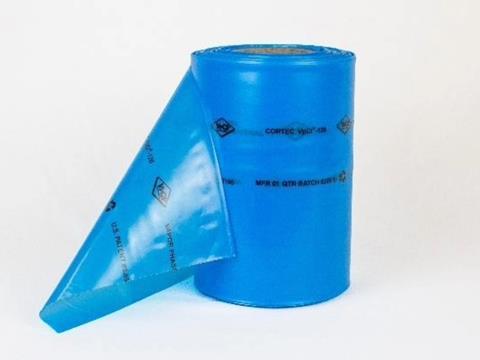
Cortec has announced that all of its VpCI-126 bags are now made with 20% minimum recycled content, a move hoped to help suppliers and end-users keep up with increasing global recycled content mandates.
By standardizing VpCI-126 film and bags to contain a minimum of 20% recycled content, Cortec and EcoCortec state they have simplified compliance for multinationals that might otherwise have to reconfigure their supply chain to keep up with changing demands. Cortec says it is also raising all VpCI-126 users to a higher standard of recycled content, reducing the use of virgin plastic even in areas without mandates.
The company adds that VpCI-126 users can become a Cortec/EcoCortec recycling partner. Both US and European plants are currently accepting inquiries from US and European customers who have large amounts of clean used VpCI film or offcuts to recycle.
The programme is ‘especially ideal’ for companies with large supply chains that receive parts packed in VpCI-126 film and need a convenient disposal channel. Approved Cortec recycling partners can reclaim the waste material by sending it back to Cortec/EcoCortec for reprocessing into new VpCI-126 film.
Apparently, Cortec tests the recycled resin to ensure moisture and melt consistency with standard raw materials and conducts physical property tests to verify that the new film maintains the necessary integrity for effective corrosion protection. Each batch of VpCI-126 film is marked for traceability.
Cortec adds that Cortec Advanced Films (US) and EcoCortec (Europe) can meet customer requirements of up to 30% PCR (post-consumer recycled) content upon request.
In related news, last year Xact Prepack partnered with Termoformas to create plastic punnets and trays for the food industry with a minimum of 80% recycled content, designed for applications including meat and fresh produce. Xact Prepack adds that the recycled content requirement means the products are not applicable for plastic tax, delivering cost savings.
A few months ago Dow, Macchi, and ITP collaborated to create a mono-PE pouch prototype containing over 50% chemically recycled content, intended as a recyclable pack for snacks and other highly regulated products. This approach is expected to lessen reliance on virgin resources while providing a gas and moisture-resistant material suitable for direct contact with food products.
If you liked this story, you might also enjoy:
The ultimate guide to packaging innovation in 2026
The ‘complex reality’ of reusable packaging in Europe
Everything you need to know about global packaging sustainability regulation













No comments yet