




All Food articles – Page 3
-
 Article
Can seaweed-based films replace plastic?
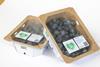
Noriware recently closed a €4.3M seed round in a bid to scale its seaweed-based transparent film. The company says that its product, Norifresh, has no chemical modifications, adhesives or coatings, can be directly heat-sealed onto cardboard, and is suitable for use on existing production lines. In this interview with Jessica Farda, Noriware’s co-founder and CEO, we learn more about the key functionalities of the solution, its origin story, and its potential to scale.
-
 Article
Mondi introduces laser marking concept for e-commerce packaging
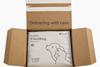
Mondi has unveiled a new packaging concept combining a corrugated outer box with recyclable, laser-marked flexible packaging, designed for e-commerce and bag-in-box applications.
-
 Article
Altopack reveals resealable zip pack for spaghetti
Altopack has introduced a new resealable zip pack for spaghetti allowing consumers to reseal the pack after each use, preserving product freshness and protecting it from external contamination over time.
-
 Article
Taking a closer look at the EU’s latest PPWR guidance
The European Commission recently published further guidance on the Packaging and Packaging Waste Directive, this time in the form of a Frequently Asked Questions document. Launched at the height of the summer break and just days before the PPWR begins to apply, what are the key points the packaging industry needs to be aware of? Matteo Squeo, founder of The Green Clause and member of the Permanent Delegation of the Court of Justice, the General Court and the EFTA Court, takes a comprehensive look.
-
 Article
Dunn’s River seasoning products debut new look
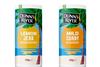
Grace Foods, a major supplier of Caribbean food and drink products, has launched a new pack design for its Dunn’s River seasoning range.
-
 Article
Sustainability Awards Finalist Interview: PAPACKS’ fibre box for chilled fish and seafood
PAPACKS is nominated in this year’s Sustainability Awards for its Molded Fiber Box for chilled fish and seafood, said to be food-contact safe and recyclable in the paper waste stream. A finalist in the Renewables category, we spoke to PAPACKS CMO Manuel Leibrock to find out more.
-
 Article
ResponsibleGlass opens public consultation for international glassmaking standard
ResponsibleGlass has launched the first public consultation on its International Standard for Glassmaking draft, from 20th July-18th September 2026. The draft covers all aspects of glass production including legal compliance, transparency and reporting, responsible sourcing and design for sustainability and circularity.
-
 Article
Indorama Ventures begins Zero Waste to Landfill initiative at Philippines recycling site
Indorama Ventures has announced a new Zero Waste to Landfill initiative at its recycling site PETValue Philippines, aiming to maximize resource efficiency and reduce waste for its IndoNova business, which recycles post-consumer PET bottles into high-quality food-grade recycled PET.
-
 Article
Freshness-saving packs from Esseoquattro slow spoilage to avoid waste
Esseoquattro’s Ideabrill line of freshness-saving packaging is designed to slow food spoilage, reduce food waste, and separate easily for recycling.
-
 Article
BZERO raises €2.5 million in seed round for home-compostable film
Biomaterials startup BZERO says it has closed an oversubscribed €1.5 million seed round to accelerate commercial adoption of its home-compostable film, said to be as thin as 7 microns while having the same mechanical strength as conventional plastic.
-
 Article
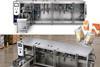
WeighPack seeks increased throughput with new pouch bagger
WeighPack Systems has announced its new Swifty S-3600 Duplex high-speed pre-made pouch bagger, part of its Swifty Bagger portfolio, said to deliver increased throughput and maintain precise pouch handling across a range of applications.
-
 Article
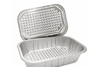
Aluminium meat and seafood tray replaces absorbent pads for recyclability
i2r Packaging Solutions has designed its new aluminium tray to replace hard-to-recycle absorbent soakaway pads in fresh meat and seafood packaging.
-
 Article
ReVentas receives £3.5m from Scottish government to develop solvent-based recycling technology
Start-up ReVentas has been awarded a £3.5m grant from Scottish Enterprise (Scotland’s national economic development agency) to fund the development of its solvent-based recycling technology over the next three years, particularly focusing on hard to recycle plastics including food packaging films.
-
 Article
Inside a new project turning flexible snack packs into new food packaging
Last month we reported on HolyGrail 2030’s latest project to test intelligent sorting and recycling of flexible food-contact polypropylene (PP) packaging, and the consortium has now begun industrial trials utilizing digital watermarks. We spoke with Richard Akkermans, European R&D packaging productivity and sustainability manager at Mondelēz and Russell Avens, global packaging director at pladis, to find out more.
-
 Article
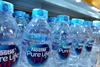
How are big brands working with plastic packaging in 2026?
How are household brands using or reducing plastic packaging – and what does it say about brand sentiment on the whole? We take a closer look at the five biggest brands by sales – Nestlé, PepsiCo, Procter & Gamble, Unilever, and Coca-Cola – to discover their attitudes ...
-
 Article
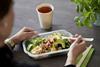
Duni Group implements PP mono-material solutions for takeaway, ready meals and catering
Duni Group has announced it is implementing polypropylene (PP) mono-material solutions across its Duniform brand’s takeaway, ready meal and catering lines, aiming to make them more compatible with existing recycling systems.
-
 Article
Plastipak aims to increase recycled content with single pellet PET resin
Plastipak has revealed its pakPET Single Pellet Solution, designed to help manufacturers increase recycled content while maintaining packaging quality, consistency and operational efficiency.
-
 Article
Limited-edition Nature Valley packaging encourages visits to national parks
Nature Valley has revealed commemorative packaging and merchandise kits inspired by national parks in the United States, hoping to encourage consumers to visit them in person.
-
 Article
New R&D centre for Magnum targets packaging prototypes and development in India
The Magnum Ice Cream Company (TMICC) has opened a new Research, Design & Innovation Centre in Bengaluru, India, aiming to accelerate consumer-led product and packaging development across the Kwality Wall’s, Cornetto, Magnum, Carte D’Or, Feast, and Twister brands.
-
 Article
Could European retailers pack fresh produce in banana leaves?
Retailers in Southeast Asia regularly go viral on social media for wrapping fresh produce in banana leaves. Could this approach serve as an effective solution in other global regions? Packaging Europe dives deeper in search of an answer.