


What does your business need to do next to comply with the Packaging and Packaging Waste Regulation (PPWR)?
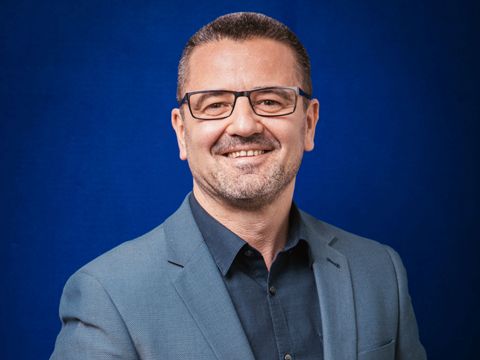
With just over six weeks to go until the Sustainable Packaging Summit 2026, we touched base with Marius Tent, founder of Via Packaging UG and 360PackMastery.com, to hear a snapshot of the conversations taking place at this year’s event.
Click here to learn more about attending this year’s Sustainable Packaging Summit.
What do you think will be the key talking points at the 2026 Sustainable Packaging Summit?
The biggest PPWR mistake in 2026 will be waiting for certainty.
We already know enough to act. Yes, important secondary legislation is still coming, particularly around recyclability. But packaging investments, line changes, supplier decisions and portfolio redesign do not happen overnight.
The companies that will be best prepared are the ones creating room to adapt now – not betting everything on one material or one answer.
That means designing packaging portfolios that can evolve, being very careful about investments that could lock the business into the wrong solution, and getting serious about data. Every pack will increasingly need a data trail as robust as its material specification – composition, recyclability, compliance evidence, cost and, increasingly, EPR implications.
And we should not forget people. This is the moment to invest in packaging capabilities, too. Regulation may trigger the transformation, but people will make it happen. People! I cannot emphasize this enough (this comes from someone who has built multiple packaging teams that made a difference, sometimes from ground, across the globe).
One of the shifts I find most interesting is EPR moving much closer to the design table. As recyclability performance becomes connected to future fee modulation, packaging choices increasingly have a direct financial consequence. That changes the conversation with procurement, finance, innovation and leadership.
So I do not think the big question in Utrecht will be whether paper, plastic, reuse or another solution “wins”.
The much more important question is: How do we make packaging decisions today that will still make sense when regulation, infrastructure and technology look different tomorrow?
For me, that is where the real PPWR conversation begins.
Plenty of brand owners will be represented at the Summit – what sort of things do you expect them to be saying about the PPWR?
There’s a reason I enjoy this question.
Before building ViaPackaging and 360Mastery.com, I spent most of my career on the brand-owner side of the table. I know what it feels like when a regulation may arrive through Legal or Sustainability, but very quickly lands on the desks of Packaging, Procurement, Operations, Marketing and Finance.
I think brands will be saying: we understand where PPWR is taking us; now we have to make good decisions while some of the detail is still evolving.
Of course they want clarity on secondary legislation, recyclability and EPR. But they also know they cannot simply wait.
The real questions are much more practical: What do we redesign? Where do we invest? What do we simplify? What do we digitize? And how do we avoid solving one problem while creating another?
Because PPWR is not just a compliance exercise. It affects cost, operations, procurement, innovation, consumer experience and capital.
That is when regulation becomes genuinely interesting to me: when it leaves the legal department and starts changing how the business thinks.
We see a lot of concerning/negative packaging stories every day, so much so that it can be hard to remember positive stories about innovation and sustainability successes.
What has been your favourite packaging-related good news story from the past year?
I should probably declare a conflict of interest here – I’m going to cheat and choose two.
The first is RoFLEX, with CEFLEX.
What excites me is not a shiny new material (although that matters, too). It is something much harder: bringing brand owners, EPR schemes, industry and brand-owner associations, collectors, sorters and recyclers together, putting real material through real infrastructure, seeing where the system works and where it does not - and then taking that evidence to policymakers.
That really matters.
Because circularity is not a material problem. It is a system problem.
If Europe is serious about the 55% recycling target for plastic packaging waste by 2030, then flexible packaging has to work not only in the most advanced markets. It has to work across Europe, with different infrastructure, economics and starting points.
And there is something bigger behind that. When we keep materials circulating in Europe, we retain value, reduce waste and reduce our dependence on virgin resources. Circularity is therefore not only an environmental issue; it is increasingly part of Europe’s economic resilience.
My second choice is CELAB Europe and release liner.
It is almost the opposite of a glamorous sustainability story – which is precisely why I love it. Release liner is easy to overlook. But there are tonnes of material there, and practical collection and recycling solutions can make a real difference.
I think some of our biggest sustainability opportunities are hiding in plain sight.
Real circularity is not always the next breakthrough material. Sometimes it is finding the waste everybody forgot, connecting the right people and simply making the system work.
Yes, I am subjective about these two. I am helping drive them because I believe deeply in what they are trying to achieve.
For me, purpose becomes real when it changes what actually happens to material after we have finished using it.
When you think about the 2026 Sustainable Packaging Summit, what is the part you are most excited for?
Probably the coffee breaks – because that is often where the packaging industry stops presenting and starts telling the truth.
And I mean that seriously.
2026 is an unusual moment. PPWR is now part of everyday business, important details are still being developed, and companies are already making decisions that will shape their packaging for years.
So I am looking forward to the conversations where brand owners, policymakers, EPR schemes, recyclers, converters and innovators stop defending their own corner for a moment and ask:
What will actually work – at scale, economically, and across Europe?
Because sustainable packaging will not be decided by the loudest claim, the newest material or one piece of legislation.
It will be decided by whether we can connect regulation with infrastructure, innovation with economics, and ambition with what consumers and businesses can actually make work.
I do not expect everyone in Utrecht to agree. In fact, I hope we do not. Because that means progress!
But if we leave with fewer slogans, better questions and a few solutions we could only have found together, I think that would be a very good Summit.
If you liked this story, you might also enjoy:
The ultimate guide to packaging innovation in 2026
Packaging and Packaging Waste Regulation: what to know in 2026
Everything you need to know about global packaging sustainability regulation
















No comments yet