
Innovia Films reveals new high-barrier metallized BOPP film
Innovia Films has introduced Propafilm CHBM, an ultra-high barrier metallized BOPP film said to provide ‘exceptional’ product protection and
Innovia Films has introduced Propafilm CHBM, an ultra-high barrier metallized BOPP film said to provide ‘exceptional’ product protection and

Kraft Natural Cheese has introduced its Pocket Parm miniature bottle format for its grated cheese, designed to clip onto a
Australian Vintage's Poco Vino offers wine in 178 ml single-serve bottles for easier transportation, lower-waste sampling,

Where will the next generation of sustainable packaging materials come from, and how will they reach commercial scale?
Ward Heij, business development manager at Colesco Circular & Climate Credit Impact Fund (C4IF), discusses the opportunities and challenges for biobased materials, the role of renewable carbon, and how packaging companies should assess their viability.
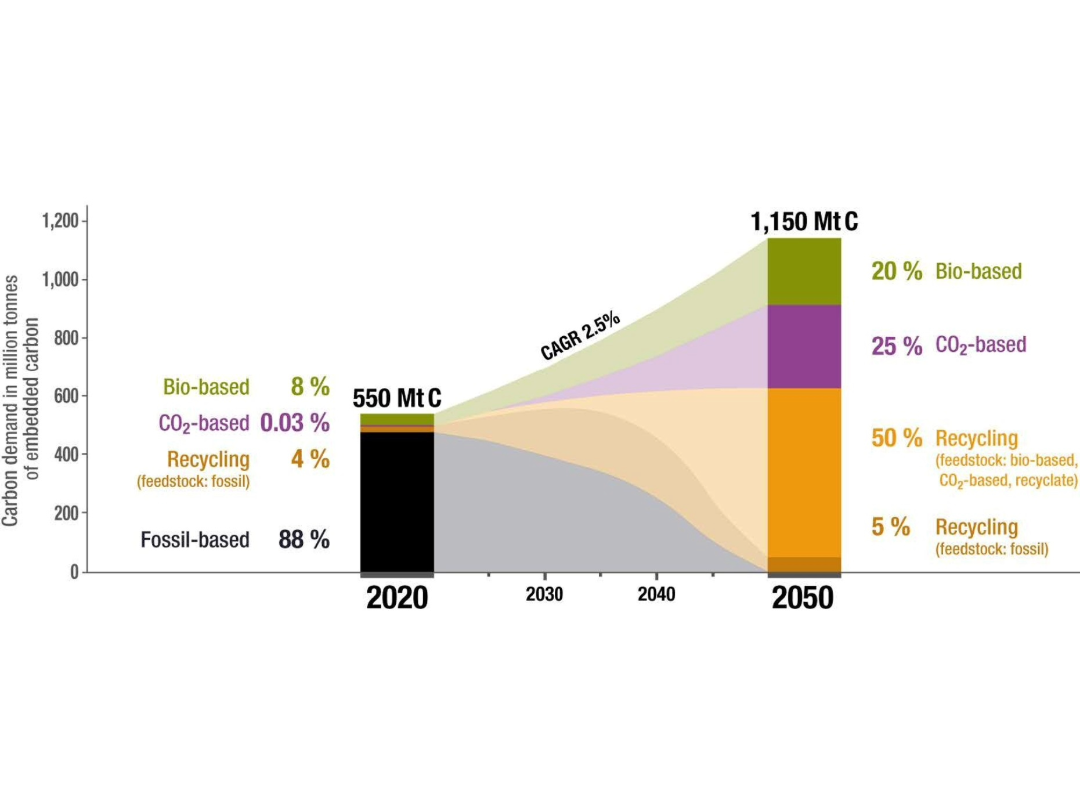
Like with most materials, the starting point for any packaging is carbon. Most packaging (food trays, tubs, films, bottles) is carbon-based, yet today that carbon is still largely fossil-derived: the Nova Institute estimates that around 85% of the carbon embedded in organic chemicals and derived materials currently comes from fossil feedstocks, compared with approximately 10% from biomass and 5% from recycled sources.
Reducing reliance on fossil-derived carbon is therefore an important part of efforts to reduce the packaging industry’s dependence on fossil resources. As the Ellen MacArthur Foundation has highlighted, shifting a material’s carbon base through the biological cycle is just as important as the technical one, creating a significant opportunity for businesses developing renewable carbon alternatives.
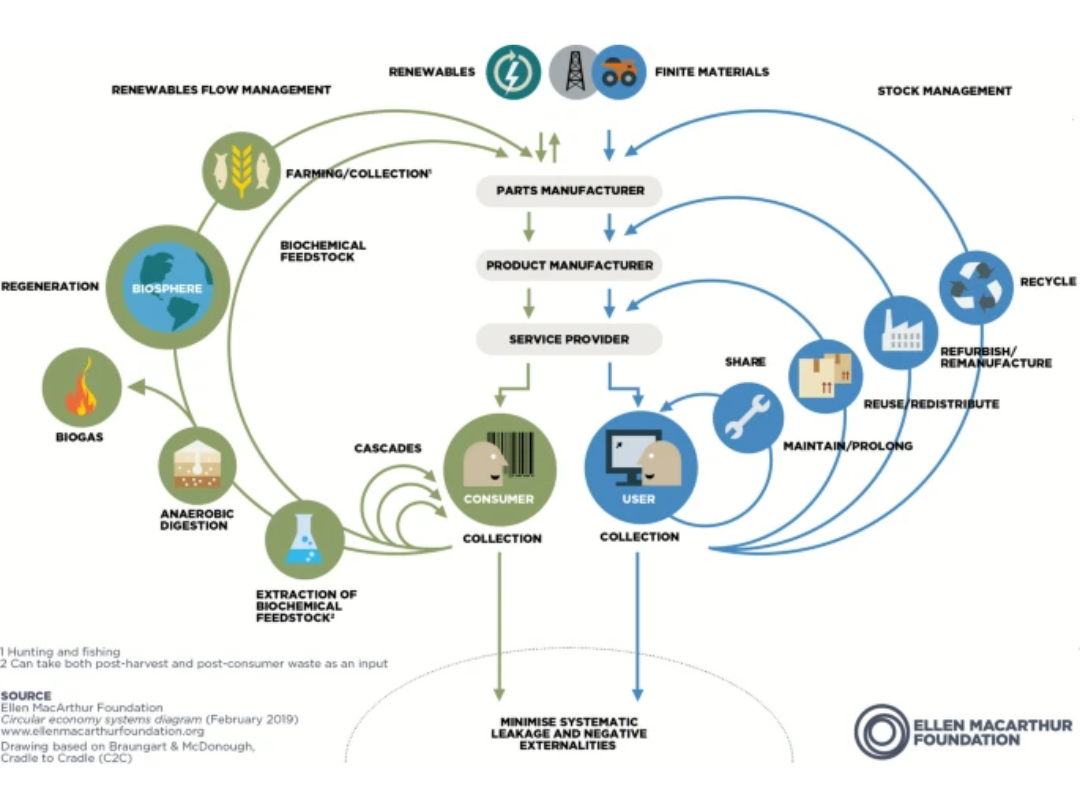
This is the basis of the renewable carbon concept, developed by the Nova Institute and the Renewable Carbon Initiative, which argues that embedded carbon should come from non-fossil sources. These fall into three categories: recycled carbon from waste streams; captured carbon from CO2; and biogenic carbon derived from biomass (noted as bio-based in the chart). Each has a role to play in a credible circular economy.
For packaging, this creates an opportunity to reduce reliance on fossil-derived carbon through greater use of recycled, captured and biogenic carbon, depending on the application.
Through C4IF, its circular and climate credit fund, Colesco Capital evaluates businesses developing renewable-carbon technologies, and a consistent pattern has emerged: bio-based alternatives to fossil-based packaging already exist across polymers, fibres and coatings, and many are technically proven.
The real challenge is identifying which scale-ups can overcome the commercial, operational and financing hurdles required to mature. Many companies stumble during the transition from demonstration to commercial deployment, where success depends far less on the technology itself than on three commercial fundamentals: long-term customer demand, regulatory certainty, and access to suitable financing for the realisation of a first-of-a-kind (FOAK) production facility. This article explores bio-based packaging through that lens.
Demand: the signal that decides what scales
Packaging is both fossil-dependent and a persistent source of waste (the EU generated 79.7 million tonnes of it in 2023, according to Eurostat). Brand owners are facing growing pressure from sustainability commitments, customer expectations and regulation, but on the other hand are rarely willing to pay a premium for sustainable packaging material.
To prove market viability of bio-based packaging, producers need predictable and stable demand at scale. This demand will only manifest if bio-based packaging will truly be able to compete with fossil alternatives on cost, or when a strong regulatory framework creates an incentive for brand owners to pay the required premium. Creating sufficient large-scale demand is therefore likely to be one of the most important determinants of which bio-based packaging technologies ultimately scale.
Regulation: why certainty matters more than ambition
The EU’s Packaging and Packaging Waste Regulation (PPWR, Regulation (EU) 2025/40) entered into force in February 2025 and will apply from August 2026, replacing fragmented national rules with a single, directly applicable framework. From 2030, all packaging placed on the EU market must be designed for recycling, minimum recycled-content thresholds will apply, and new obligations on minimisation and reuse will take effect.
For investors, manufacturers and brand owners alike, this harmonised framework provides greater clarity over the long-term direction of the market. A binding, EU-wide framework increases regulatory pressure on packaging producers and brand owners to meet requirements around recyclability, recycled content, minimisation and reuse, providing greater clarity over the direction of the market.
Although these requirements do not necessarily favour bio-based materials specifically, greater regulatory certainty can help create the conditions in which alternatives to conventional fossil-based packaging are evaluated and adopted. Material weakening or postponement of these requirements could reduce the regulatory demand signal for investment in alternative packaging solutions, while also affecting perceptions of the EU’s regulatory predictability and stability.
For investors, a predictable PPWR is crucial for their ability to commit funding to companies developing bio-based packaging alternatives.
But for a business making an investment decision for a plant expected to operate for decades, or a lender underwriting a long-term loan against it, the value of regulation lies more in the certainty it provides, than in its ambition. A production facility financed today will still be repaying debt well beyond 2030, and the investment case rests on the assumption that the market demand signalled by regulation will materialise on schedule, supported by clear consequences for non-compliance.
At the time of writing, however, uncertainty remains around how elements of the PPWR will be implemented and enforced. Where the timing or consequences of non-compliance are unclear, prospective off-takers have a rational incentive to delay long-term commitments. Every month of delay makes it harder for first commercial facilities to secure financing. Regulatory certainty is not simply a backdrop to the bioeconomy; it is a driver of investment decisions and a direct input into the cost of capital.
Where the momentum is
Bio-based packaging is developing along three paths, with markedly different commercial profiles.
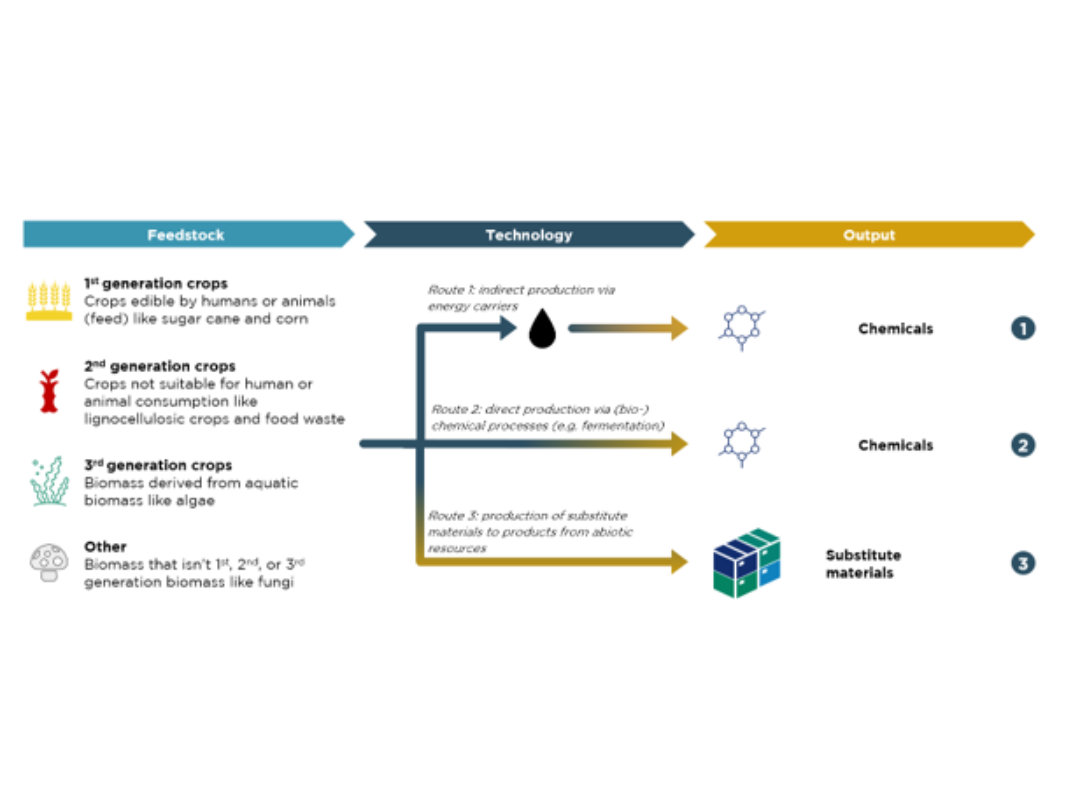
The direct route converts biomass (typically sugars) into polymers through fermentation, producing PLA and PHA. Although technically proven, these materials face a demanding commercial proposition. They often require the value chain to accept a new material, establish new end-of-life solutions and absorb a price premium simultaneously. In applications where composting infrastructure and regulation align, they work well. As a general substitute for conventional plastics, however, the path to scale remains more challenging.
The indirect route converts biomass into an intermediate energy carrier (methanol, ethanol or syngas), before producing polymers through conventional petrochemical methods. This yields drop-in materials chemically identical to fossil plastics, and it is where the strongest near-term momentum appears to lie.
As drop-in materials are chemically identical to their fossil-derived counterparts, they can generally be processed using existing assets, meet established specifications and enter existing recycling streams. Theoretically, this leaves cost competitiveness as the remaining challenge which significantly simplifies commercial adoption, making long-term offtake agreements easier to secure and, ultimately, projects easier to finance.
In practice, the business case for this route is rarely competitive with that of fossil alternatives – again highlighting the need for demand creation mechanisms.
Fibre and natural-material packaging (paper and moulded fibre, alongside emerging materials from agricultural residues, algae and fungi) benefit from a similar advantage as drop-ins. They can often be integrated into established recycling systems, enabling substitution wherever performance requirements can be met.
The main challenge is achieving the barrier properties and durability needed for demanding applications, particularly food contact, while remaining cost competitive with virgin plastic. As a result, much of the most commercially significant innovation is focused on developing recyclable barrier coatings that allow fibre-based packaging to compete without compromising circularity.
Bio-based does not automatically mean sustainable
An important caveat applies. Bio-based does not automatically mean sustainable, nor does it automatically satisfy the requirements of the PPWR.
The regulation rewards packaging that is recyclable and that keeps materials in circulation; compostability is recognised only in specific applications. For investors and manufacturers alike, this distinction matters.
A bio-based material that cannot be recycled, is not compostable, or that competes with food production for feedstock, may solve one problem while creating another. By contrast, bio-based drop-in materials that are chemically identical to their fossil-derived counterparts can be processed, used and recycled within existing infrastructure, while reducing reliance on fossil-derived feedstocks.
Ultimately, the technologies most likely to succeed will not simply replace fossil feedstocks; they will need to integrate effectively into existing value chains while demonstrating a credible environmental advantage across factors such as feedstock sourcing, fossil-resource use and end-of-life treatment.
The scale-up challenge
For many emerging technologies, the principal difficulty is not demonstrating technical viability at laboratory or demonstration scale, but proving that they can operate reliably, profitably and competitively at industrial scale.
The barriers are well documented: technology and execution risk, feedstock availability, consistency and logistics, certification and market acceptance, pricing, the need for committed long-term customers, and substantial capital requirements. As a result, FOAK facilities tend to fall between conventional financing options: too risky for traditional lenders, yet too capital-intensive for equity investors alone.
From a credit perspective, however, these risks are not equally weighted. Technology risk can be mitigated and managed through due diligence. Far harder to underwrite is a project whose revenues depend on future customer commitments, within a regulatory environment that is still evolving.
Without confidence that demand will materialise sufficiently, financing becomes significantly more challenging, regardless of how promising the technology may be. Ultimately, bankability is a demand question dressed up as a technical one.
Why financing matters
This is one area in which impact-focused private credit strategies such as C4IF can play a role, by providing financing structured around the particular risks of commercial scale-up. Commercial deployment of bio-based packaging requires patient, long-term capital structured around the realities of scale-up: financing that supports construction, accommodates phased commissioning and reflects the cash flows that first commercial facilities can realistically generate.
Debt of this kind can help bridge the gap between demonstration and commercial deployment. Compared with raising additional equity, debt financing can allow founders and existing investors to retain a greater share of ownership, and it helps businesses establish the operational track record needed to attract more conventional sources of finance as they scale.
Finance alone, however, is not enough. Capital can accelerate commercialisation, but it cannot compensate for uncertain demand or an unpredictable regulatory environment. The projects most likely to succeed are those where technology, long-term customer demand, regulatory certainty and appropriately structured financing come together.
Looking ahead
The technologies are increasingly available. Bio-based packaging will not replace recycling, nor is it intended to - it is one part of a broader transition to renewable carbon, alongside recycled and captured carbon, and it could become increasingly important as pressure to reduce reliance on fossil feedstocks grows.
Which of these materials ultimately reaches industrial scale, however, will not be decided in the laboratory. It will be determined by three factors: regulation that provides sufficient certainty to underwrite; long-term customer demand that is contracted rather than merely intended; and access to financing appropriate to the risks of FOAK deployment.
The question is therefore increasingly less about whether bio-based packaging technologies can work, and more about whether the right market, regulatory and financing conditions will exist to allow commercially viable solutions to scale.
If you liked this story, you might also enjoy:
The ultimate guide to global packaging sustainability regulation in 2026
PPWR timeline: the key dates to know

PPWR is a data challenge. In this Spotlight, we find out how Centric Software® tackles the challenge through a connected

In this Spotlight, Plastipak discusses the opening of its PET material centre in Verbania, Italy. Home to pakPET™ Single Pellet

In the latest edition of the Spotlight, Matthew Wright, Founder and CEO of FOREST-PKG, shares why finding the right

Duynie has decades of experience in developing applications for side-stream potato starch. With Novinexx CPB, the company is applying


In this edition of The Spotlight, Markem-Imaje examines how 2D coding is redefining the role of flexible packaging and


The material that consumer and industrial (C&I) applications rely on just got a sustainability upgrade. DuPont talks us

Australian Vintage's Poco Vino offers wine in 178 ml single-serve bottles for easier transportation, lower-waste sampling,

What do the recently published CEN design for recycling standards mean for the packaging value chain and particularly for labels?


UPM is working with Ingredion and Paramelt to research the use of starch-based barrier technologies for recyclable paper food

Z1RO has announced that industrial trials have been completed for its materials on automated wet moulded fibre equipment at Kiefel