
Kneipp trials Sonoco’s fibre-based can for limited-edition bath crystals
Kneipp has launched its limited-edition bath crystals in Sonoco’s fibre-based GreenCan packaging in a bid to unlock
Kneipp has launched its limited-edition bath crystals in Sonoco’s fibre-based GreenCan packaging in a bid to unlock

BioPak’s Huskee brand has developed an intelligent, IoT-enabled Smart Bin for reusable cups and containers – intended to simplify

Futamura and Bio4life have collaborated on a certified home and industrially compostable PSA label, designed to help retailers and packers eliminate conventional plastic stickers from fresh fruit and vegetables.
The new label combines Futamura’s NatureFlex cellulose films (derived from responsibly managed wood pulp) and Bio4life’s technology in a renewable label said to be food-safe and suitable for fresh produce such as apples, avocados, kiwis and citrus fruits. The companies state that traditional PSA labels use fossil-based plastics and non-compostable adhesives which make them a contamination risk in organic waste streams and anaerobic digestion processes, because consumers dispose of the fruit and vegetable skins and the label together.
According to Futamura, its fruit and vegetable labels produced using NatureFlex films are suitable for anaerobic digestion and break down without contamination. The new compostable PSA label aims to meet growing demand for environmentally responsible packaging solutions without compromising performance, printability or application efficiency.
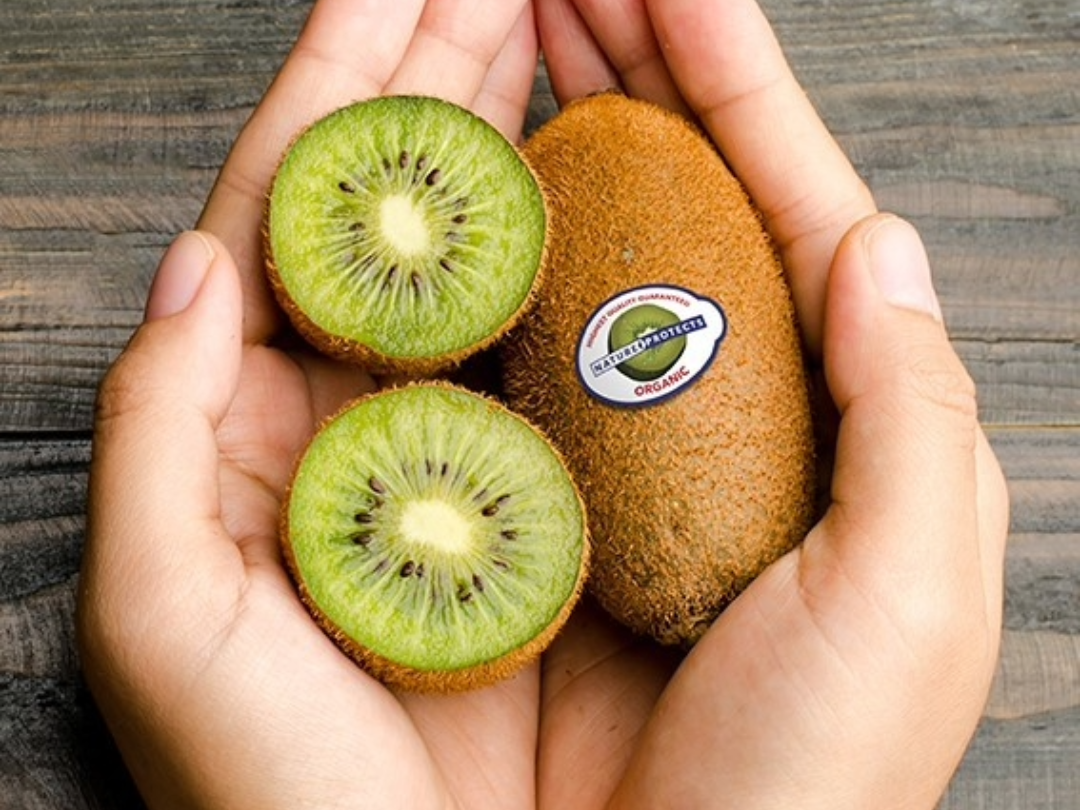
The NatureFlex films are available in clear, white or metallized variants and are suited for die-cutting and dispensing. Futamura adds that their stiffness means they can be used in thinner grammages compared to other bio-based and compostable alternatives while maintaining ‘excellent’ machineability.
Apparently, the films also have a high barrier to oils and chemicals, a great adhesive key and can achieve a highly decorative finish. The barrier properties help to prevent any transfer through the label and preserve its freshness over time.
Marcel de Oude, co-owner of Bio4life, comments: “Our home compostable adhesive technology BioTAK is designed to work hand-in-hand with renewable home compostable substrates like NatureFlex. This partnership showcases how collaboration can accelerate the shift toward packaging that supports a circular economy. We’re proud to bring this innovation to market with Futamura.”
In related news, last year TIPA Compostable Packaging and its European subsidiary Bio4Pack launched a new ‘certified home compostable’ label for fresh produce, suitable for a wide variety of fresh fruits and vegetables. The labels are said to be compatible with conventional label printing presses; suitable for machine and hand application techniques; durable in cold and moist conditions and certified as food-safe for direct food application.
In other labelling news, UPM Specialty Materials has extended its barrier paper technology to label face papers for the first time under its new UPM Asendo 80 grade, which applies grease-resistance technology to labelling without using PFAS. UPM says the new grade is compatible with a range of adhesive types, suited to UV Flexo and UV-inkjet printing and meets the U.S Food and Drug Administration (FDA) and the German Federal Institute for Risk Assessment (BfR) requirements for food-contact use.
If you liked this story, you might also enjoy:
The ultimate guide to global packaging sustainability regulation in 2026
PPWR timeline: the key dates to know


In this edition of The Spotlight, Markem-Imaje examines how 2D coding is redefining the role of flexible packaging and


The material that consumer and industrial (C&I) applications rely on just got a sustainability upgrade. DuPont talks us


Utilizing vacuum aluminizing and laser-writing technologies, Shunho Creative (a sub-brand of Shanghai Shunho International) has developed a plastic-

Seeking to meet the challenges of the climate crisis and regulatory changes, Smurfit Westrock is investing in its manufacturing network,

ATS-Tanner’s banding solutions aim to reduce packaging waste, provide a practical alternative to plastic and improve recyclability. In

Kneipp has launched its limited-edition bath crystals in Sonoco’s fibre-based GreenCan packaging in a bid to unlock

BioPak’s Huskee brand has developed an intelligent, IoT-enabled Smart Bin for reusable cups and containers – intended to simplify


How do sustainable packaging topics in the United States fit into the global conversation, and what can different regions learn