
Kneipp trials Sonoco’s fibre-based can for limited-edition bath crystals
Kneipp has launched its limited-edition bath crystals in Sonoco’s fibre-based GreenCan packaging in a bid to unlock
Kneipp has launched its limited-edition bath crystals in Sonoco’s fibre-based GreenCan packaging in a bid to unlock

BioPak’s Huskee brand has developed an intelligent, IoT-enabled Smart Bin for reusable cups and containers – intended to simplify

In a bid to upscale reuse in the Global South, Smartfill and DY|DX have open-sourced the core design and technical architecture of their dispensing systems for liquid FMCG products, first developed alongside Unilever and Bopinc.
The technology was developed in South Africa via the TRANSFORM impact accelerator, in which Unilever, the UK’s Foreign, Commonwealth & Development Office, and EY come together to support SMEs and entrepreneurs in testing and scaling new packaging models.
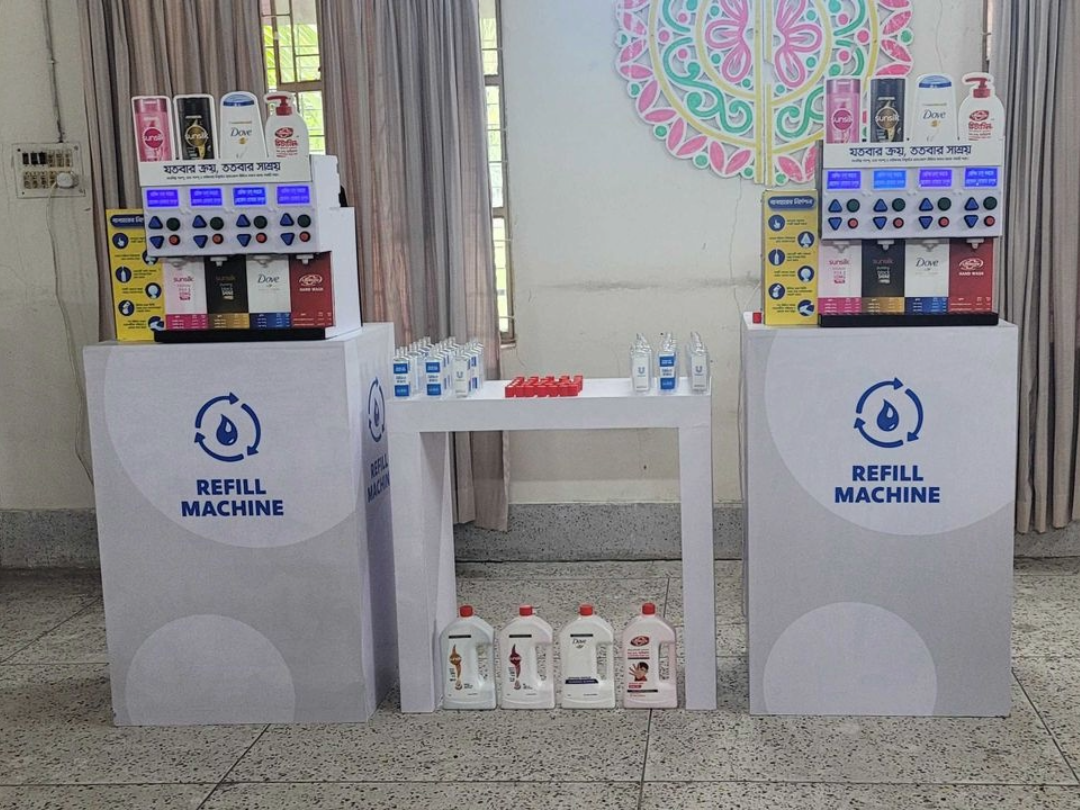
Designed as a replacement for single-use sachets, the dispensing system requires shopkeepers and consumers to refill bottles with FMCG products. Smartfill and DY|DX also aim to tackle the global challenge of high hardware costs by allowing users to adopt the system for less than US$50 per dispenser.
Now the designs will be available to any party for commercial use through a General Public License. This will include designs for dispenser hardware using widely available components; shared bills of materials totalling less than US$35 per product line; firmware guidelines and technical standards; and documentation of technical, behavioural, and business-model learnings from real-world deployments.
The assets are hosted on the moderated open-source repository OpenRefill. The core design can be further adapted by developers, but any improvements must also be made available to other customers.
Credit: Smarfill
Open-sourcing the technology is also anticipated to support the development of industry standards and regulatory reform. Advocacy groups and policymakers are set to benefit from shared data and documentation as they work on metrology, labelling, and quality standards to increase the adoption of refill.
“Refill won’t scale if every market has to start from scratch,” said Nevo Hadas, CEO of Smartfill and partner at DY|DX. “We already see multiple small-scale hardware manufacturers recreating the wheel in pilots when the technology could be made available and the investment focused on driving adoption.
“By open-sourcing the core dispenser design and learnings for shampoos, liquid soaps and conditioners, we’re lowering the barrier to entry so brands and innovators can adapt, improve and deploy refill systems that are proven to work. This has strong potential to directly tackle sachet sales, which are made of multi-layered plastic and difficult to collect and recycle.
“Our vision has always been that refill dispensers will be as common as cold drink fridges. If refill is going to win, it has to be cheaper, simpler and easier to adopt than single-use packaging.
“Open source is a part of how we get there, and we call on innovators around the world to improve on our designs, implement in new markets and bring this technology to scale.”
The system was first implemented in ‘mom and pop shops’ serving low-income communities in Bangladesh, deployed with a smaller unit size and a custom bill of materials. Similar refill devices are currently being tested in South Africa through a separate TRANSFORM project, with South African deployments operating as fully managed commercial systems for food-safe solids and liquids.
Unilever has contributed to various refill pilots in recent years, including a collaboration with Vega Innovations to install two large high-tech refill machines in modern trade outlets in Sri Lanka; a trial for self-service refill machines in Bangladeshi modern trade stores, undertaken alongside Bopinc; and work alongside Alner and other local partners to help supply family-owned roadside stalls across Indonesia with scalable manual refill stations. Each solution dispensed home and personal care brands from Unilever, including Dove, TRESemmé, Sunsilk, and Sunlight.
Elsewhere, Sonke introduced its first automated refill store in Johannesburg. Consumers were invited to refill their own containers with products from Sunlight, Handy Andy, and other Unilever brands at bulk prices – a move set to achieve cost savings of up to 60%.
If you liked this story, you might also enjoy:
The ultimate guide to packaging innovation in 2026
Packaging and Packaging Waste Regulation: what to know in 2026
Everything you need to know about global packaging sustainability regulation


In this edition of The Spotlight, Markem-Imaje examines how 2D coding is redefining the role of flexible packaging and


The material that consumer and industrial (C&I) applications rely on just got a sustainability upgrade. DuPont talks us


Utilizing vacuum aluminizing and laser-writing technologies, Shunho Creative (a sub-brand of Shanghai Shunho International) has developed a plastic-

Seeking to meet the challenges of the climate crisis and regulatory changes, Smurfit Westrock is investing in its manufacturing network,

ATS-Tanner’s banding solutions aim to reduce packaging waste, provide a practical alternative to plastic and improve recyclability. In

Kneipp has launched its limited-edition bath crystals in Sonoco’s fibre-based GreenCan packaging in a bid to unlock

BioPak’s Huskee brand has developed an intelligent, IoT-enabled Smart Bin for reusable cups and containers – intended to simplify


How do sustainable packaging topics in the United States fit into the global conversation, and what can different regions learn