





Transporting air is costly – both from an operational and a sustainability point of view. Fraunhofer IML has presented a market-ready software that sets out to tackle this challenge head on.
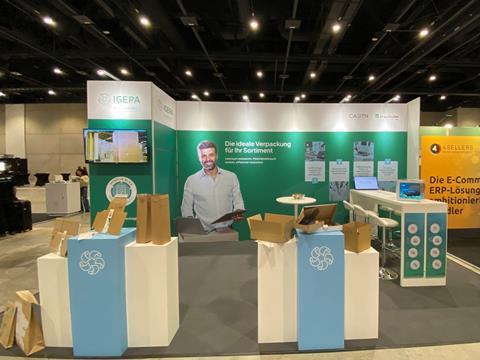
The CASTN tool (Carton Set Optimization) helps to make the actual filled percentage of each carton visible. Reports have shown that often, the percentage is below the level that would make sense from a regulatory and economical point of view. In view of the European Packaging and Packaging Waste Regulation (PPWR) that sets out the requirement of a a minimum use volume of 50%, the issue becomes even more pressing.
CASTN aims to reduce empty space during shipping as much as possible. The software enables the analysis of data quality and supports companies to evaluate their own data and identify weaknesses – an important step towards efficient operations. Companies can then analyze their box usage. Building on that, the software supports the creation of an optimized standardized carton set, tailored to a company’s individual needs. It determines a suitable selection of shipping cartons individually in order to maximize volume utilization within the cartons while minimizing the number of carton sizes required.
Customer-specific parameters can be taken into account, such as the maximum or minimum carton size, weight restrictions, or special cartons that must be included in the set in all cases.
Researchers have developed the software with collaboration with industry partners, such as Hellmann Worldwide Logistics and NORDWEST Handel AG. It is now available as a market-ready solution.
In March this year, Sealed Air created an automated void reduction system to process two box sizes on one machine, right-size corrugated packaging and avoid unnecessary waste.
Late last year, Electronics for Imaging (EFI) has unveiled its Packsize EFI X5 Nozomi solution, the ‘world’s first’ full-colour, right-sized on-demand box system seeking to address challenges such as long lead times and rising labour requirements.















No comments yet