




All Food articles – Page 25
-
 Article
Huhtamaki’s plant polymer-coated delivery boxes now available via Lieferando
Lieferando is providing partnering restaurants with corrugated paper delivery boxes from Huhtamaki, coated with Xampla’s plant-based polymer, in hopes of providing ‘plastic-free’ and ‘biodegradable’ packaging solutions for a broader range of dishes.
-
 Article
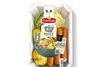
DS Smith and Priméale launch fibre-based tray for fresh produce
DS Smith and Priméale (part of agricultural and food processing group Agrial) have collaborated to create a plastic free, fibre-based punnet for Priméale’s Vegetable Kit range, designed to protect fresh produce during transportation and on the supermarket shelf.
-
 Article
Fibre-based bottle from Zipform contains 50% PCR and avoids plastic liner
Zipform Packaging has developed a bottle made with 95% wood-based fibre and over 50% post-consumer recycled content, replacing the conventional plastic liner with a moisture- and oxygen-resistant barrier layer to improve recyclability.
-
 Article
The key to increasing the use of reusable packaging in supermarkets
At the end of 2022, the Dutch Ministry of Infrastructure and Water Management (IenW) began an initiative titled the ‘Reuse Roadmap 2030 for Supermarkets’ involving various supermarkets and organisations. In this edition of The Brief, we outline the main pathways identified by the participants and consider how the project’s learnings could impact the structure of supermarket reuse schemes beyond a national level.
-
 Article
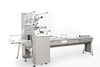
Syntegon unveils flow wrapping machine for small and medium-sized businesses
Syntegon has launched its Pack 103 entry-level flow wrapping machine designed to offer efficiency and ease of use to small and medium-sized businesses, with an output of up to 175 packs per minute.
-
 Article
Recyclable, fibre-based thermal insulation liner to cut EPS from supply chains
Visy’s fibre-based thermal insulation liner is intended to replace expanded polystyrene with a kerbside recyclable alternative while maintaining the protective properties of conventional solutions.
-
 Article
Consumer purchases most influenced by recyclability claims, Amcor research suggests
New research from Amcor suggests that recyclability claims are the most influential on consumer purchase decisions, with 84% of consumers reporting that they check on-pack instructions to inform how they dispose of products.
-
 Article
Fiberdom secures €3.5M funding for compostable paperboard material
Finnish start-up Fiberdom reports that it has secured €3.5 million in funding to develop and scale its patented technology which creates a ‘100% plastic-free’ material, seeking to replace non-essential plastics with scalable, circular solutions.
-
 Article
Reichmuth & Co and Enviroo to construct PET recycling plant
Reichmuth Infrastructure (Reichmuth & Co) has announced it will be financing the construction of a PET recycling plant in the north-west of England, in cooperation with developer and operator Enviroo.
-
 Article
ULMA Packaging launches new thermoforming range for food packaging
ULMA Packaging has introduced a new range of TFX thermoformers for the food industry, targeting improved productivity and efficiency.
-
 Article
Syntegon to present new handling solution for cookie packaging
Syntegon has announced it will be presenting a new handling solution for cookie packaging, the Syntegon FGCT count feeder, at the iba trade fair in Düsseldorf, taking place from May 18th-22nd 2025.
-
 Article
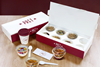
Pret A Manger delivers more granola pots with Sabert’s ‘added value’ insert
Pret A Manger can now secure and deliver eight granola pots with a bespoke, FSC-certified insert from Sabert Corporation Europe – a solution designed to be ‘simple and cost effective’ to use.
-
 Article
TOPPAN to acquire BOPP film manufacturer Irplast
TOPPAN has entered into a definitive agreement to acquire 80% of the issued shares of Italian based BOPP film manufacturer Irplast from the current majority shareholder, investment fund Cheyne Strategic Value Credit.
-
 Article
AM Labels targets improved efficiency with automatic packet feeding system
AM Labels has introduced an automatic packet feeding system hoping to reduce manual handling requirements and ensure a more efficient labelling process for use in food, pharmaceutical and consumer goods industries.
-
 Article
Completed OMV plant converts mixed, hard-to-recycle plastics into feedstocks
OMV has completed the expansion of its proprietary ReOil technology at its Schwechat refinery, where it plans to convert up to 16,000 metric tons of hard-to-recycle mixed plastic waste into chemical feedstocks annually.
-
 Article
Xact Prepack and Termoformas produce plastic trays and punnets with 80% recycled content
Xact Prepack has partnered with Termoformas to create plastic punnets and trays for the food industry with a minimum of 80% recycled content, designed for applications including meat and fresh produce.
-
 Article
Lecta reveals new barrier base paper for flexible packaging
Lecta has introduced its Linerset FP barrier base paper for converters and printers, designed for flexible packaging and seeking to offer a strong translucent alternative for bags, pouches and wrapping applications.
-
 Article
Plant-based dog treats packed in 98% paper Sonoco can for easier recycling
Designed to contain up to 98% paper content and facilitate home recyclability, Sonoco’s GreenCan solution has been utilized by start-up DoggyLove to package its plant-based pet treats.
-
 Article
Australian advanced chemical recycling criteria target food-grade plastic packs
GPT Circular and iQRenew have finalized quality and specification criteria for the use of Australian soft plastics in global advanced chemical recycling – a move set to keep contamination low, ensure efficient processing, and result in food-grade packaging materials.
-
 Article
McKinsey delves into the ‘untapped potential’ of unboxing experiences
A new article from McKinsey considers how consumer goods companies can design their packaging to appeal to consumer desires, provide a positive unboxing experience, and facilitate minimal but easy returns – and how high-ranking executives can unite packaging teams across their organizations.