



All Recyclability articles – Page 3
-
 Article
Businesses continue to use less recyclable materials under EPR, data warns
89% of obligated packaging producers continue to use non-recyclable, hard-to-recycle, or mixed-rating packaging under extended producer responsibility laws, according to data from the Department for Environment, Food & Rural Affairs (Defra).
-
 Article
Melodea launches end-to-end flexible food packaging solution
Melodea has launched its MeloPack end-to-end flexible packaging solution for food brands, said to cover the process from specification to production-ready printed rollstock and be delivered to filling lines in 30 days.
-
 Article
How Swiss packaging law compares to the Packaging and Packaging Waste Regulation
Switzerland has just published its new Ordinance on Packaging. How does it compare to the European Union’s approach?
-
 Article
Report urges EU to close national EPR gaps via Circular Economy Act
The upcoming Circular Economy Act must address ‘wide’ performance gaps between national packaging EPR systems across the EU, according to a study commissioned by EUROPEN and conducted by CIRCPACK by Veolia.
-
 Article
Switzerland updates packaging law with minimum recycling rates and more
The Federal Council of the Swiss Confederation has revealed a new ordinance for packaging, mandating minimum recycling rates of 55% for plastic packaging and 70% for beverage cartons.
-
 Article
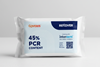
Coveris unveils recyclable wet wipe packaging with up to 45% PCR content
Coveris has expanded its MonoFlexLite E portfolio - made with single-layer polyethylene material - to include a recyclable solution with up to 45% PCR content, designed for wet wipe and cosmetics applications. To find out more about this solution, we spoke to Philipp Niehues, business development director at Coveris.
-
 Article
Bio-based adhesive from BindEthics begins industrial-scale production
Adhesive company BindEthics has announced that its flagship bio-based adhesive, Ecohesive, has transitioned from laboratory development into industrial-scale production.
-
 Article
Reverse vending machines for plastic water bottles piloted at Wimbledon
Danone, Exchange for Change, and the All England Lawn Tennis Club piloted reverse vending machines for evian water bottles at the Wimbledon Championship Qualifying Competition – testing their logistics ahead of the UK’s deposit return scheme rollout in 2027.
-
 Article
Polytag and MCC combine UV tag technology with in-mould labelled packaging
Data capture platform Polytag has announced a partnership with Multi-Color Corporation (MCC) to incorporate its UV tag technology directly into MCC’s in-mould labelled (IML) packaging, aiming to help brands unlock consumer recycling data and support future advanced sorting capabilities for recycling.
-
 Article
Coffee roaster pilots reusable plastic buckets from Jokey and circolution
Jokey and circolution are working alongside Kaffee Braun to pilot reusable polypropylene buckets for industrial applications – designed to be stacked, reused in high circulation volumes, and recycled at end-of-life.
-
 Article
Mars designs 67% of packaging for recycling, reuse or compost in latest report
In its latest sustainability report, Mars claims that over 67% of its consumer-facing packaging is designed to be reusable, recyclable or compostable – and reiterates industry-wide challenges with infrastructural limitations and access to food-safe recyclate.
-
 Article
Ellen MacArthur Foundation collaborates with Mars, Nestlé and more to scale collection and recycling in Brazil
Drawing on findings from a new report, the Ellen MacArthur Foundation has announced a project aiming to unlock approximately over €50 million in multi-year investment for collection and recycling systems in Recife, Brazil, in collaboration with the city, Brazil’s federal government, Clean Rivers and businesses including Mars, Nestlé, Pepsi Co and Unilever.
-
 Article
Klöckner Pentaplast seeks waste reduction with ‘fully recyclable’ fruit trays
Klöckner Pentaplast (KP) has introduced a new mono-material tray range for fresh fruit as part of its KP Infinity portfolio, said to be fully recyclable, lightweight and durable.
-
 Article
EU Commission publishes recycled content calculation for single-use PET bottles
The European Commission has published a methodology to calculate, verify, and report chemically recycled content in single-use PET beverage bottles – intending to level the playing field and ensure investment security for the plastics recycling sector.
-
 Article
Kelpi to integrate seaweed-based barrier coatings into Amcor’s fibre-based portfolio
UK based materials company Kelpi has announced a partnership with Amcor, aiming to integrate its seaweed-derived barrier coatings into the company’s fibre-based packaging.
-
 Article
Tablet dispenser releases exact dose with one tilt for simple, accessible use
The ONE tablet dispenser, developed by Sergei Ivanov, is designed to release exact doses with a single tilt – removing barriers to consumption and improving accessibility.
-
 Article
How climate change is affecting plastic packaging
In this edition of the Brief, we examine the impacts of climate change on plastic packaging in everyday life and the aftermath of natural disasters, and consider all the complexities of addressing the problem.
-
 Article
Fedrigoni Self-Adhesives introduces permanent wash-off adhesive
Fedrigoni Self-Adhesives has revealed its SH6020-W PLUS adhesive with permanent and wash-off performance, designed for the wine and spirits industry and aiming to support bottle reuse and glass recycling processes.
-
 Article
Biodegradable, recyclable biofoam protects Game of Thrones-themed whisky set
Kyrö Distillery Company’s limited-edition whisky tasting set, a collaboration with HBO’s Game of Thrones, uses Woamy’s biodegradable and recyclable biofoam to protect its sample bottles and glassware.
-
 Article
New project seeks to recycle 400,000 tonnes of post-consumer waste by 2030
The Flexible Plastic Fund – a coalition comprising Ecosurety, CEFLEX, RECOUP, WRAP, and more – has launched FlexCircular, an initiative intended to help the UK recycle up to 400,000 tonnes of post-consumer flexible packaging by 2030.