




ExxonMobil Signature Polymers and Reifenhäuser have collaborated on a ‘high-performance’ stretch hood film incorporating up to 35% post-consumer recycled (PCR) content, aiming to address contamination and inconsistency issues with household-sourced PCR in stretch hood applications.
ExxonMobil says the new film combines advanced materials and process technology to transform lower-quality PCR into a high-performance packaging film. Key materials include Exceed Tough+ m 0512, a polyethylene that provides bubble stability, good openability features and high holding force; Vistamaxx 6102, a performance polymer that facilitates PCR incorporation by enhancing film toughness; and Exceed Tough+ m 0211, a low-MI high-performance polyethylene that can act as a gel grinder, improving film performance and optics.
The PCR resin, Systalen LD-C12200, was provided by Der Grüne Punkt from post-consumer packaging waste collected through Germany’s ‘yellow bag’ recycling system.
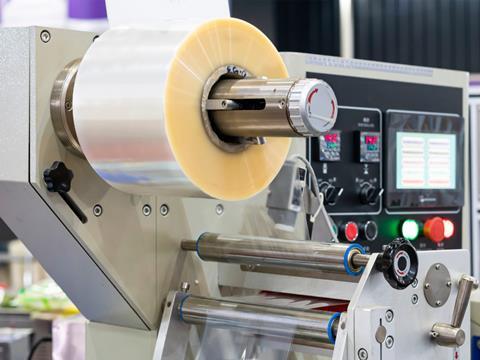
Reifenhäuser’s twin-screw extruder technology is said to ensure thorough mixing and homogenization of PCR blended into virgin resins. Apparently, the company’s EVO Fusion line is equipped with an in-line degassing system that removes volatiles, ensuring a ‘bubble-free film’ capable of withstanding the high mechanical stresses of industrial packaging.
According to ExxonMobil, the new film delivers good holding force and elastic recovery, helping to ensure secure load containment and goods protection during transit. It’s also said to have tear propagation resistance and was ‘rigorously tested’ on the Lachenmeier hooding system against performance metrics including friction control, tear resistance, and load retention. The full case study is available here.
In related news, last summer ExxonMobil Signature Polymers partnered with XL Recycling to develop high-performance stretch and shrink hood films containing post-consumer recycled (PCR) content, in response to growing consumer demand and evolving regulations including the European Packaging and Packaging Waste Regulation (PPWR), which requires 35% PCR in industrial packaging by 2030. The films are said to have ‘excellent’ puncture and tear resistance to protect products during storage and transport, and high holding force and pallet security throughout distribution.
More recently, Amcor teamed up with plant care company DCM on a ‘recycle-ready’ mono-material polyethylene (PE) film for its European fertilizer portfolio, incorporating 35% post-consumer recycled (PCR) content and said to reduce its carbon footprint by 17%. Amcor says the film’s MDO structure offers reliable protection against gas and moisture ingress while maintaining high tensile strength and resistance to tearing or puncturing.
If you liked this story, you might also enjoy:
The ultimate guide to packaging innovation in 2026
Packaging and Packaging Waste Regulation: what to know in 2026
Everything you need to know about global packaging sustainability regulation















No comments yet