




Credit: Sparxell
Sparxell has raised $5 million (€4,231,350) in Pre-Series A funding for its cellulose-based colourant technology, which is said to reduce water consumption by 90%.
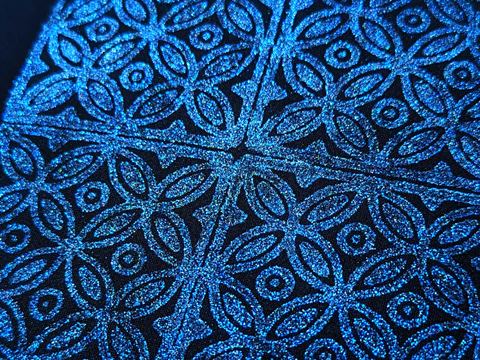
The patented technology derives cellulose from wood pulp, extracts cellulose crystals, and assembles them into structures that reflect specific wavelengths of light. This results in plant-based colourants that can be used to create pigment powders, inks, films, glitters, and sequins.
The ‘drop-in’ solution is hoped to replace and outperform petroleum-based chemicals in coloured packaging applications, among others. Reportedly integrating ‘seamlessly’ into existing manufacturing processes, it is anticipated to reduce water use and energy consumption.
Additionally, the pigments are designed to be biodegradable at end-of-life. This is hoped to reduce chemical pollution and the creation of microplastics while contributing to circular economy initiatives.
The Pre-Series A funding is expected to help Sparxell scale up from pilot programmes to commercial-scale manufacturing. Tonne-scale production facilities are hoped to become operational this year.
The funding round is led by SWEN Capital Partners’ Blue Ocean 2 impact venture fund. It aspires to regenerate ocean biodiversity by tackling pollution, over-fishing, and climate change.
Other participants include Alpha Star Capital, which specializes in biomimicry and AI-driven innovation; and Cambridge Enterprise, which has invested in Sparxell since the company’s origins at the University of Cambridge.
“Every major brand knows they need to eliminate toxic chemicals and colourants,” said Dr Benjamin Droguet, founder and CEO of Sparxell. “These have been on their checklist, but with limited options that truly compete with synthetics’ performance.
“We’re at an inflexion point. Brands are under pressure to eliminate synthetic toxins from their supply chains. Momentum is building in Europe around banning ‘forever chemicals’ such as PFAS. The EU microplastics ban is also now in force, while the FDA is reassessing synthetic colour additives.
“Our technology isn’t just an alternative – it is here to stay because it delivers superior performance due to its nature-inspired features. This funding takes us from proof of concept to production and commercial launches.”
Mélanie Le Guen, investment director of SWEN Capital Partners’ Blue Ocean strategy, continued: “By reinventing colour through a bio-based, biodegradable approach, Sparxell offers a tangible response to a major environmental challenge while enabling global industries to transition toward safer and more sustainable practices. We are delighted to accompany them in this next phase of growth.”
“We were drawn to Sparxell’s method and leadership,” commented Alpha Star Capital’s co-founder and managing partner, Alexandre Cadain. “Instead of trying to retrofit sustainability into existing chemistry, they rebuilt colour from first principles using a natural structure. It offers a clear answer to a long-standing industry challenge, and it works at a scale that matters.”
Chris Gibbs, investment director at Cambridge Enterprise, added: “This investment is an important milestone in Sparxell’s development, enabling more sustainable colourants based on natural, biodegradable pigments delivering tangible environmental benefits as the technology scales.”
Sparxell is undertaking several fully funded pilot projects this year. Among other developments, it has secured a €1.9 million grant from the European Innovation Council and launched commercially available plant-based textile inks with Positive Materials.
If you liked this story, you might also enjoy:
The ‘complex reality’ of reusable packaging in Europe
Single-use packaging versus reusable packaging: Which is more sustainable?
The ultimate guide to global packaging sustainability regulation














No comments yet