
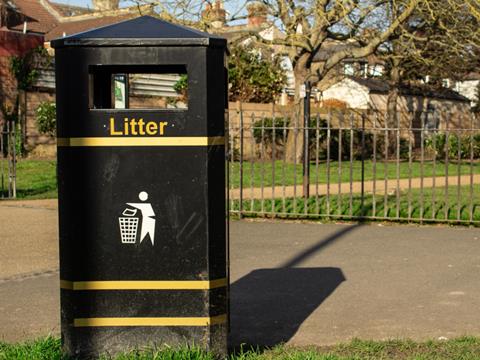
A pilot programme involving major brands such as KFC, Mars, McDonald’s and Nestlé - aiming to demonstrate how sustained behaviour change activity can improve physical conditions and people’s perceptions of their local area – has reported a 16% reduction in food and drink-related litter.
Led by independent environmental charity Keep Britain Tidy, the 12-month ‘Love Where You Live Heckmondwike’ programme in West Yorkshire, UK was funded through the Litter Pact, a community initiative in partnership with Kirklees Council and food and drinks brands including Coca-Cola. In 2024, Keep Britain Tidy began the project with the aim of pulling together all the research, insights, interventions and approaches the charity had delivered in the previous decade and see if it could make a measurable difference to the levels of litter and people’s reported behaviour and perceptions of their local area.
Key results of the project include a 20% reduction in confectionery litter, a 52% reduction in littering around ‘Bin it for Good’ installations (where bins are converted into charity tins) and an increase from 14% to 36% in public satisfaction with cleanliness. The charity says that through co-investment in research, campaign development and local activation, the partners supported a coordinated multi-channel programme that combined evidence-led messaging tailored to specific litter behaviours like ‘careful littering’ and dog fouling; strategic placement of litter interventions in high-impact locations; community engagement and localized creative collaboration with businesses, schools and the local community.
Apparently, 70% of residents recalled taking part in the campaign. Among those with the highest exposure, 83% said they would pick up litter near their home, 68% were more likely to take personal responsibility for keeping the area clean and 63% were more likely to use bins.
Keep Britain Tidy states that the findings demonstrate that individuals who viewed their area as clean were significantly more likely to act responsibly, with a significant reduction in those who perceived fast food litter to be a problem between the beginning and end of the project, with the number of people saying it was a problem falling from 86% to 42%.
The pilot highlighted the commercial importance of tackling litter, with 16% of businesses in the area saying customers would spend more in cleaner areas and 30% believing that improved cleanliness would attract new businesses.
Keep Britain Tidy is due to launch a full report and place-based litter toolkit for councils on Tuesday 7 July.
In other news, Ekoroll has developed a disposable and biodegradable paper ashtray, intended to simplify cleaning operations for outdoor hospitality while meeting waste reduction requirements. The new ashtray is designed to serve as a ‘safe, visible, and controlled’ disposal point where reusable ashtrays are impractical.
Danone, Exchange for Change, and the All England Lawn Tennis Club piloted reverse vending machines for evian water bottles at the Wimbledon Championship Qualifying Competition, expected to increase recycling and test their logistics ahead of the UK’s deposit return scheme rollout in 2027. During the event, spectators could purchase 75cl plastic bottles of evian water on-site, with each bottle made from 100% rPET.
If you liked this story, you might also enjoy:
The ultimate guide to packaging innovation in 2026
Packaging and Packaging Waste Regulation: what to know in 2026
Everything you need to know about global packaging sustainability regulation













No comments yet