
Kneipp trials Sonoco’s fibre-based can for limited-edition bath crystals
Kneipp has launched its limited-edition bath crystals in Sonoco’s fibre-based GreenCan packaging in a bid to unlock
Kneipp has launched its limited-edition bath crystals in Sonoco’s fibre-based GreenCan packaging in a bid to unlock

BioPak’s Huskee brand has developed an intelligent, IoT-enabled Smart Bin for reusable cups and containers – intended to simplify

Summer is often the height of festival season, and with thousands of people set to descend on various sites around the globe, it also brings attention to how festivals are handling their packaging waste. In this article, we examine how the recent Download Festival in the UK utilized recycling incentives, reusable water bottles and aimed to reduce single-use plastic across the event.
I attended Download Festival this year as a volunteer, working with other festival crew members in the campsites throughout the weekend. I personally noted that bin bags for waste were regularly available throughout the standard campsites, and water points for refilling bottles were available in campsites and the Village and Arena areas, for while attendees were seeing bands, going on rides or visiting shops and stands.
When it came to food and drink packaging, I noticed that some Village and Arena vendors would provide wooden cutlery and cardboard packaging, and there were separate bins in the Village area for food waste, general waste and recycling.
Under the festival website’s Sustainability Information section, it states that none of its traders used single-use plastic and serve-ware, and water and other drinks were served in cans or paper cups. Consumers were encouraged to bring empty sports or metal refillable bottles of any size to refill at water points throughout the festival for free. Download branded water bottles were also available.
All paper cups, cans and bottles sold in the Arena area of the event (where the majority of stages were concentrated) had a 10p deposit included in the price which could be redeemed at the refund points in the arena, with a minimum return of 5 for 50p.
The festival also had an Eco Camp area, where all guests agreed to be responsible for their gear and take responsibility for any waste they produce, as well as separating their recyclables in the recycling facilities and placing any residual waste in the bins provided.
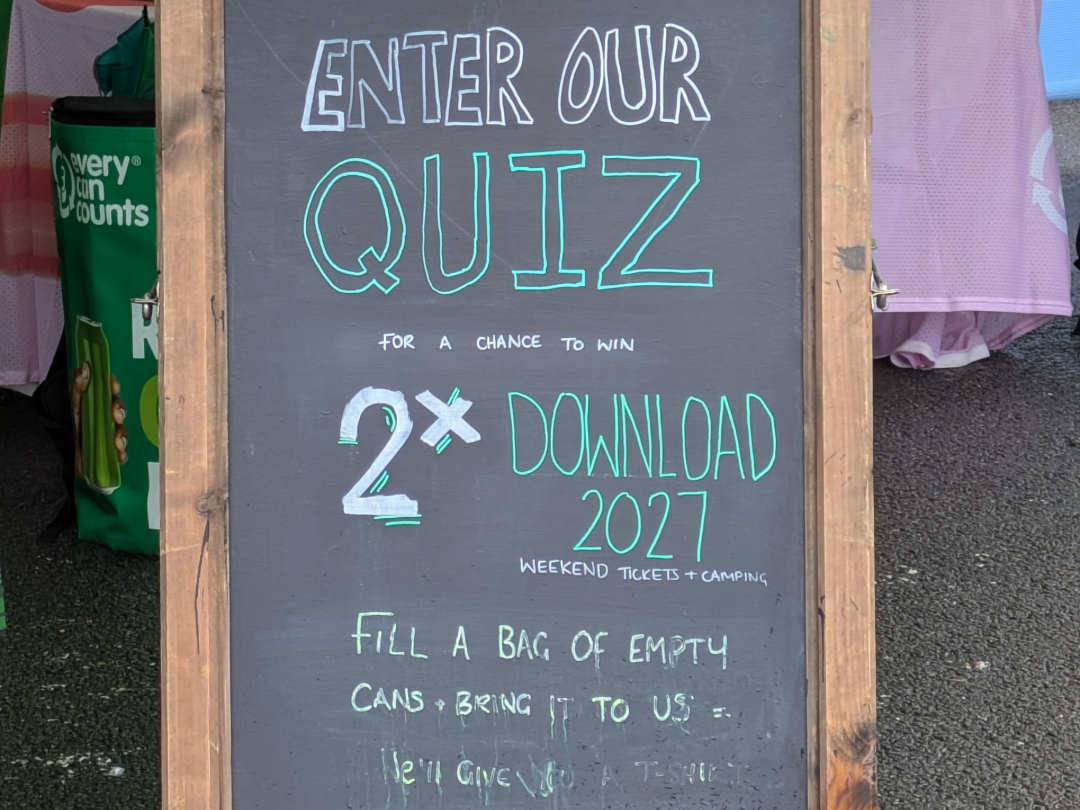
Not for profit Every Can Counts was also present at the festival, with a stand in the Village area where attendees could exchange cans for Download-related rewards including t-shirts and keyrings. Incentives also included the chance to win tickets to next year’s festival. The organisation’s recycling ambassadors collected cans in recycling backpacks and tested festival-goers on their drinks can recycling knowledge.
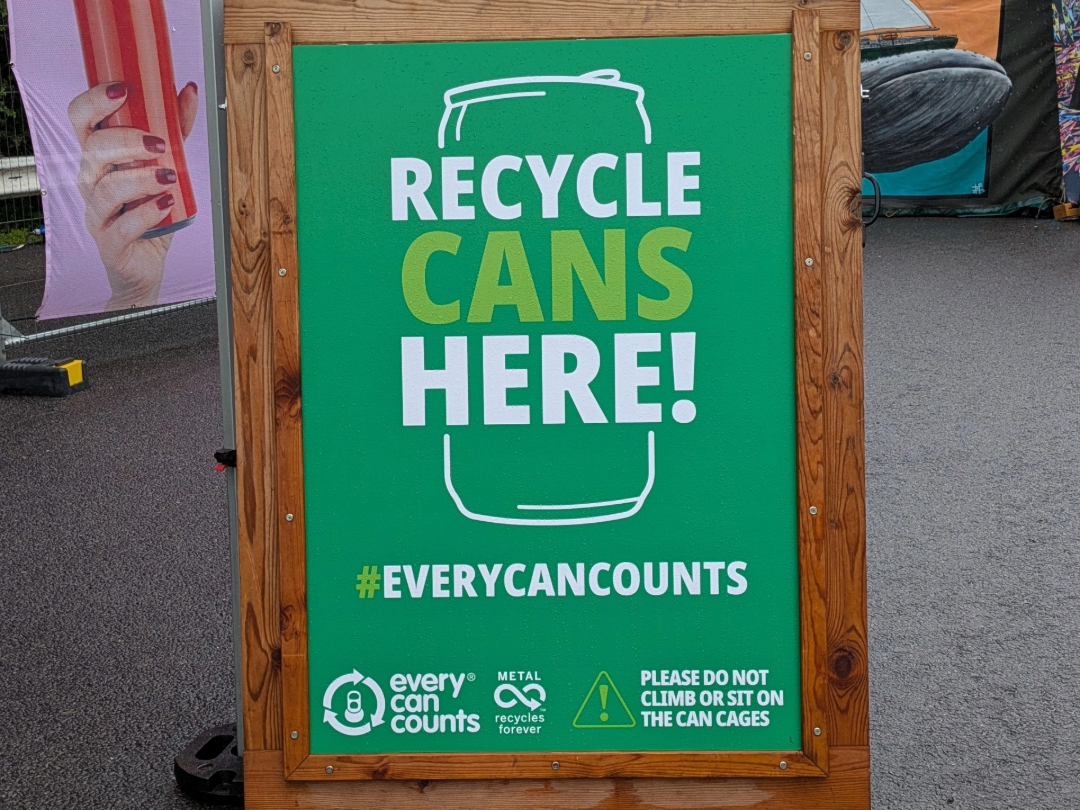
Under the festival’s ‘Riff, Reduce, Recycle’ initiative, it aimed to cut single-use plastic across the site by donating £1 from every car parking pass to Trees for Cities and encouraging can recycling through collaboration with Every Can Counts. Its Green Team of 40 volunteers handed out recycling bags to attendees, ran surveys and offered rewards for sustainable actions.
The event’s Sustainability Charter highlights the recycling initiatives put in place across the site, such as a recycling reward scheme, offering customers prizes for recycling in the campsites; a site-wide bin system allowing separation of recyclable, non-recyclable, and compostable waste; and campsite recycling points with bags distributed to campers, allowing them to collect and dispose of their waste and recycling.
The festival claims not to sell any virgin single-use plastic, including sampling containers, cutlery, plates, cups, bottles, stirrers and straws. Apparently, the festival’s sorting policy prioritizes reuse over single-use, renewable over finite resources and products with the highest recycled content available, including at least 50% where alternatives are not available.
The Charter states that:
“Download Festival is zero waste to landfill, as all festival waste is either recycled, composted, or used to generate energy from waste.”
For food and drink packaging, all soft drinks were served in cans, with no pre-bottled water provided as standard to crew or artists. All bar cups were made from paper, and soft drink post-mix outlets and bars were required to decant mixers from multi-serving bottles to reduce the number of bottles.
The Charter adds that plastic cutlery and straws have been banned since 2009, and only EN 13432 certified compostable materials are permitted for food service containers. Bulk condiment bottles are required to be used instead of single-use sachets.
While initiatives to recycle drinks cans and encourage attendees to bring their own refillable water bottles have been present at previous iterations of Download Festival, it will be interesting to see how the festival continues to introduce and advocate for reuse and recycling, and whether any of the current schemes will be replaced or modified in future years.
If you liked this story, you might also enjoy:
The ultimate guide to packaging innovation in 2026
Packaging and Packaging Waste Regulation: what to know in 2026
Everything you need to know about global packaging sustainability regulation


In this edition of The Spotlight, Markem-Imaje examines how 2D coding is redefining the role of flexible packaging and


The material that consumer and industrial (C&I) applications rely on just got a sustainability upgrade. DuPont talks us


Utilizing vacuum aluminizing and laser-writing technologies, Shunho Creative (a sub-brand of Shanghai Shunho International) has developed a plastic-

Seeking to meet the challenges of the climate crisis and regulatory changes, Smurfit Westrock is investing in its manufacturing network,

ATS-Tanner’s banding solutions aim to reduce packaging waste, provide a practical alternative to plastic and improve recyclability. In

Kneipp has launched its limited-edition bath crystals in Sonoco’s fibre-based GreenCan packaging in a bid to unlock

BioPak’s Huskee brand has developed an intelligent, IoT-enabled Smart Bin for reusable cups and containers – intended to simplify


How do sustainable packaging topics in the United States fit into the global conversation, and what can different regions learn