

Packaging Europe’s Sustainable Packaging Summit is taking place from 10-12 November in Utrecht. In this article, we’ll bring you live updates on the key news, announcements, and talking points from the event.
The Summit brings together leading experts from across the packaging value chain for three days of discussions, panel debates, and presentations - with the aim of sparking real progess on packaging sustainability.
Wednesday 12th November
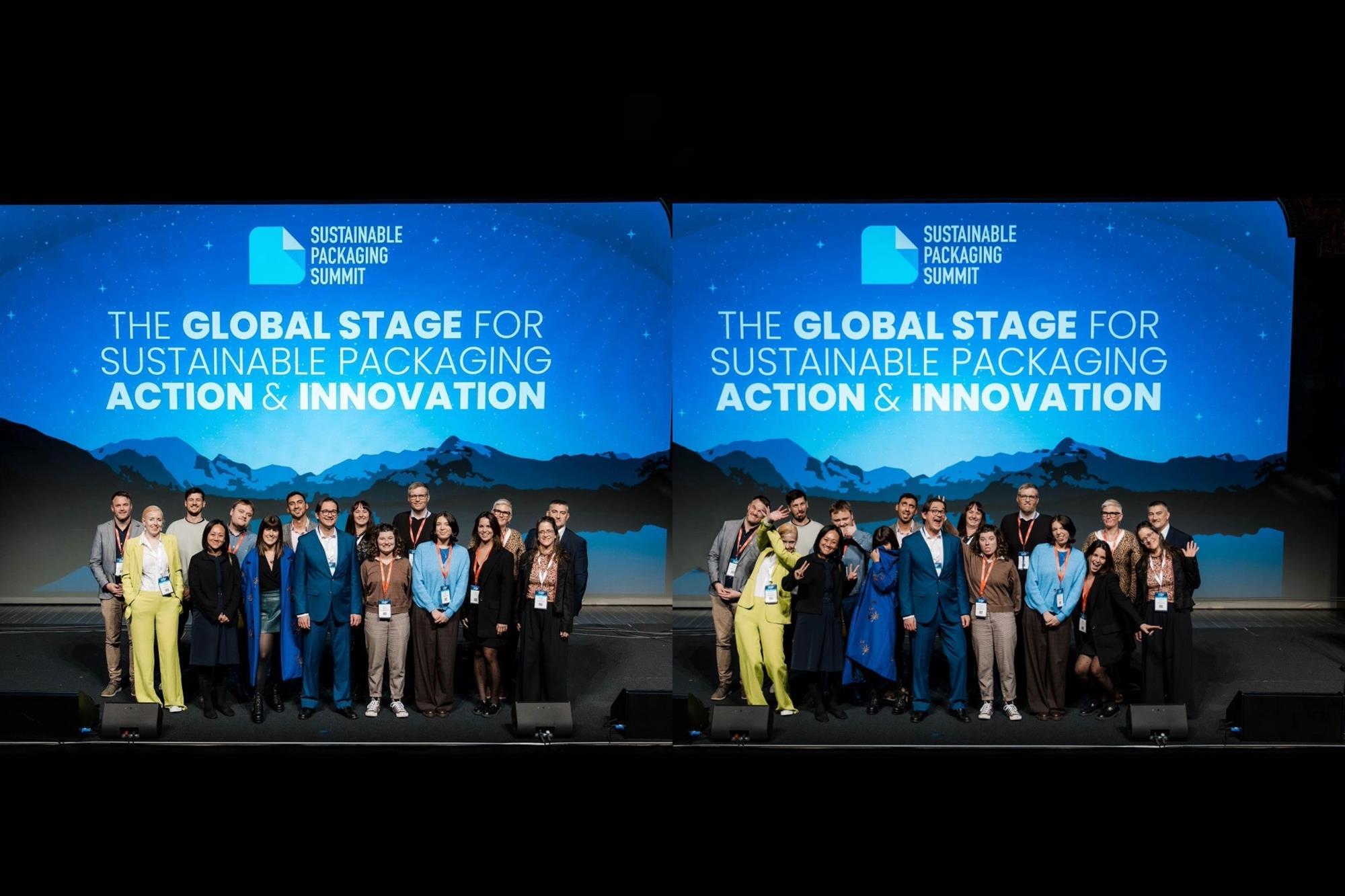
And that’s a wrap! The 2025 Sustainable Packaging Summit has officially ended.
Across the past three days we’ve been joined in Utrecht by 822 delegates, 142 speakers, and 89 exhibitors all working towards the same goal: making the packaging industry more sustainable.
To everyone who joined us at the Summit – your passion and drive is truly inspiring, keep doing what you’re doing.
A huge thanks to all of you from the entire Packaging Europe team - we look forward to seeing you again next year! Keep an eye on the Summit website for more details: https://www.packagingsummit.earth/
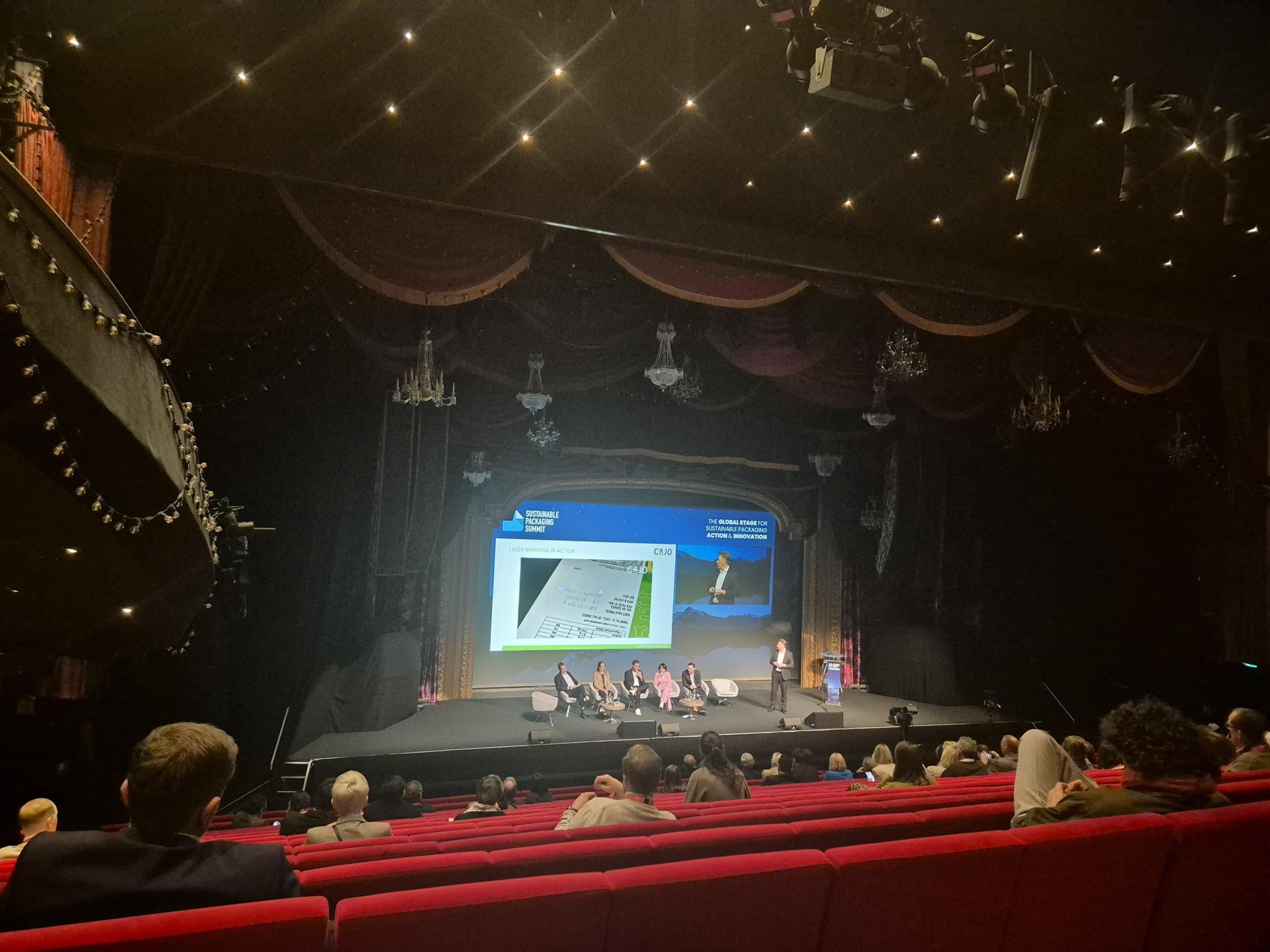
What’s on the innovation horizon? Our final panel of the Summit is in progress in which we are hearing from R&D leaders, VCs & incubators about the state and trajectory of sustainable packaging innovation today – and meet their curated selection of what they consider to be the most exciting start-ups around the world that are poised to become a feature of our packaging landscape. One notable trend is the development of innovative biobased materials.
Some startup projects we have heard from:
The Overall Winner of the Sustainability Awards Zafree Paper’s Bethelhem Dejane told us about the company’s 100% tree-free paper made from Banana farm waste.
She shared, “I’m incredibly honoured to win the Overall Winner award!
In fact, as the first company from Africa to win, she underlines that: “this reflects that innovation can come from anywhere and have global relevance. Real change has to start with the materials we choose, and where they come from.
“In Africa, there’s so much agricultural waste which is abundantly available. So we focused on banana waste, of which the fibres could be produced at scale.”
She calls upon corporates, investors and experts who are interested in working with Zafree to connect
Hanh Do, CEO of BUYO described her company’s ’breakthrough’ technology to transform organic waste into bio-based and biodegradable materials to replace plastics.
Alexandra French from Xampla is passionate about her belief in the need for plant-based materials to help address the plastic waste crisis - something she firmly believes needs to be a bigger part of the global conversation around packaging sustainability. Xampla’s world-first Morro materials are a case in point, designed to eliminate the most polluting plastics and made from natural polymers extracted from plants.
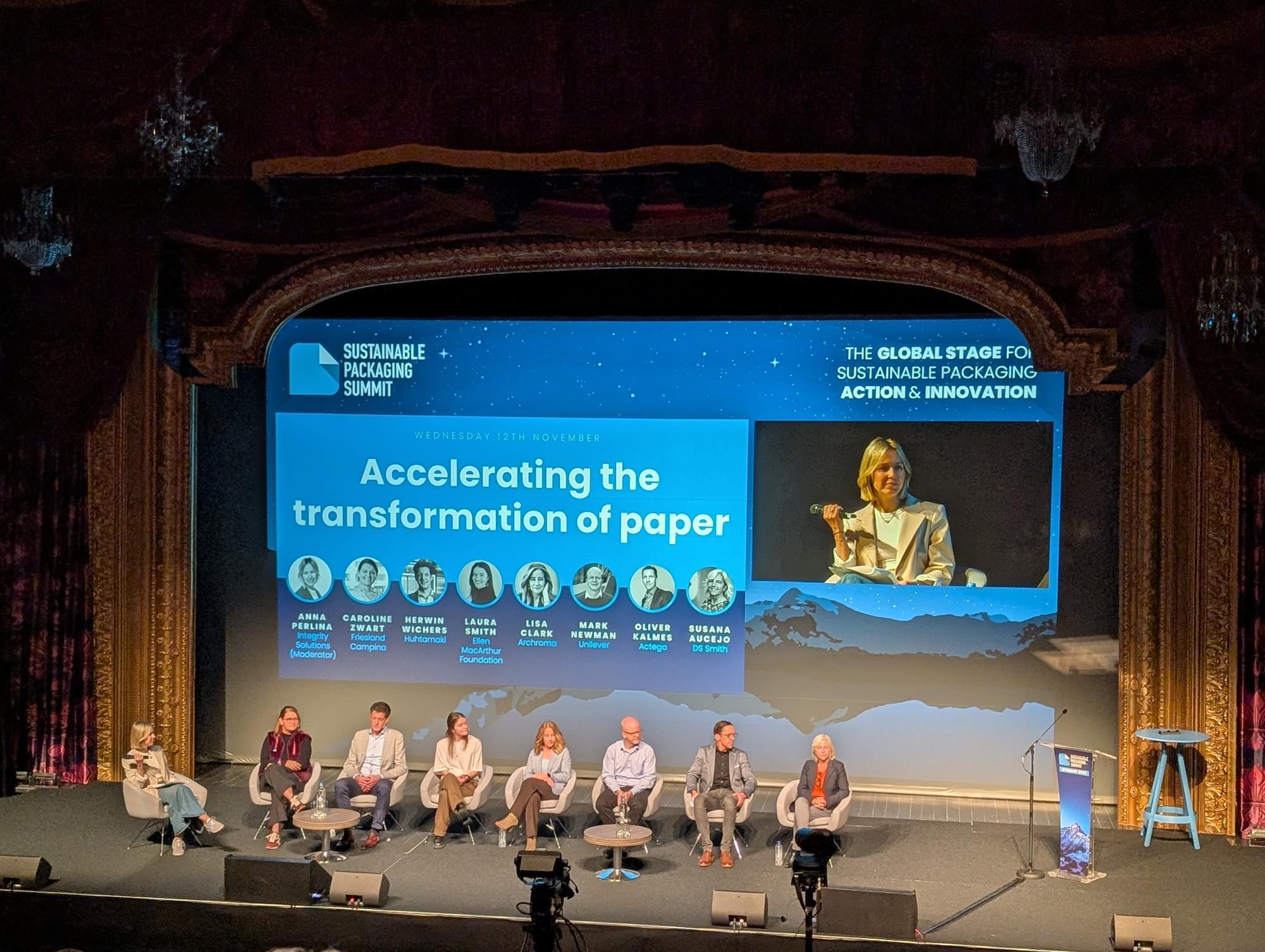
Day Three of the Sustainable Packaging Summit saw a discussion on accelerating the transformation of paper. Anna Perlina moderated a panel with FrieslandCampina’s Caroline Zwart, Huhtamaki’s Herwin Wichers, Ellen MacArthur Foundation’s Laura Smith, Archroma’s Lisa Clark, Actega’s Oliver Kalmes, DS Smith’s Susana Aucejo and Unilever’s Mark Newman.
Many interesting points were raised.
Caroline Zwart commented that paper often needs plastic coatings or layers for liquid products, so it was key to educate consumers not to put multilayer papers in the paper bin. Paper often needs plastic coatings or layers for liquid products. On-pack communication or AI sorting could help with waste stream accuracy. She reminded us that the best solution is the one with the lowest total carbon footprint, not just the one with the least plastic.
Susana Aucejo echoed this sentiment and also recommended choosing the baste material based on life cycle impact.
She pointed out that advances in material science have transformed fibre performance in barrier enhancement, strength and formability, and that corrugated board can now handle 3D shapes and circular design. “As performance and sustainability are converging, collaboration is essential.”
Lisa Clark highlighted Archroma’s water-based cup stock: water-based, heat-sealable for hot and cold use. For her, innovation in paper is still in the early stages. “We haven’t seen the end yet. There is huge R&D momentum pushing boundaries of what fibre can do.”
Herwin Wichers emphasised the importance of fit for purpose design and having the “right solution for the right situation.” He outlined recent innovations including fully recyclable, compostable fibre lids containing no polymer and one-side coated dairy packaging.
He pointed out that while affordability remains a challenge, the industry is just at the start of a big transformation, with advances in barrier technology, shaping and bio-based systems ahead.
Oliver Kalmes also spoke about his company’s innovations, such as water-based coatings for quick service restaurants, with work going into fully bio-based or recycled plastic dispersions to replace PE and PET. However, he warned of performance and cost limits when replacing rigid plastics and advocated ecosystem thinking. “We should integrate materials, technologies and design to find the best overall solution.”
Laura Smith discussed how paper packaging can help reduce plastic pollution if designed to be biodegradable or compostable, as collection systems remain a challenge and recyclability depends on collection, not just on the material.
She cautioned us about resource limits as sustainable wood supply cannot meet all demand and advocated rethinking packaging formats, promoting reuse and refill before switching materials.
Mark Newman agreed that collection infrastructure is the bottleneck for circularity and that shifting to paper shouldn’t increase the packaging footprint, and decisions should be based on thorough lifecycle analyses. He emphasised the importance of collective industry action and cross-sector collaboration.
Tuesday 11th November
2025 Sustainability Awards winners announced!
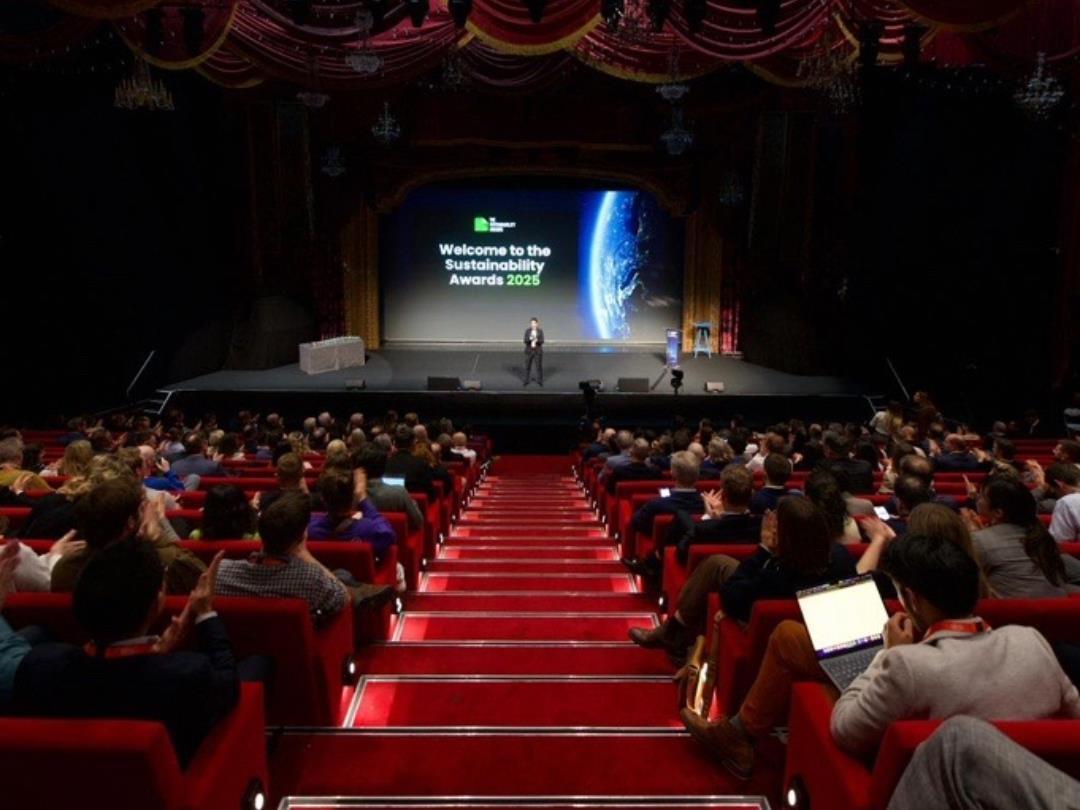
We shared a fantastic evening with our Summit delegates today as we announced the winners of the 2025 Sustainability Awards!
14 awards in total were handed out – with Zafree Paper and 100+ Accelerator scooping the Overall Winneraward for their recyclable, tree-free folding cartons, made using agricultural waste from Ugandan farmers.
Meanwhile, Emerald Venture Fund’s Fredric Petit picked up this year’s Outstanding Contribution award for his tireless work on bringing exciting sustainable packaging innovations to commercial scale.
This year’s Readers’ Award which is voted on and decided by you, the readers of Packaging Europe, was won by Mondi for its recyclable paper wrapping for mattresses.
The full list of winners can be viewed here – a huge congratulations again from the whole Packaging Europe team to all the participants in this year’s awards!
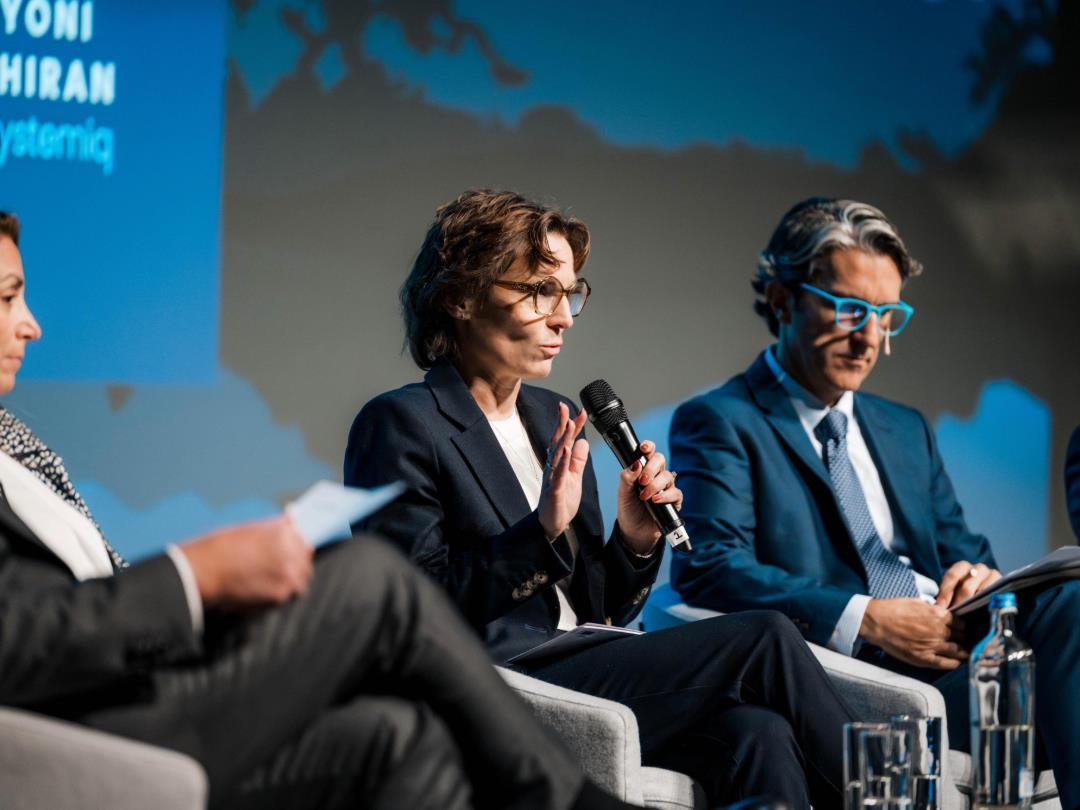
At another jam-packed talk, Jessika Roswall – the European Commissioner for Environment, Water Resilience and a Competitive Circular Economy – discussed strategic outlook with Amazon’s Juan Manuel Banez-Romero, Mondelez’s Massimiliano di Domenico, Heineken’s Hans von Bochove, Europen’s Francesca Stevens, and Systemiq’s Yoni Shirnan.
The conversation revolved around strategic context, global trade volatility, investment in various geopolitical and macroeconomic conditions, and the impacts of competitors on the European industry.
Roswall spoke about the effects of protectionism on trade and, as a result, access to raw materials. Some regions, she argued, are becoming more closed-off and protective – the opposite should be true for the EU which “wants to be open for business in a sustainable way.”
“We need resources to put into wealth, not waste,” she told us. “Use entrepreneurship and innovation to strengthen Europe.”
She emphasized that politicians shouldn’t work in silos, and that approaches to sustainability currently differ between different regions – underlining the importance of the EU’s single market strategy. To boost Europe’s 12% circularity rate, she highlighted the importance of listening to industries and citizens alike in the transition from a linear to a circular economy.
She added that certainty and predictability are important facets of the PPWR, assuring the audience that the Commission is working on guidance and an omnibus to find bottlenecks in the circular economy. A package is set to be put forward before Christmas.
Stevens felt reassured that the EU is approaching competitiveness and sustainability simultaneously, yet she asked: “Europe leads by example, but is anybody following?” In her eyes, Europe must implement structural reforms – pragmatic regulation, reduced energy costs, and future policy legislation backed by scientific fact – to demonstrate that economic growth and sustainability goals can be balanced effectively.
di Domenico built on this, suggesting that competitiveness should be hardwired into the EU lawmaking process. Still, he argued that clearer regulation could satisfy both environmental and economic intentions; and that “urgent” legal clarity on definitions and secondary acts could help big brands plan to meet their targets.
Romero noted two kinds of complexity: intentional, in which the EU knowingly raises the bar for sustainability; and unintended, stemming from a lack of harmonization. He urged the Commission to reduce administrative burden and duplication – adding that going digital, particularly utilizing AI, could help with compliance.
Shiran added that the transition into sustainability is the “number one source” of good-quality, high-paying jobs in the 21st century, and that regulation is driving innovative approaches such as the Vinted business model and TOMRA sorting technology.
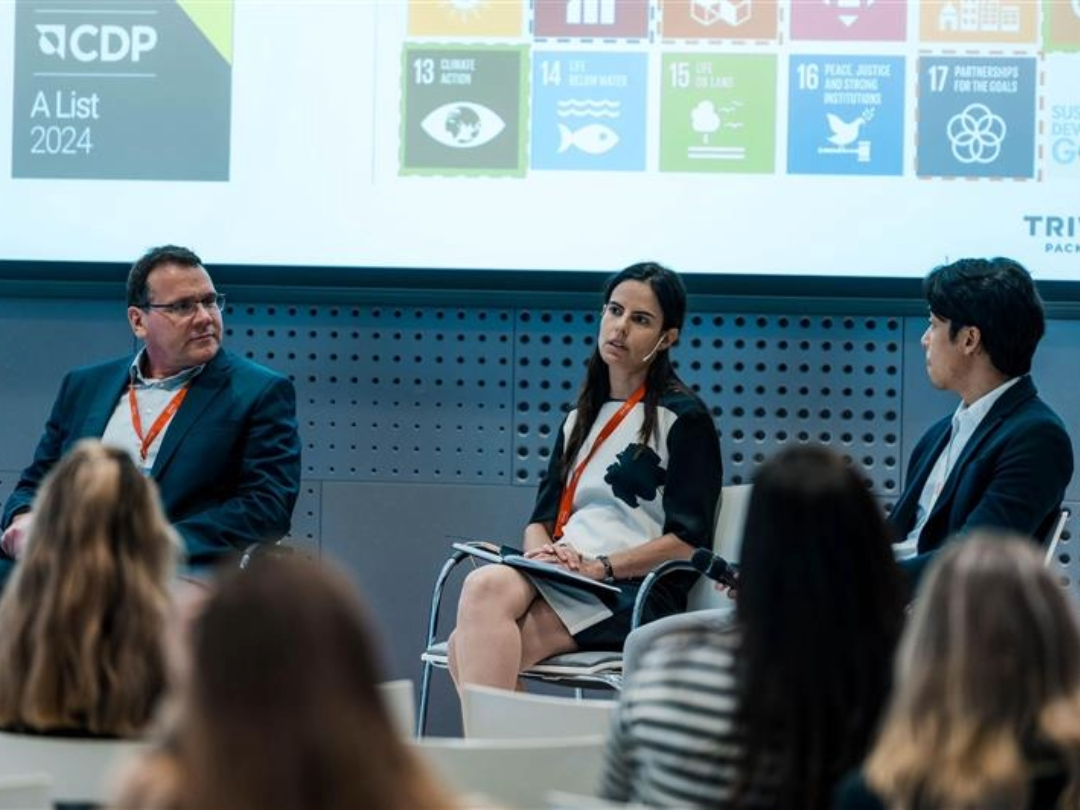
Steve Claus from Steel for Packaging Europe moderated a panel on legislation for the metal packaging industry. His colleague Metka Cavka Luciani, Geza Nagy from Nestlé, Krassimira Kazashka from Metal Packaging Europe, and Felipe Watanabe from Trivium Packaging joined him on stage.
According to Luciani, steel achieved an 82% recycling rate in 2023 – and has since increased by 2.5%.
“Collaboration is very important,” said Claus. “The PPWR is there; we [the industry] will not let them draft it in their ivory tower.”
“We need the policymakers to be open to talk to us,” Kazashka continued. Although she acknowledged that the current Commission is “at least willing to listen more”, she asked whether it would lead to definitive change.
“We need to collaborate, but it’s a dialogue that requires two parts,” she considered. In particular, she specified the importance of balancing data and expertise.
Another point of discussion was to underline that the concept of ‘permanent materials’ is not widely understood by consumers, the Commission, or the packaging industry at large.
“Perhaps our industry needs to get better at telling the full circularity story,” said Watanabe, “not just the recycling rate.” One example is illustrating to consumers how easily they can sort metal packaging.
“We have to recognize that factual communication should be the basis,” he elaborated – but he urged companies to pair it with emotional communication and reap the rewards of consumer participation.
Nagy added that one of the biggest misconceptions about metal packaging is that it has no future – an outcome attributed to the environmental impacts of mining and CO2 emissions. In reality, he argued, the industry is well on track to meet the PPWR’s 2030 targets, and is in fact looking ahead to 2050.
“What we need to support at max is collection,” Claus concluded. “It’s all about separate collection at source to minimize the oxidation of our packaging waste.
Alvin Lim from NBCo, Jamie Stone from PA Consulting, and Guido Schmitz from Inncrereal sat down with Elisabeth Skoda to talk all things paper bottles – and ended up revealing the value of collaboration.
Lim laid out an interesting anecdote about litter on the beach in Singapore, and how it informed his approach to packaging; “You can only do so many beach clean-ups in Asia. The trash keeps coming back every day.
“Initially, we were trying to do this [develop paper bottles] by ourselves. I didn’t realise that in order for this to work, we need collaboration. What we actually need is to create an ecosystem.”
This linked to his partnership with Stone, who described the structure of a pulp bottle and its barrier as “tangential journeys”. He presented the material compositions of different paper bottle innovations, from the Baileys’ Original Irish Cream Liqueur bottle (91% pulp, 8% PET liner, and 1% foil) to the Johnnie Walker lid (50% Dry Molded Fiber paper pulp, 50% cork).
Similarly, Lim viewed liner coatings and bladders as “interim solutions”, hoping that paper bottles can one day be 100% fibre-based.
Schmitz also clarified that he is not competing with other paper bottle creators, and that his main goal is to reduce fossil-based plastics in favour of natural alternatives. Nevertheless, he acknowledged that there are still product applications that require a plastic lining, such as alcohol.
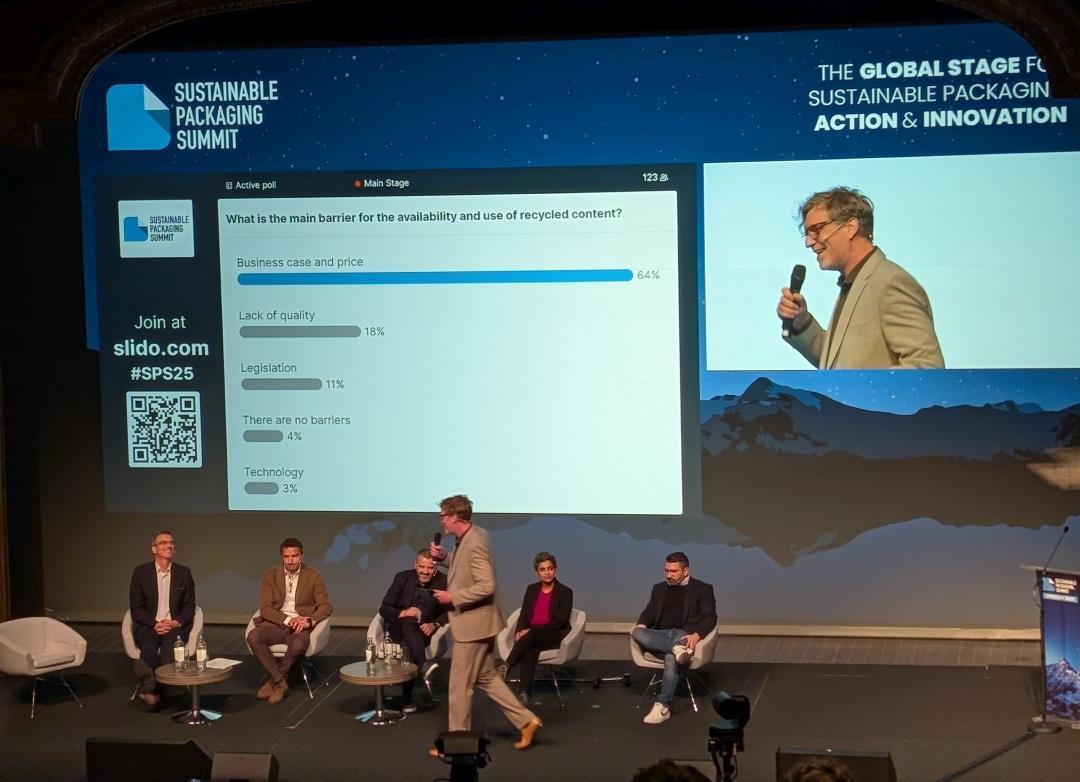
On day 2, a panel moderated by CIRCPACK’s Vincent Mooij, explored barriers to incorporating recycled content in packaging and surveyed innovations in the supply chain that drive increased use of PCR.
A poll showcased the biggest barrier for the availability and use of recycled content, and a clear leader was “business case and price”, followed by lack of quality and legislation.
Tomra’s Valerio Samma pointed out that high end technology already has been around for 20 or 30 years, including automated sorting plants, but that near infrared sorting has its limits, and that more is needed for high quality recyclates in demanding applications.
“AI has the power to transform resource recovery as we know it, with the flexibility to adapt to market demands, sorting of new material streams, high level automation and data driven automation.”
Deep learning and artificial neural networks are set to further transform the space, not just sorting but also collecting data.
TNO’s Nithya Subramanian explained the importance of working at different strategies and technologies, whether it’s mechanical, chemical or dissolution recycling and highlighted the importance of recompounding to enable include recycled material in their existing production line.
This is particularly important in the context of ongoing recycling loops.
“Polymers could undergo several cycles of recycling, so it’s important to consider that your plastic could stay in the loop for a long time.”
Procter & Gamble’s Gian de Belder discussed how the company’s experience with cleaning products led them towards cleaning plastics and showcased Flexloop, a new dissolution recycling technology that was launched at K2025.
Asked about how this ties in with price pressures faced by recycled materials compared to virgin he explained that Flexloop was setting out to be affordable. “We need to be affordable, and we are working closely with demo plants and recyclers. Our first industrial line will open in Europe to prove our business case.”
Erik Halleberg from Stora Enso represented fibre-based packaging, and was proud to highlight the 80% collection and recycling rate of fibre-based packaging. However, he pointed out that both recycled and fresh fibre are needed, and that further scaling up of collection was key.
“When we have barriers in products, the main goal is to have a clean separation from the fibres.”
ViaPackaging UG’s Marius Tent asked the audience two thought provoking questions:
“How many countries today use manual sorting for packaging?” His answer? “Too many.”
He underlined the importance to discuss and foster new technologies, but”before driving the roof, it’s important to sort the foundation.”
He wrapped up the discussion by inviting the audience to think different.
“We need more innovation in product design (recyclability, using recycled content, minimisation) and in offering a fantastic user experience.”
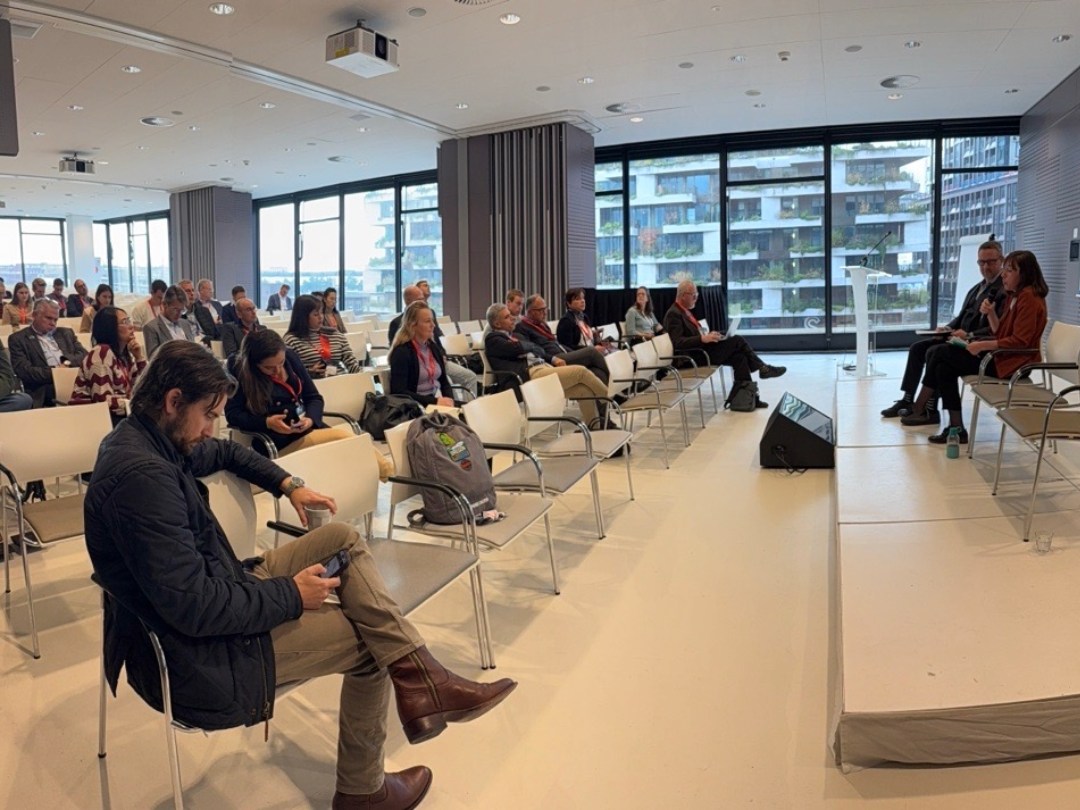
On the Future Forum stage, Sustainable Packaging Podcast host Cory Connors sat down with Vanessa Chesnot from FEVE to talk all about circularity for glass.
According to Chesnot, 80% of the industry’s emissions stem from natural gas in the melting process. “If we built the most wonderful furnace somewhere and it didn’t run on green electricity, it would not work,” she told the audience.
Yet she also believes that an additional €20 million in investment is required to meet climate objectives – and electricity is more expensive in the EU than both the USA and China.
In response to the PPWR, she told Cory that FEVE supports measures like design for recycling and closing material loops; however, she felt that “the whole focus was on packaging as waste, not packaging as a product.” She expressed fears that this sentiment excluded products where glass packaging is part of the novelty, such as spirits in a flagon.
Additionally, she acknowledged the setbacks glass faces: “We need to do better [at collection], even though we are at 81%. On average, we are at 53.5% recycled content, but we do not benefit from this high use rate with EPR fees.”
From an American perspective, Cory underlined the visual beauty of glass, and noted that “consumers know glass is reusable or recyclable – they just don’t know where to put it.”
In the afternoon panel focused on Circular Flexibles, our host, Tim Sykes, asks about the progress of circularity in flexible packaging, and what are we learning about the crucial role of sorting technologies in maximising recycling yields?
Fabrizio Di Gregorio, from Plastics Recyclers Europe, comments that: “Design for Recyclability will remain vital for achieving all the targets of PPWR.” He emphasises that this is a global issue, and that it remains essential, underlining that we should be pragmatic and take a scientific approach towards design.
Richard Akkermans, European R&D Packaging Sustainability Manager at Mondelez International comments that globally, they model 96% of packaging as designed for recyclability. “The remaining 4% is the hardest combinations of material to crack, and functionally difficult to replace.”
Dominika Maruszak-Dankbaar, from PepsiCo agrees, “97% is our minimum target. The rest is hard to crack with our existing portfolio.”
Dana Mosora from CEFLEX explains that the value chain must demonstrate “courage and determination.”
“There needs to be a significant increase in volume, but most importantly diversification in recycling technologies, and a shift from quantity to quality. There is also a clear need for smart sorting to become commercially available, this needs to start now.”
Richard Akkermans focuses on the need to smooth the economic curve over the next four years when it comes to the survival of recyclers, and new technologies/systems. He comments that, “Recyclers need to be assured of demand, however we need to follow the process of innovation, we almost need a Tinder matchmaking to test systems and technologies out!”
Monday 10th November
The Packaging and Packaging Waste Regulation: destined or doomed?
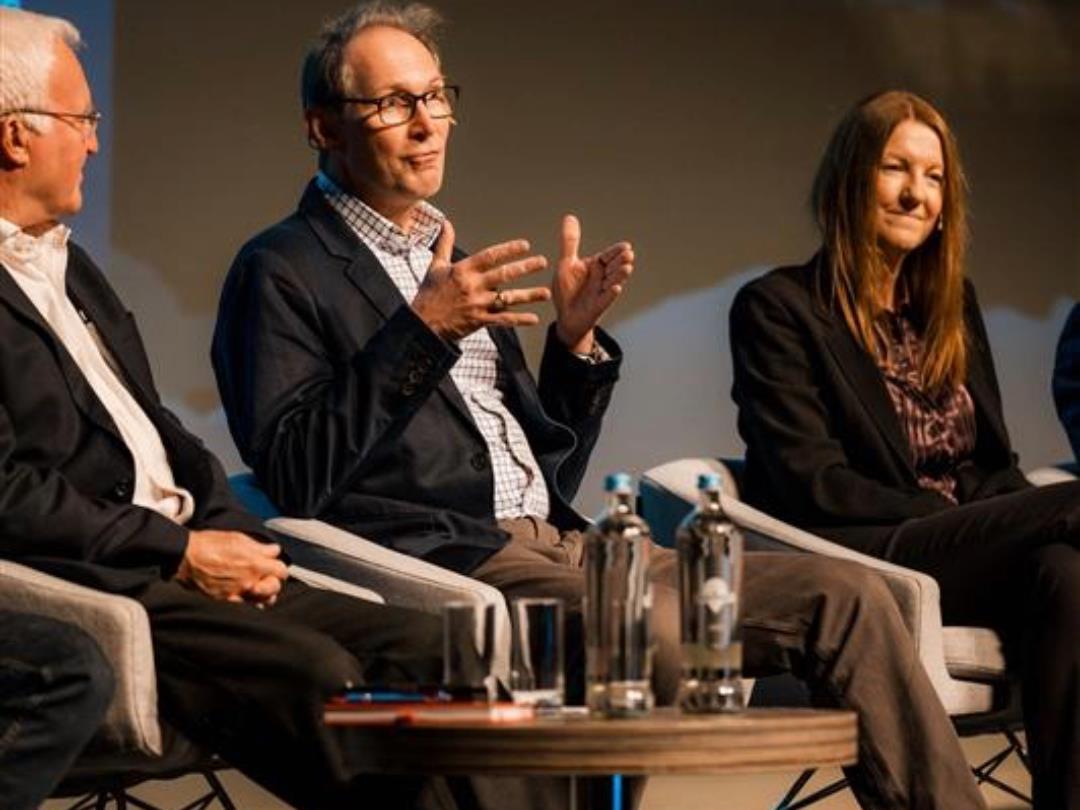
In the next panel, Bruno Van Gompel talked circularity regulation with EXPRA’s Joachim Quoden, Michelle Norman from Suntory, Graham Houlder from CEFLEX, SAP’s Darren West, Gerald Rebitzer from Amcor, and European Commission policy officer Wolfgang Trunk.
Van Gompel set the scene: Europe is set to lose one million tons of recycling capacity by the end of the year, and its recycling capacity growth rate is at its lowest since 2017. Recycled content levels are “about half” of the level they should be after twenty years of recycling operations, and on the PFAS front, many companies are still investigating their supply chains.
“We are fully aware of the current crisis in the mechanical plastics recycling sector,” Trunk acknowledged. “I don’t see it so much in PP bottles recycling, but in polyolefins, it’s a big crisis. We are taking it very seriously.”
For Houlder, certainty is key: whether targets will be enforced, whether they’ll change, and who oversees them. He pushed for a definitive statement on whether omnibus amendments would delay the PPWR’s application date – and was met with applause.
Assuring the panel that the omnibus is “so far” from being adopted by the Commission, Trunk insisted that the targets set out for August 2026 will not change; “We are fully committed to do the best we can for these [targets] to [come] true, and therefore we reassure you that the omnibus will only be the start of the negotiations and co-decision procedure.”
Questions also arose as to whether the Commission’s view of circularity was Europe-specific or global, and how that playing field would be levelled. Rebitzer expressed concerns about the low price of imported recyclate, especially from Asia, compared to virgin materials – and how that will affect European targets for 2030.
From a brand owner’s perspective, Norman highlighted issues with market fairness, including high recyclate costs and competition between industries for food-contact recyclate: “We paid for [packaging] in the first place; we’d like to be able to put it back in our bottles.”
Additionally, she underlined the importance of “being the voice of a consumer” and considering what end users want from a specific packaging application.
According to Quoden, the process starts with governments: “We can only reach our goals if we have a more streamlined approach. We know what to do; we just have to be allowed.”
For West, the matter was simple: “If you decide to have EPR schemes paying for all of this, and I think that’s a great way to level up the playing field, then we need a little bit more harmonization.”
“There are indeed some things missing,” Trunk agreed, raising the examples of earmarked fees and where the fees are applied. “There is still a lot to improve, but the structure is there.”
Norman had a different stance: “Unless things are brought forward, industry will fail. The ducks need to be in a row, and the ducks need to be a lot faster.”
While West believes that the PPWR is “heading in the right direction”, he acknowledged the responsibility of industry players to keep their boards informed of the regulation’s impact – even despite the “regulatory PTSD” they are burdened with. This would apparently lead to economies of scale and bring prices down.
Similarly, Rebitzer stated that “the first element is design for recycling. Let’s do that and not wait for it; we all know how to do it. Anybody who waits until 2028 will be too late and will face the risk of market bans in 2030.”
“If we get the clarity, the harmonization, the ringfencing system better, and we watch out for the economics, we can make it work,” Van Gompel concluded. “Just get started and don’t delay it.”
The 2045 roadmap
Our very own Tim Sykes hosted Aisha Stenning from Ellen MacArthur Foundation, Clarissa Morawski from Reloop, Fernando Rodriguez-Mata from the New European Reuse Alliance, Julius Lorenzen from Nestlé, Lara Dammer from nova-Institute, and Pascale Wautelet from Avery Dennison in the next panel, The 2045 Roadmap.
In an initial audience survey, 62% of audience members voted for 2030 as the impact horizon for their current work – but Tim Sykes asks what the twenty-year future looks like for our industry, and what decisions we should make today to reach that end point.
Reloop Morawski noted that “consumers aren’t perfect, and they’re not recycling in the way we hoped they would.” She went on to add that the best way to really accelerate the circular economy is to ensure that legislation is well-designed and includes proper penalties.
In response, Pascale Wautelet from Avery Dennison argued that the industry may have become too dogmatic: “we are all businesses, there needs to be profit – we need to tell a much better story about the profitability of sustainability.”
Meanwhile, Laura Dammer highlighted the potential costs of not acting sustainably in the long-term.
Nestlé’s Julius Lorenzen said that his company welcomes the PPWR as a “good piece of legislation that sends the right market signals.”
However, he also said that lots remains unclear with the legislation, when the most important thing for businesses is predictability. Money collected from EPR is, he argued, collected from producers and used on all kinds of projects, rather than being spent on projects that in the field where the money was collected from.
We are live!
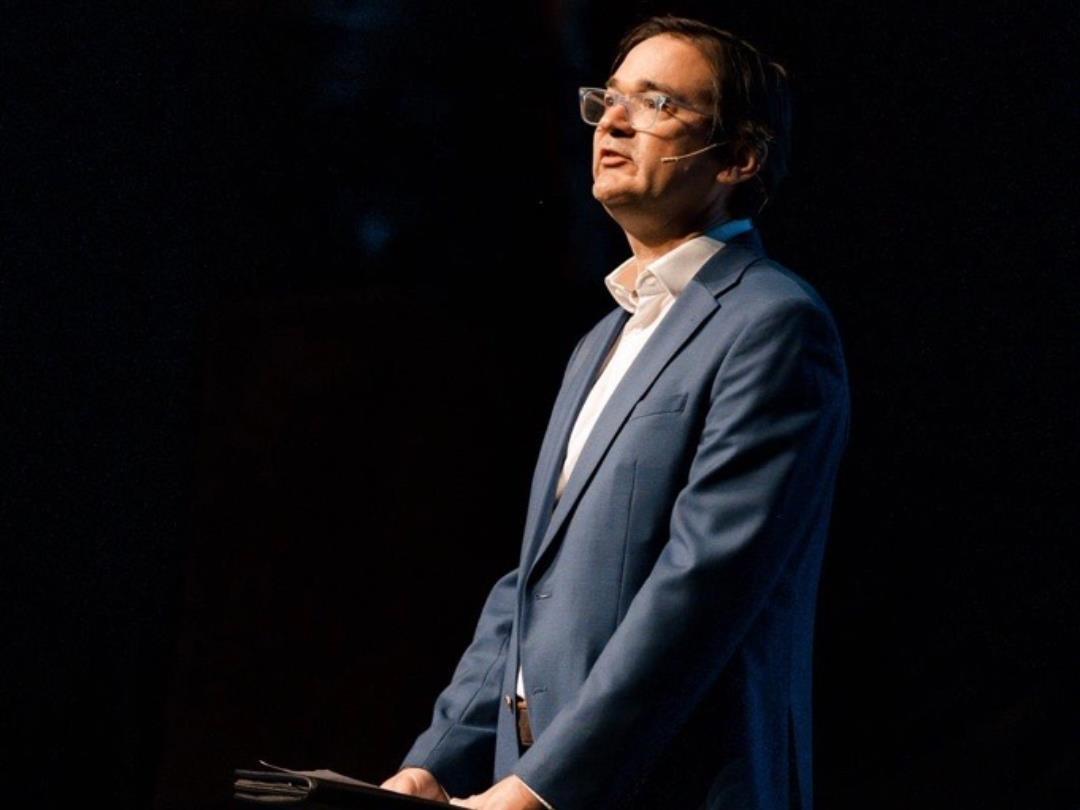
The Summit has begun! Tim Sykes, Olga Kachook, and Hery Henry kicked off the event on the Main Stage.
“We’re not here to re-state points of consensus,” Tim told us. “We’re here to fix the disconnect and the barriers to get to the next step faster.”
When asked about her hopes and aspirations for the event, Olga continued: “I am here looking for shared solutions to our shared packaging challenges.”
She advocated for the sharing of knowledge and learnings between global regions, sectors, and applications – using the example of tethered caps, widely implemented (but not overwhelmingly popular!) in Europe, yet still a foreign concept in the United States.
Next up, Willemijn Peeters from Searious Business took to the stage as our first keynote speaker. She presented her “provocative rather than reactive” roadmap for rethinking packaging formats as legislation like the Packaging and Packaging Waste Regulation comes into force.
“Packaging has become a box-ticking exercise,” she told the audience, arguing that companies are “stuck in a loop” of adapting their existing packaging to developing laws – oftentimes at their own expense. “It’s a race to the bottom,” she empathized, “and it’s exhausting,”
Yet she also asked attendees what would happen if this industry could “move beyond ticking boxes to build a better box.” By going back to the drawing board and completely rethinking packaging formats, Willemijn suggested that companies can reduce packaging volume while saving costs, increasing customer retention, achieving positive ROI, and ensuring business growth in competitive spaces.
Although there is no one-size-fits-all answer for every company’s unique needs, she posed the question: “What if packaging was so circular, so smart, so future-proof, that legislation simply didn’t apply to you anymore?”
Friday 7th November
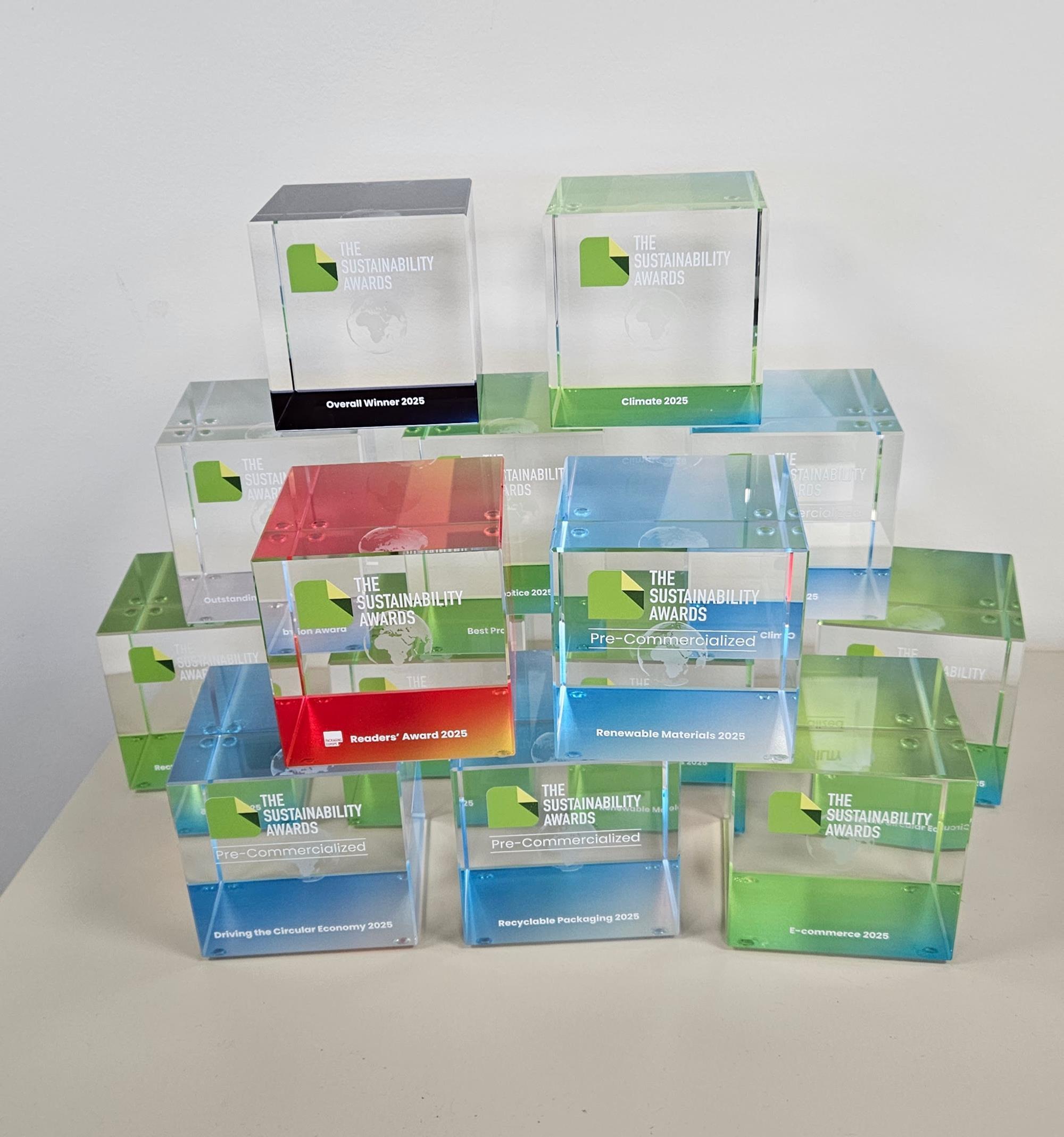
The beautiful (and extremely heavy) awards pictured above will be handed out to the winners of our Sustainability Awards in just a few days’ time!
The Awards ceremony takes place on the second day of our 2025 Sustainable Packaging Summit, which itself kicks off on Monday. The Summit is the culmination of months of intense planning, and we look forward to welcoming attendees in Utrecht from 10-12 November.
If you’re reading this before the start of the Summit, a small number of tickets are still available and we’d love for you to join us - click here for more information.
On Monday, after some words from Packaging Europe’s Tim Sykes, SPC’s Olga Kachook, and moderator Hery Henry; Willemijn Peeters from Searious Business will appear on the main stage as our first keynote speaker.
Then, after a panel discussion between representatives from Nestlé, the Ellen MacArthur Foundation, the New European Reuse Alliance, and Avery Dennison; we’ll hear from the European Commission’s policy officer, Wolfgang Trunk, for an in-depth discussion on the Packaging and Packaging Waste Regulation.
At the end of the first day, attendees are invited to join us at the first-ever Summit block party – where there’ll be opportunities to try cuisines from across the world and network with potential future collaborators.
On Tuesday, Jessika Roswall, European Commissioner for the Environment, will be joined by various FMCG business leaders to discuss the macro-trends currently facing our industry – from evolving consumer demands to trade-related frictions.
And, before the Sustainability Awards ceremony in the evening, there’ll be plenty of enlightening discussion taking place in various formats and across the Main, Emerging Tech, Knowledge Exchange, and Future Forum stages.
The final day of the Summit opens with the Accelerating the Transformation of Paper panel. Unilever’s Mark Newman, Laura Smith from the Ellen MacArthur Foundation, Huhtamaki’s Herwin Wichers, DS Smith’s Susana Aucejo, Oliver Kalmes from Actega, Lisa Clark from Archroma Packaging Technologies, FrieslandCampina’s Caroline Zwart, and Anna Perlina will delve into the direction and impact of R&D in packaging paper.
And then, after another action-packed day of discussion with representatives from across the value chain, Tim Sykes and Olga Kachook will host a session to close out the Summit and aggregate all the key learnings from across all three days.
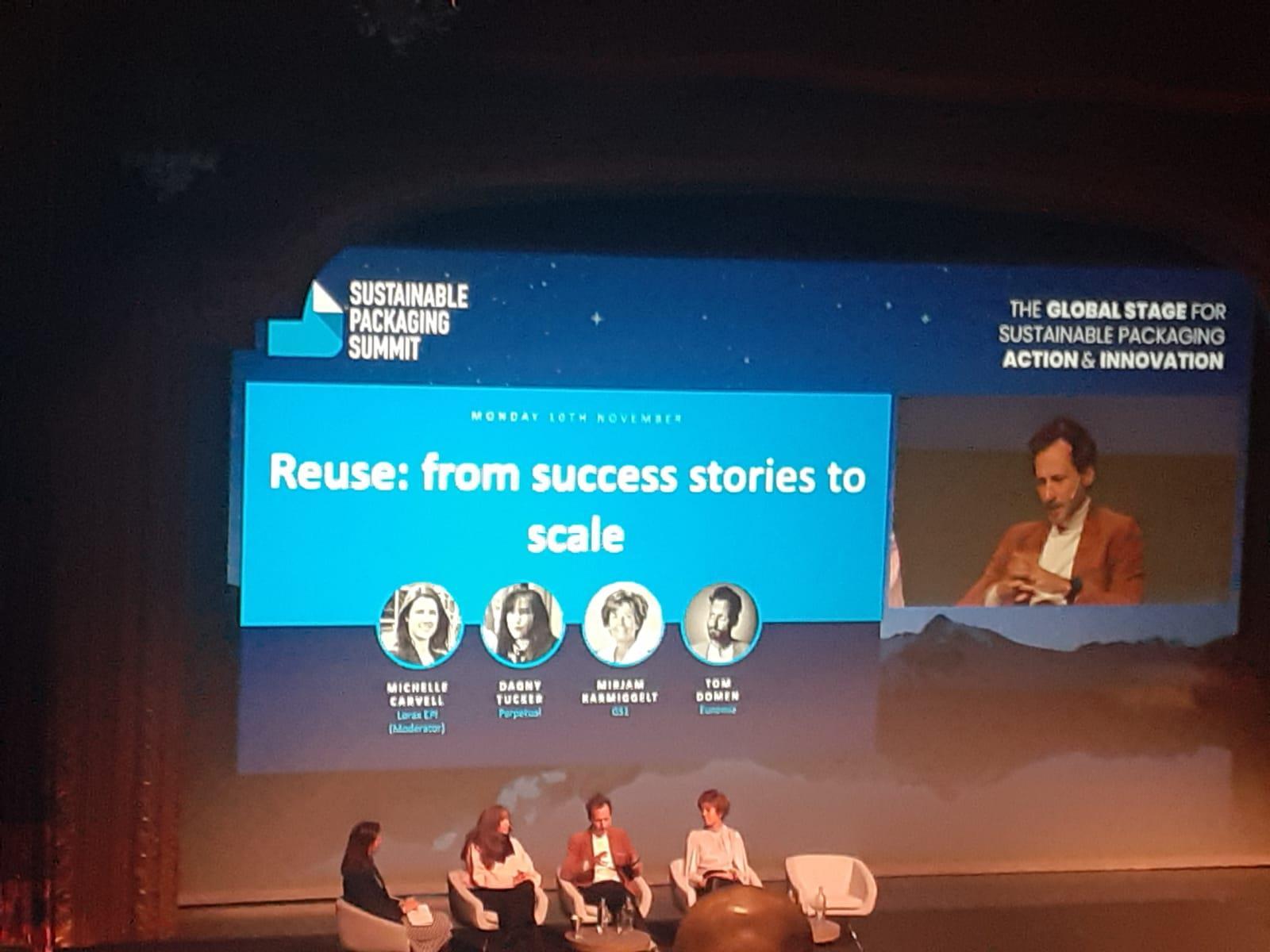
’Reuse is the biggest opportunity for reduction in plastic production that we have available.’ (Quote from panellist Dagny Tucker)
It’s still Day One of the Susainable Packaging Summit and we’re currently talking reuse: Despite many impressive projects, much of today’s activity in this field is still confined to pilots and niche applications. Serial circularity entrepreneur Dagny Tucker and Tom Domen of Eunomia are exploring the commonalities and contrasts between their experiences scaling up implementation of reuse systems. Mirjam Karmiggelt give the perspective from GS1.
A few key thoughts from the panellists:
- All EPR should be coupled with reuse. Some current EPR is actually disincentivizing reuse and this is still a major potential barrier for the future.
- With modelling a system at scale and then you can carry on to targeted pilots that have validation for scaling - whetehr that is city-wide, regional or countrywide.
- We need to be thinking even bigger than country by country. Organizations such as PR3 are working on standardization that can work globally.
- On driving consumer behaviour: Findings from pilots have shown that once you have reuse systems in place consumers do follow. The behaviour follows the implementation, not the other way around. (Prefill models such as Loop have seen success at scale by enabling consumers to become familiar with a single system.)
- Furthermore, distance is a factor for consumers: Studies have shown that the average person will litter or ignore returnable systems if they have to walk further than 150 feet.
- Moving forward, expect an increasing number of reuse apps to play a major role in moving reuse ‘from niche to norm’.
- Mirjam: ’It is my hope that in five years’ time sharing product data for reuse purposes will be non-competitive with fewer to no closed systems.’
- Eunomia is working alongside UENP with 15 countries across the global south and there have been many different kinds of success stories around this - something the global north may not be aware of.

Sponsored stories

PPWR: Are your products packaging and data ready?
PPWR is a data challenge. In this Spotlight, we find out how Centric Software® tackles the challenge through a connected

Plastipak opens PET material centre to advance recycled content solutions
In this Spotlight, Plastipak discusses the opening of its PET material centre in Verbania, Italy. Home to pakPET™ Single Pellet

FOREST-PKG is helping packaging people find the right people faster
In the latest edition of the Spotlight, Matthew Wright, Founder and CEO of FOREST-PKG, shares why finding the right

Why better adhesives can improve paper sack production
Duynie has decades of experience in developing applications for side-stream potato starch. With Novinexx CPB, the company is applying


2D Coding: Redefining the role of flexible packaging
In this edition of The Spotlight, Markem-Imaje examines how 2D coding is redefining the role of flexible packaging and


DuPont launches Tyvek® with Renewable Attribution
The material that consumer and industrial (C&I) applications rely on just got a sustainability upgrade. DuPont talks us
Read next

EU Council agrees negotiating stance for small business EPR exemptions
The European Council has set its position on a proposal to exempt businesses producing less than one tonne of packaging

Single-serve wine bottles fit in bags, avoid waste, and help portion drinks
Australian Vintage's Poco Vino offers wine in 178 ml single-serve bottles for easier transportation, lower-waste sampling,

Sustainability Perspectives: A CEN design for recycling standards deep dive
What do the recently published CEN design for recycling standards mean for the packaging value chain and particularly for labels?


UPM investigates starch-based grease barriers for paper food packaging
UPM is working with Ingredion and Paramelt to research the use of starch-based barrier technologies for recyclable paper food