

All Article articles – Page 13
-
 Article
Avantium and Packamama partner on plant-based, low carbon wine packaging
Avantium has entered a capacity reservation agreement with Packamama for future volumes of its plant-based, recyclable polymer PEF, branded as Releaf. The companies aim to combine the material with Packamama’s wine bottles, made from 100% recycled PET.
-
 Article
EU funds €4 million drive to develop natural, home-compostable cup coating
After securing €4 million in funding from Horizon Europe, Notpla is leading a three-year R&D programme to develop a disposable coffee cup with a natural, home-compostable coating.
-
 Article
The ultimate guide to packaging innovation in 2026
This report examines the most impactful sustainability-driven innovations shaping the packaging industry today, drawing on insights from Sustainability Awards judges and real-world commercial examples.
-
 Article
What the High Seas Treaty means for packaging: from substrates to shipping
The High Seas Treaty has entered into force, with potential implications for the packaging industry – including access to marine genetic resources like seaweed and mandatory environmental impact assessments for shipping activities.
-
 Article
Sappi expands packaging paper range with heat-sealable solutions
Sappi has announced the addition of heat-sealable packaging papers to its portfolio, designed for converters, printers, and brand owners looking for fibre-based alternatives to plastic.
-
 Article
EU Commission publishes harmonized labelling proposal for PPWR
The European Commission’s Joint Research Centre has developed a proposal to harmonize waste sorting labels under the Packaging and Packaging Waste Regulation – recommending unified pictograms, colour-coded symbols and receptacles, and more.
-
 Article
Cepi supports EU-Mercosur trade deal amid rising tensions in US relations
Amidst ongoing political tensions between the EU and the United States, Cepi is encouraging the European Parliament to ratify a trade agreement set to eliminate tariffs from the Mercosur trade bloc and mandate deforestation efforts.
-
 Article
Huber + Suhner incorporates 100% rPET into fibre optic products
Huber + Suhner states it has converted 35,500 blister packages to 100% recycled polyethylene terephthalate (PET) across its fibre optic product portfolio, as well as removing over 743,000 single-use plastic bags and replacing 1.5 million twist cable ties.
-
 Article
CITEO joins the EXPRA alliance for non-profit EPR model
CITEO (France) has announced that it has joined the Extended Producer Responsibility Alliance (EXPRA), a group of 35 industry-managed packaging and packaging waste recovery and recycling organizations.
-
 Article
Aluminium value chain teams up to sort and recycle small packaging formats
The European Aluminium Foil Association and Flexible Packaging Europe have founded an alliance to drive recycling performance for small aluminium packaging, supported by Nestlé Nespresso, JDE Peet’s, Lindt, and Bel Group.
-
 Article
Cirrec sorts three billion recycled food-grade PET trays with AI system
Faerch company Cirrec is using an AI-based system to sort PET trays from household recycling into a food-grade stream – claiming to sort 60,000 tonnes of plastic and over three billion trays annually.
-
 Article
Zeopore and BioBTX report ‘up to 100%’ yield increase in BTX through catalyst and pyrolysis technology
Zeopore Technologies and BioBTX have announced a ‘major advancement’ in converting waste plastics and biomass into circular aromatics, reportedly achieving up to 100% yield increase in BTX (benzene, toluene, xylene) by combining BioBTX’s Integrated Cascading Catalytic Pyrolysis (ICCP) technology with Zeopore’s tailored mesoporous zeolite catalysts.
-
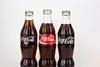 Article
Iconic Packs: Coca-Cola’s glass bottle
What makes Coca-Cola’s glass bottle design so instantly recognisable? How did the design come about, and why has it done so well? We explore all these questions and more in the first of our Iconic Packs series, focusing on the history of significant packaging designs and why they’ve been so successful.
-
 Article
Streamlined Gü packaging design aims to catch the eye and restore brand DNA
Gü’s dessert packaging has undergone a global redesign, spearheaded by strategy and branding agency Derek&Eric, to improve consumer navigation and shelf appeal.
-
 Article
Heinz simplifies dipping on-the-go with built-in ketchup compartment
The Kraft Heinz Company has developed a fry box with a built-in ketchup compartment, designed for on-the-go consumption.
-
 Article
First 13 partners chosen for L’Oréal’s €100 million sustainable innovation programme
L’Oréal has announced the initial 13 startups and SME’s due to take part in its L’AcceleratOR programme, endowed with €100 million over five years and run in partnership with the University of Cambridge Institute for Sustainability Leadership (CISL), aiming to help develop scalable solutions to solve climate, nature and circularity challenges.
-
 Article
Sabert launches food packaging made from bagasse fibre in Europe, UK and Ireland
Sabert Corporation Europe has launched its PULPUltra food packaging solution across Europe and the UK & Ireland, designed for for fresh ready-to-eat dishes, hot foods and made from over 95% bagasse fibres.
-
 Article
DS Smith’s packaging predictions for 2026
2025 was a year of innovation, evolving consumer demands and intense regulatory upheaval – but what are the factors that will most affect the packaging industry in 2026? DS Smith’s new Managing Director for UK and Ireland Packaging, James Lomax gives us his predictions.
-
 Article
‘Bombshell’ article casts doubt on studies of microplastics in the human body
Have scientists been wrong about microplastics in our bodies all along? The Guardian has reported on ‘bombshell’ concerns that contamination and false positives could have led studies to overestimate their findings, sparking fears of disproportionate countermeasures.
-
 Article
M&S takes on ultra-processed foods with reduced ingredients on front labels
Marks & Spencer is responding to backlash against ultra-processed foods and previous criticism of its on-label transparency by displaying its stripped-back ingredient lists on the front label of its packaging.