




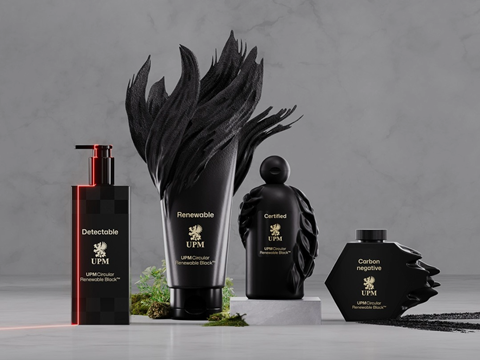
UPM’s Circular Renewable Black material is said to be made from renewable, forest-based feedstock and engineered to remain detectable in NIR sorting systems, while integrating seamlessly into existing polymer and masterbatch processes. The company explains more in this edition of the Spotlight.
Black is one of the most widely used colours in packaging. From premium cosmetics and personal care to food and consumer goods, it signals quality, simplicity and confidence. Yet despite its popularity, black plastic packaging has long been problematic in one critical respect: recycling.
The reason lies not in design, but in material science.

Traditional carbon black pigments absorb near-infrared (NIR) light, making black plastic invisible to the sorting systems commonly used in mechanical recycling. As a result, black packaging is often misidentified or rejected, preventing it from re-entering recycling streams. For brand owners and packaging professionals, this has created a structural conflict between design intent, brand equity and circularity targets.
In practice, the industry has been forced into compromise. Designers have been asked to avoid black, reformulate colours or sacrifice visual identity in order to improve recyclability. While these workarounds have helped in some cases, they have never addressed the underlying limitation.

A material-level solution
UPM Circular Renewable Black™ was developed to remove this barrier at its source.
Instead of relying on fossil-based carbon black, the pigment is derived from renewable, forest-based feedstock and engineered to remain detectable in NIR sorting systems. This allows black plastic packaging to stay visible throughout the recycling process, enabling proper sorting and reintegration into circular material flows.
Crucially, this detectability is achieved without compromising aesthetics or processing behaviour. The pigment delivers the same deep, premium black appearance expected in high-end packaging applications, while integrating seamlessly into existing polymer and masterbatch processes.
For converters and brand owners, this means black packaging no longer has to be excluded from circular design strategies.
Restoring choice without disruption
The implications extend beyond recyclability alone.
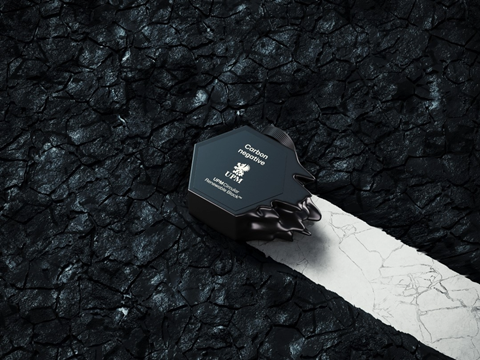
By replacing fossil carbon black, UPM Circular Renewable Black™ also delivers a measurable climate benefit. Its carbon footprint is carbon-negative, based on a cradle-to-gate life cycle assessment conducted in accordance with ISO 14040 and 14044 standards.
In addition, the pigment is supported by a transparent and traceable supply chain. Feedstock sourcing is certified under FSC® and PEFC™ and chain of custody is ensured through ISCC+.
Together, these attributes address the growing need for packaging solutions that meet regulatory requirements, sustainability commitments and brand expectations simultaneously.
Importantly, the solution does not require disruptive changes to existing production infrastructure. It has been designed as a drop-in replacement, allowing companies to maintain established processes while improving recyclability and climate performance.

From compromise to capability
For years, black packaging has been treated as an exception in circular economy discussions. The assumption was that certain colours simply could not be reconciled with recycling systems.
UPM Circular Renewable Black challenges that assumption.
By solving a long-standing technical limitation at the material level, it enables the industry to move beyond trade-offs between aesthetics and circularity. Designers regain freedom of choice. Brand owners protect visual identity. Recyclers gain visibility. Sustainability targets become more achievable without dilution of design intent.
This shift reflects a broader direction in packaging innovation: sustainability does not have to mean compromise. When materials evolve, systems can follow.
As regulatory pressure increases and circularity expectations rise, solutions that eliminate bottlenecks rather than work around them will play an increasingly important role. In the case of black packaging, that evolution has now begun.
A limited amount of free samples for the new material are available through UPM’s website.
This content was sponsored by UPM.