



With the EU’s new Packaging and Packaging Waste Regulation (PPWR) quotas for post-consumer recyclates (PCR) due from 2030 onwards, Interzero commissioned a study from BP consultants of the Berndt+Partner Group, which showed a PCR supply gap of around 1 million tonnes in 2030. The company details its findings in this edition of the Spotlight.
PCR gap of around 1 million tonnes – act now!
A wake-up call for the packaging industry
The EU’s new Packaging and Packaging Waste Regulation (PPWR) requires all packaging distributors to meet binding minimum usage quotas for post-consumer recyclates (PCR) from 2030 onwards. However, high-quality PCR is already scarce and expensive today. A study commissioned by Interzero from bp consultants of the Berndt+Partner Group shows that even under optimistic assumptions, there will be a supply gap of around 1 million tonnes in 2030 – with serious consequences for brand manufacturers and packaging producers. Those who wait a few years to respond risk not only penalties, but also production losses and price increases.
In order to enable a well-founded analysis of the current market situation, the independent consulting firm was commissioned to prepare a status report. The study examines possible causes of a future PCR shortage, analyzes the effects of regulatory requirements and identifies possible solution strategies. To this end, current market data at European level, expert assessments and developments along the value chain were taken into account.
According to the study, 80% of the experts surveyed are convinced that the PPWR quotas will be implemented as planned – regardless of material availability. At the same time, many companies already report having to search for food-grade PCR for a long time and paying a high price for it.
The PCR gap in 2030 – around one million tonnes missing
The analysis shows that even with rising chemical recycling rates and higher mechanical recycling rates, there will still be a massive gap. Particularly critical is:
• Polypropylene (PP): in high demand in food and cosmetics, but rarely suitable for food contact.
• LDPE & multilayer from household waste streams: technically difficult to recycle.
• Food-grade PCR: under-regulated, under-certified, under-produced.
Closing the gap would require around ten new large-scale plants, none of which are currently operational on an industrial scale. While mechanical recycling is currently the main source of PCR, it reaches its limits when it comes to complex structures. Chemical recycling can help in the long term as a supplement to mechanical recycling, but is still in the development phase.
In order to secure the supply of post-consumer recyclates in the long term, companies should develop and implement a clear strategy now. A key lever is consistent design for recycling: packaging must be designed in such a way that it can be efficiently recycled. This also includes gradually replacing complex multilayer constructions with recyclable monomaterials. At the same time, it is crucial not to rely solely on short-term tenders, but to establish reliable supply partnerships with recyclers and dual systems – ideally through long-term contracts with clearly defined quality and origin standards.
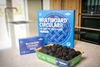
Interzero supports companies in this transition with in-depth analyzes, the optimization of packaging according to recycling criteria, the targeted sourcing of PCR materials and the development of individual roadmaps to meet PPWR requirements. The complete white paper on the study ‘Circular Packaging 2030 – Strategies against PCR Shortages’ contains detailed market figures and recommendations for action and is available for download free of charge.
This content was sponsored by Interzero.