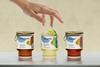



Kocktail recently launched an innovative new pack featuring a peel-off metal lid that reveals a ready-to-drink cocktail in an attractive, reusable glass. One of the company’s co-founders, Emil Stickland, tells us more.
Let’s start at the beginning – can you give us an overview of Kocktail’s mission, core portfolio, and history as a company?
Kocktail was co-founded by myself and my friend Andrew Hutchinson in the summer of 2020. It was born out of a desire to experience our favourite cocktails from the comfort of home, and we were unable to find anything bottled that was up to our standards, so decided to take matters into our own hands.
At Kocktail we are passionate about quality. Proudly handmade in Newcastle, all Kocktail’s Bottled Cocktails and Kocktail Collections are made in small batches using the finest ingredients and premium spirits by our team of award-winning bartenders, designed with experience at the heart.
We are now the proud winner of eleven Great Taste Stars, with an ever-growing collection, now set to expand even further with the launch of our new Kocktail Glass. Kocktail is available at the likes of John Lewis, Majestic Wine and independents nationwide.
I’d like to talk about Kocktail Glass now – please could you introduce it for any readers who may have missed the initial announcement?
We are really excited to be unveiling a brand-new addition to our ready-to-drink (RTD) line-up, the new Kocktail Glass.
The Kocktail Glass offers a point of difference in the category as we serve up a fresh take on ready-to-drink. We’ve focused on delivering an elevated cocktail experience that truly delivers. A first-of-it’s-category cocktail glass format, our Kocktail Glass contains a premium cocktail and is designed to be kept and reused, something yet to be seen in our category.
The Kocktail Glass also marks the next step in the evolution of category premiumisation, as we are using world-best spirits in every one of our serves, such as Elijah Craig Small Batch, known as the Father of Bourbon, alongside favourites such as Hepple Gin, Asterley Bros and Cazcabel.
What was Kocktail’s thinking behind launching its new product in this pack, and why is it especially important for packs to stand out on-shelf/in-feed?
We’ve spent the last five years proudly taking every decision to ensure our drinks are the best on the market. From mixing everything in house, by hand, to trialing and tweaking every ingredient and recipe until we hit the perfect serve. Our approach to our pack formats is no different.
We always wanted to enable our loyal customers to pick up a Kocktail for under £10 but found that every time we saw a cocktail in a can, or a pouch, we just wished it was in a glass, with ice and a lovely garnish and all the ceremony that surrounds that. We think a cocktail should be an experience and our beautiful new Kocktail glasses really deliver on that.
When it comes to on-shelf standout, retailers are always looking for something that will draw attention and catch the eye (and imagination) of consumers. The new Kocktail Glass packaging format really delivers on this, standing out on shelf as something truly unique.
While the product inside the glass is our heartland, our job doesn’t end here. Packaging, branding and format is a huge part of what we do. We feel like our Kocktail Glass truly delivers difference into the fixture. The pack, just like our premium serves, reflects how there is no compromise across any aspect of our creativity at Kocktail.
Could you give us some insights into how the new packaging was developed, from concept all the way to delivery? What were the main issues that had to be overcome during the R&D process?
It’s easy to come up with an idea, but the execution is often much harder! Rather than commissioning an external design studio, we developed the vessel internally. This may have made things harder in some ways but enabled us to maintain a direct connection between the cocktail, the serving ritual and the manufacturing process.
Our first bespoke glass project, we became fascinated by the idea that ready-to-drink packaging is usually designed to disappear as quickly as possible and wanted to create something that behaved more like glassware than packaging. The aim was to bring elements of the cocktail bar experience into a retail format, while also creating an object designed for permanence rather than disposal.
During the design process, the user experience became central to the project’s development, with particular focus placed on transitioning the object from packaging into reusable glassware.
For us to achieve our goal, it was important to test every element again, and again, and again. Reflective of this, I have over 100 different 3D prints of the new Kocktail Glass! This enabled us to split test variations in size, width, height and whether the ripples were embossed or debossed, how thick the lip was, the distance between where the ripples stop and the lip begins, and so many more variants. We got there in the end and couldn’t be more pleased with our final design.
A “glassware first” format, Kocktail Glass allows drinkers to add ice and garnish directly into the vessel before serving. The vessel features a vertically fluted surface inspired by traditional barware and was engineered to remain stackable for convenient storage. It is sealed using a scaled-up ring pull cap more commonly associated with bottled drinks, while a fully removable wraparound label was designed to peel away cleanly once opened.
While the project takes cues from traditional cocktail glasses, the product is manufactured using industrial glass blowing processes typically reserved for bottle production. This allowed us to produce reusable glassware at scale while retaining the efficiencies of conventional manufacturing.
Every detail came from balancing form with manufacturing constraints. The glass needed to stack efficiently, work with a ring pull closure, survive industrial production and still feel elegant in the hand once filled with ice and garnish. We mix all our cocktails by hand in house, so it felt important that the design process reflected the same philosophy. While we were never going to blow glass ourselves, we wanted to feel closely connected to the process, so that the finished object genuinely reflected our brand ideals.
Whilst the user experience was central to the design, we also wanted to ensure Kocktail was remembered. So, we reverse debossed a logo in the base of the glass, so that when you get to the end of your drink and look down at the last drop, you see the Kocktail logo in the base. It might just be a small logo at the bottom of a glass, but to me it personifies Kocktail.
Kocktail Glass is set to retail at £7.50 (€8.80) – are you able to give a rough estimate regarding how much of that price is attributable to the packaging? And how much does each pack cost the company compared with traditional alternatives?
Whilst glass is more expensive than cans, it’s simply not comparable. With the Kocktail Glass, consumers are not only getting an elevated experience, simply needing to add ice and garnish for a premium at-home cocktail serve, but also a piece of glassware they can use time and time again. This is fairly reflected in the recommended retail price.
Can you give us some insight into the carbon footprint of this pack – is it more or less carbon intensive than other packaging formats you’ve used before?
In terms of sustainability, our aim wasn’t simply to replace an aluminium can with another single use format. The Kocktail Glass has been designed as a reusable drinks glass first, with the cocktail acting as the introduction to a piece of glassware consumers are encouraged to keep and use long after the drink has been enjoyed.
While an aluminium can is lighter and typically has a lower carbon footprint for a single use, it is designed to be recycled after one use. By contrast, the environmental impact of the Kocktail Glass improves each time it is reused. We deliberately designed it to be an attractive, durable piece of glassware that consumers will keep in their cupboards rather than discard.
Glass is also infinitely recyclable without loss of quality where suitable recycling facilities exist, but we believe the greatest environmental benefit comes from extending the life of the product through repeated reuse before it is eventually recycled.
Glass is one of the most chemically inert packaging materials available. It doesn’t require plasticisers or polymer coatings to come into direct contact with food and drink (as cans do), and it’s infinitely recyclable without loss of quality. Combined with its potential for repeated reuse, that’s why we chose glass as the foundation for the Kocktail Glass.
If you liked this story, you might also enjoy:
The ultimate guide to packaging innovation in 2026
Packaging and Packaging Waste Regulation: what to know in 2026
Everything you need to know about global packaging sustainability regulation


No comments yet