


All Circular Economy articles – Page 3
-
 Article
Debunking common recycling myths
As Germany transposes the Packaging and Packaging Waste Regulation into national law, the German Environment Agency (UBA) and the Central Agency Packaging Register (ZSVR) have cleared up common misconceptions about plastic recycling rates, glass waste collection, and more.
-
 Article
Saica Group recycles its own paper into repulpable adhesive tape
Saica Group has unveiled an adhesive tape made entirely from its own recycled paper, aspiring for a fully repulpable product and a circular system.
-
 Article
Separate collection, PCR targets, and EPR to unlock flexible plastic recycling
A new report from the Alliance to End Plastic Waste names separate waste collection, post-consumer recyclate targets, and extended producer responsibility among the essential factors to improve recyclability for flexible plastics.
-
 Article
Sykell’s reuse system for takeaway food now accepts prefilled packaging
Sykell has expanded its Einfach Mehrweg reuse system for takeaway containers to include prefilled packaging, hoping to scale up reuse operations for pre-packaged food.
-
 Article
Taking stock as Global Plastics Treaty negotiations begin at INC-5.3
Negotiations for a Global Plastics Treaty continue in Geneva, but where do we currently stand – and where do negotiators hope to go? We take a bird’s eye view of the International Negotiating Committee saga so far, and hear from a number of voices commenting live from the conference centre.
-
 Article
Unilever, L’Oréal and P&G join reuse project rolling out across Ottawa
Unilever, Procter & Gamble, and L’Oréal are among the participants in The Reuse City Canada Project, a city-scale reuse initiative run across Ottawa by Reposit and the Consumer Goods Forum’s Plastic Waste Coalition.
-
 Article
Why ‘non-recyclable’ is no longer an option
The global pharmaceutical and healthcare packaging sector has reached a pivotal juncture. Blister packs, bottles, tubes, pouches, and other primary and secondary packaging are critical for sterility, dose precision, and patient safety, but their end-of-life profile remains largely linear: produce–use–dispose. In this article Professor Edward Kosior, Sustainability Awards winner and Founder/CEO at Nextek Ltd, plots a path forward.
-
 Article
Norway’s ‘first’ recycling facility for EPS waste opens its doors
BEWI has opened a recycling facility for expanded polystyrene in Norway, anticipating an annual recycling capacity of up to 3,500 tonnes.
-
 Article
Our guide to the fibre-based packaging market in 2026
In the last year or so, we have seen increased investments in companies producing fibre-based packaging - from Yangi securing €10 million in funding to scale its dry forming technology to Fiberdom receiving €3.5 million for its compostable paperboard material. What are the main drivers behind these investments and what kind of projects are receiving this support? We explore these questions in this edition of the Brief.
-
 Article
Post-consumer recycled material made from household plastic waste streams
TBM has unveiled its CirculeX material, made from post-consumer recycled plastics – a solution believed to avoid poor strength and unpleasant odour while reducing CO2 emissions by up to 61%.
-
 Article
BlueAlp and partners receive €1.5 million for chemical recycling project
The Dutch Government has awarded BlueAlp, Renewi, Shell, and Utrecht University with €1.5 million in funding to support their chemical recycling solution for flexible plastics.
-
 Article
Sparxell raises over €4 million for cellulose-based packaging pigments
Sparxell has raised $5 million (€4,231,350) in Pre-Series A funding for its cellulose-based colourant technology, which is said to reduce water consumption by 90%.
-
 Article
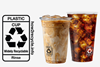
Polypropylene cups designated as ‘widely recyclable’ in U.S.
Polypropylene cups are now designated as “widely recyclable” in the U.S., as a result of a partnership between Starbucks, WM, The NextGen Consortium, How2Recycle, The Recycling Partnership, and more.
-
 Article
Submissions are open for the Sustainability Awards 2026!
The Sustainability Awards are open for submissions! From start-ups and universities to global brands and manufacturers, everyone is invited to nominate their packaging innovations for a crystal trophy – with zero entry fees.
-
 Article
A status report on GLP-1 packaging: sizing, safety, security, and more
Weight-loss drugs keep gaining traction – is that a blessing or a curse for the packaging industry? We dive deeper into the implications of smaller portion sizes, pharmaceutical safety practices versus circular packaging initiatives, supply chain traceability, and more.
-
 Article
Coalition unites to ‘modernize’ plastic recycling systems in America
Closed Loop Partners and the Consumer Brands Association are among the founding members of the Recycling Leadership Council, which aims to ‘modernize’ the American recycling system and tackle plastic waste.
-
 Article
Companies must ‘reframe’ green premiums debate, says PepsiCo CEO
Speaking at the World Economic Forum in Davos, PepsiCo CEO Ramon Laguarta argued that corporations must “reframe” the debate around green premiums in their product prices.
-
 Article
Davos 2026 sees $2 billion investment model to decarbonize supply chains
At Davos 2026, Canopy and its partners presented a $2 billion blended finance blueprint to utilize recycled textiles and agricultural residues in packaging – a move helped to cut down on carbon emissions.
-
 Article
Cirrec sorts three billion recycled food-grade PET trays with AI system
Faerch company Cirrec is using an AI-based system to sort PET trays from household recycling into a food-grade stream – claiming to sort 60,000 tonnes of plastic and over three billion trays annually.
-
 Article
Make Waves upfronts recycled plastic in antiperspirant and deodorant refills
Make Waves offers a refillable format for antiperspirant and deodorant products – emphasizing that the refills are manufactured onshore, contain recycled plastic, and are recyclable at end-of-life.