


Selenis, a global leader in high-performance specialty polyesters resins and part of the IMG Group, has announced a transformational expansion of its industrial headquarters in Portalegre, Portugal. This strategic investment is set to double the site’s production capacity by the third quarter of 2027, significantly accelerating the industrial scale-up of bio-based, medical-grade, and circular co-polyesters resins.
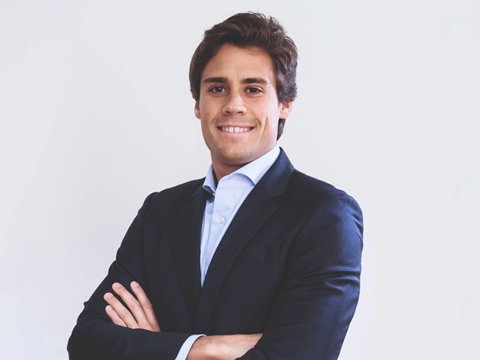
Magazine interviewed Duarte Gil, CEO of Selenis, about the company’s vision and strategy, its contribution to the market development, and its efforts to meet customer needs and expectations. The interview provides insights into the specific challenges of the market of high-performance specialty polyesters, increasing demand, and regulatory changes.
Selenis has announced a major expansion in Portalegre. What strategic vision is driving this decision to double capacity by 2027?
In Portalegre we have built a facility that is world-class in sustainability, technically sophisticated, and commercially competitive at the same time.
The decision to double capacity reflects our belief that Selenis is at a pivotal moment. Our growth has been constrained by production capacity, customer demand and market conditions wanting for more products of the quality we provide. Brands are looking for reliable suppliers of certified sustainable polyester at scale. The regulatory environment in Europe is, for the first time, genuinely rewarding producers who invest in the right direction.
Doubling capacity by 2027 is an expression of confidence in our people, our technology, and the future of this industry. It is also a statement that Selenis is a thought leader, not a follower.
How does this investment strengthen Selenis’ role in the global transition towards circular and low-carbon polyesters?
The expansion in Portalegre will be powered primarily by green electricity from our on-site solar park - a structural choice for more sustainability. Every additional ton of polyester produced will have a significantly lower CO2 footprint than the industry average.
More importantly: a significant portion of our new production capacity will be dedicated to sustainable polymers: products that are fully recyclable, contain recycled materials, or feature bio-based raw materials. We are not simply producing more of the same. We are creating the conditions to make circular polyester the standard product, not a niche product.
We want to demonstrate that a European polyester producer can be both economically successful and environmentally responsible. For the coming decade, these two things seem inextricably linked.
Demand for sustainable materials is accelerating worldwide. What signals from the market made this the right time to scale production?
This market is undergoing a convergence unlike anything I’ve witnessed in my entire career. Regulation, brand commitments, and consumer expectations are all moving in the same direction. This gives any manufacturer who acts first a strategic competitive advantage.
The cost factor presents a major opportunity. The biggest obstacle to the adoption of sustainable polymers has always been price. Through the significant increase in production capacity, both in Portugal and through our new project in South America, we will become one of the most competitive manufacturers on the market. By minimizing the price difference between conventional and sustainable materials, we will eliminate the last major barrier to widespread market adoption. That is precisely our objective: to make the sustainable choice the obvious choice.
European regulation, particularly the PPWR and the Single-Use Plastics Directive, is reshaping the industry. How is Selenis positioning itself to stay ahead of these regulatory changes?
We see the PPWR Directive, or the Single-Use Plastics Directive, primarily as confirmation that we are on the right track. Our product development decisions were not driven by regulatory deadlines. Rather, they were based on our conviction that the market would demand recyclable, recycled, and bio-based materials on a large scale, and that manufacturers who built up the necessary capacities early on would be best positioned to meet this demand. Regulatory changes are not a disruption for us, but rather a boost.
Selenis is expanding its production of circular and bio-based polyesters. How important are these solutions for customers in sectors like packaging, healthcare, and textiles?
In the packaging and textile sectors, these solutions are becoming business fundamentals faster than expected, rather than just a premium option. Brands with 2030 sustainability goals are being asked by retailers, investors, and regulators to demonstrate progress now. They need certified, reliable, and industry-ready supply chains.
In the packaging sector, customers must simultaneously meet mandatory recycling targets and requirements and need a partner who understands both and can supply the appropriate materials. In the textile sector, the pressure stems from a powerful combination of regulation and consumer expectations, particularly from major fashion brands that have publicly committed to specific targets and now need a supply chain that delivers on those commitments.
In healthcare, the requirements for purity, traceability, and regulatory compliance are significantly higher for materials used in medical applications. We are working to build the necessary expertise to enter this market as part of our long-term vision for Selenis.
Selenis is effectively doubling recycled polyester capacity ahead of industry projections. How does this position the company in the global competitive landscape?
The industry remains in a balancing act between utilizing existing production capacities for virgin materials and carefully integrating recycled materials.
By expanding our polyester recycling capacities, we are positioning ourselves as pioneers in the circular economy for polyester, thereby securing sustainable competitive advantages. We are forging partnerships with suppliers of high-quality recycled raw materials early on. We are building in-depth expertise in chemical recycling and depolymerization, which cannot be acquired quickly and cheaply. And we offer our customers predictable, certified quantities in a market where reliable deliveries are already becoming scarce.
Finally, what message would you like to send to customers and partners about what this expansion represents for the future of Selenis?
Our investment is a long-term, capital-intensive, and irreversible commitment on the future of circular polyester and on Selenis as one of its leading manufacturers.
At Selenis, we invest to shape the industry. And I am truly proud that we are doing this from Portugal - as a European manufacturer taking the initiative instead of waiting to see which way the wind blows.
To our customers and partners, I want to say this: we understand the challenges you face. The transition to circular materials brings significant complexity to your supply chains, product specifications, and business planning. Our promise to you: Selenis is the partner that will make this transition easier and more reliable.





No comments yet